Carbon Fiber Hiking Poles vs Aluminum Alloy Hiking Poles: Which Is Right For You?
Choosing between carbon fiber hiking poles vs aluminum alloy hiking poles can significantly impact your hiking experience. The right trekking poles provide stability on uneven terrain, reduce stress on your joints, and help distribute weight evenly across your body. But with so many options available, how do you know which material is best for your specific needs?
In this comprehensive guide, we’ll explore the key differences between these two popular materials, examine their unique properties, and help you determine which type will best support your outdoor adventures. Whether you’re a casual day hiker or a serious backpacker, understanding these differences will help you make an informed decision.

Why Use Trekking Poles?
Before diving into the material differences, let’s understand why trekking poles are essential for many hikers. These versatile tools offer numerous benefits that can enhance your hiking experience:
- Improved stability and balance on challenging terrain
- Reduced impact on knees, ankles, and joints, especially during descents
- Better weight distribution when carrying heavy backpacks
- Increased hiking speed and endurance on flat terrain
- Added propulsion when climbing steep inclines
- Versatility for crossing streams or probing snow depth
- Can double as tent supports for ultralight shelters
With these benefits in mind, let’s examine how carbon fiber and aluminum alloy poles compare in delivering these advantages.
Carbon Fiber Hiking Poles: Lightweight Performance
Material Properties and Characteristics
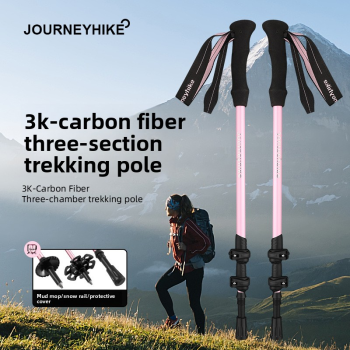
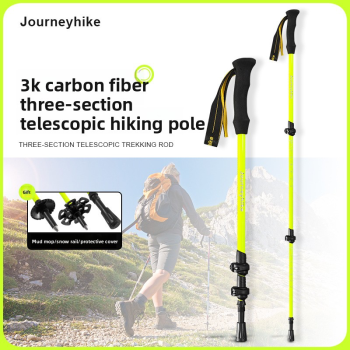
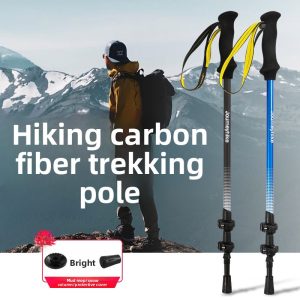
Carbon fiber trekking poles are constructed from carbon fiber composite, a material created by weaving carbon fiber strands and binding them with resin. The manufacturing process significantly impacts quality, with roll-wrapped carbon fiber (strands laid at different angles) providing superior strength compared to pultrusion methods (parallel strands).
High-quality carbon fiber poles use advanced resins that maintain flexibility even in cold temperatures, though this varies between manufacturers and price points.
Key Benefits of Carbon Fiber Poles
Advantages
- Significantly lighter weight (typically 30-40% lighter than aluminum)
- Superior vibration dampening for reduced hand fatigue
- High stiffness-to-weight ratio for immediate support
- Less arm fatigue during long hikes
- More comfortable grip and feel
Disadvantages
- More expensive than aluminum alternatives
- Can break catastrophically under lateral force
- More temperature-sensitive, especially in extreme cold
- Surface damage can compromise structural integrity
- No warning signs before failure (unlike aluminum bending)
Ideal Use Cases for Carbon Fiber Poles
Carbon fiber hiking poles excel in specific scenarios and are particularly well-suited for certain types of hikers:
- Ultralight backpackers prioritizing weight savings
- Long-distance hikers concerned about arm fatigue
- Hikers with joint issues who benefit from vibration dampening
- Trail runners needing the lightest possible equipment
- Hikers primarily on established trails with moderate terrain
- Warm-weather hikers (where temperature sensitivity isn’t an issue)
Price Range and Value Proposition
Carbon fiber trekking poles typically range from $75-$200 per pair, with premium models featuring advanced locking mechanisms, ergonomic grips, and specialized tips. While the initial investment is higher, many hikers find the weight savings and comfort benefits justify the cost for frequent use.
Looking for Quality Carbon Fiber Poles?
Explore our selection of lightweight carbon fiber trekking poles designed for serious hikers who prioritize weight savings and performance.
Aluminum Alloy Hiking Poles: Durable Reliability
Material Properties and Characteristics
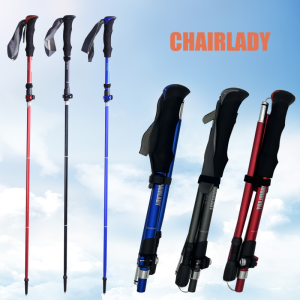
Aluminum alloy trekking poles are typically made from aircraft-grade aluminum, with 7075-T6 alloy being the gold standard for high-quality poles. This alloy offers an excellent balance of strength, weight, and durability. Lower-quality poles may use 6061 aluminum, which is less expensive but also less durable.
Aluminum is naturally resistant to corrosion and performs consistently across a wide temperature range, making it reliable in diverse conditions.
Key Benefits of Aluminum Alloy Poles
Advantages
- Greater durability and resistance to impact
- More affordable than carbon fiber options
- Performs well in extreme temperatures
- Bends rather than breaks under stress (can often be repaired)
- Better for rough terrain and heavy loads
Disadvantages
- Heavier than carbon fiber (typically 20-30% heavier)
- Transmits more vibration to hands and arms
- Can bend permanently under heavy loads
- May cause more arm fatigue on long hikes
- Less responsive feel compared to carbon fiber
Ideal Use Cases for Aluminum Alloy Poles
Aluminum alloy hiking poles are particularly well-suited for certain hiking scenarios and user profiles:
- Hikers carrying heavy backpacks who need maximum durability
- Winter hikers and those in extreme cold conditions
- Budget-conscious hikers seeking reliable performance
- Off-trail hikers navigating rough terrain
- Hikers who tend to be hard on their equipment
- Beginners who may not want to invest in premium equipment initially
Price Range and Value Proposition
Aluminum alloy trekking poles typically range from $30-$120 per pair, with quality 7075-T6 aluminum models starting around $50. They offer excellent value for hikers who prioritize durability and reliability over minimum weight.
Need Durable Aluminum Poles?
Discover our selection of rugged aluminum alloy trekking poles built to withstand tough conditions and heavy use.
Side-by-Side Comparison: Carbon Fiber vs Aluminum Alloy
To help you make an informed decision, here’s a detailed comparison of carbon fiber hiking poles vs aluminum alloy hiking poles across key performance factors:
| Feature | Carbon Fiber Poles | Aluminum Alloy Poles |
| Weight | Lighter (11-16 oz per pair) | Heavier (18-22 oz per pair) |
| Durability | Good vertical strength, vulnerable to lateral force | Excellent overall durability, resistant to impact |
| Vibration Absorption | Excellent – reduces hand fatigue | Fair – transmits more vibration |
| Price Range | $75-$200 | $30-$120 |
| Temperature Sensitivity | More brittle in extreme cold | Consistent performance in all temperatures |
| Failure Mode | Catastrophic breakage | Gradual bending, rarely sudden breaks |
| Best For | Ultralight hiking, long distances | Rough terrain, heavy loads, winter use |

User Experiences and Common Feedback
Understanding real-world experiences can provide valuable insights beyond technical specifications. Here’s what hikers commonly report about both types of trekking poles:
Carbon Fiber User Feedback
“I’ve hiked over 1,500 miles with my carbon fiber poles, and the weight savings make a noticeable difference on long treks. However, I did break one when it got caught between rocks during a descent.”
Many users praise carbon fiber poles for their lightweight feel and comfort during extended use. However, a common complaint involves unexpected breakage, particularly when poles are subjected to lateral force or used as tent supports in high winds.
Users also note that high-quality carbon fiber poles significantly outperform budget options, suggesting that investing in premium models is worthwhile for this material.
Aluminum Alloy User Feedback
“My aluminum poles have survived three seasons of rough backcountry hiking. They’ve bent slightly after supporting my weight during a stream crossing, but I was able to straighten them and keep going.”
Aluminum pole users consistently highlight durability as the primary advantage. Many report their poles surviving falls, supporting heavy packs, and withstanding conditions that might damage carbon fiber alternatives.
The most common criticism involves weight, with some hikers noting arm fatigue during multi-day treks. Users also mention that quality aluminum poles (7075-T6 alloy) significantly outperform cheaper models.
Expert Recommendations for Different Hiking Scenarios
The ideal trekking pole material depends largely on your specific hiking needs and conditions. Here are our expert recommendations for various scenarios:
Day Hiking
- Recommended: Either material works well
- Carbon fiber if weight is a priority
- Aluminum if durability and cost are priorities
- Consider terrain difficulty when choosing
- For casual use, entry-level aluminum poles offer good value
Backpacking/Multi-day Trips
- Recommended: Carbon fiber for most users
- Weight savings become more significant over multiple days
- Reduced arm fatigue improves overall endurance
- Consider aluminum for very rough terrain or if using poles for shelter support
- Premium models of either material will offer better locking mechanisms
Mountain/Rocky Terrain
- Recommended: Aluminum alloy
- Better resistance to impacts and lateral forces
- More reliable when navigating technical sections
- Can withstand more pressure when supporting body weight
- Less catastrophic failure mode if damaged
Winter/Snow Conditions
- Recommended: Aluminum alloy
- Better performance in extreme cold temperatures
- More reliable when using snow baskets
- Stronger when breaking through ice crust
- Less affected by temperature fluctuations
Beginner Hikers
- Recommended: Quality aluminum poles
- More forgiving of improper technique
- Better value while developing hiking skills
- Durable enough to withstand learning curve
- Can upgrade to carbon fiber later if desired
Experienced Hikers
- Recommended: Choose based on specific needs
- Carbon fiber for those prioritizing weight and comfort
- Aluminum for those prioritizing durability and reliability
- Consider having both for different conditions
- Invest in premium models for better long-term performance

Maintenance and Care Tips
Proper maintenance can significantly extend the lifespan of your trekking poles, regardless of material. Here are some essential care tips for both carbon fiber and aluminum alloy poles:
Carbon Fiber Pole Maintenance
- Inspect regularly for cracks, chips, or damage to the carbon fiber surface
- Avoid impact to the sides of poles, which can damage the carbon fiber structure
- Clean with mild soap and water, avoiding harsh chemicals that could damage the resin
- Store in a dry place away from extreme temperatures
- Never use as a lever or to pry objects, which creates lateral stress
- Replace damaged sections immediately rather than continuing to use them
Aluminum Alloy Pole Maintenance
- Rinse after exposure to salt water or mud
- Dry thoroughly before collapsing to prevent internal corrosion
- Lubricate locking mechanisms periodically with silicone spray
- Straighten minor bends carefully, but replace severely bent sections
- Check for hairline cracks if poles have been bent and straightened
- Tighten any loose screws in locking mechanisms
Pro Tip: Always collapse your poles from the bottom section first to prevent dirt and moisture from being pulled into the locking mechanisms. This simple habit can significantly extend the life of your trekking poles.
Conclusion: Making Your Final Decision
When choosing between carbon fiber hiking poles vs aluminum alloy hiking poles, there’s no universal “best” option. The right choice depends on your specific hiking style, terrain preferences, and personal priorities.
Carbon fiber poles excel in weight savings and vibration dampening, making them ideal for long-distance hikers, ultralight enthusiasts, and those seeking maximum comfort. The premium price is often justified for frequent hikers who value these benefits.
Aluminum alloy poles shine in durability, reliability in extreme conditions, and value. They’re the better choice for rough terrain, winter conditions, and hikers who tend to be hard on their equipment.
Consider your most common hiking scenarios, budget constraints, and personal preferences when making your decision. Many experienced hikers eventually own both types, selecting the appropriate poles based on the specific trip requirements.

Ready to Find Your Perfect Trekking Poles?
Browse our selection of premium hiking poles in both carbon fiber and aluminum alloy. With our 30-day satisfaction guarantee, you can hit the trails with confidence.
Are carbon fiber poles worth the extra cost?
For frequent hikers, long-distance trekkers, and those sensitive to weight and vibration, carbon fiber poles often justify their higher price tag. The weight savings and comfort benefits become more apparent the more you hike. However, occasional hikers or those on rough terrain might find aluminum poles offer better value.
Can I repair broken trekking poles?
Aluminum poles that are bent can sometimes be carefully straightened, though severely bent sections should be replaced. Broken carbon fiber poles typically cannot be repaired and require section replacement. Many manufacturers offer replacement parts for their poles, making it more economical to repair than replace the entire set.