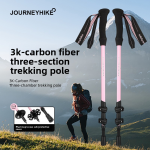
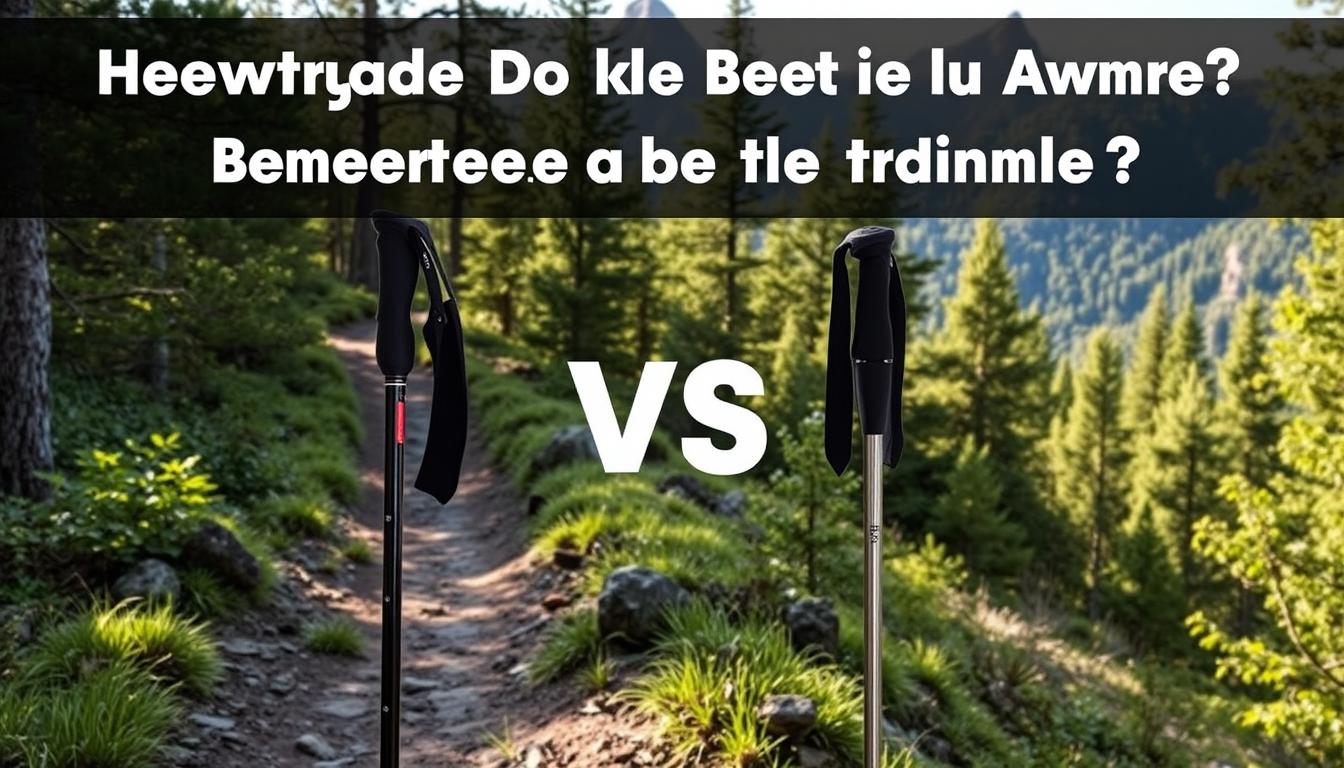
This guide helps U.S. trail users choose between lighter shafts and tougher aluminum sticks. You’ll see how weight, durability, adjustability, grips, tips, and models from Black Diamond, Leki, REI, MSR, Camp, Aonijie, and Paria stack up.
Lightweight options like the Leki Neotrail and Black Diamond Distance Carbon aim at speed and low swing weight on long climbs. Sturdier aluminum gear such as the Black Diamond Distance Z and Aonijie trades weight for impact resistance and value.
Real testing across smooth dirt, technical rock gardens, snowy approaches, and ultras shows clear trade-offs. Carbon can fail under side loads; aluminum tends to bend and can often be straightened enough to limp out.
Expect practical verdicts: racers get thin, foldable designs for packability; daily users get robust, budget-friendly sticks with replaceable tips and baskets. By the end, you’ll have a clear match to your terrain, distance, and storage needs.
Key Takeaways
- Light shafts favor speed and cadence on long climbs.
- Aluminum models offer durability and field serviceability.
- Foldable, fixed-length designs are most packable for racers.
- Interchangeable tips and baskets extend service life.
- Choose by terrain, distance, and how you carry gear.
Trail runner intent: what decision you’re trying to make today
Start with one clear question: do you want the lightest setup to shave time on long climbs, or a more forgiving daily driver that survives hits on technical mountain lines?
If speed matters, choose slim fixed-length designs and ultra-light materials that cut swing weight and fatigue on long miles. Models like the Leki Neotrail and REI Swiftland TT Carbon show how low mass feels on steep pitches.
If durability matters, pick a stronger shaft that bends rather than breaks and costs less to replace. Options such as Black Diamond Distance Z and Camp Xenon Pro 2.0 trade grams for resilience and field serviceability.
- Match gear to typical terrain: smooth singletrack needs light setups; technical rock or snow favors sturdier shafts.
- Factor distance and time on feet—grams add up, but fatigue increases the value of durability.
- Decide if you’ll adjust length often; adjustable systems add weight but aid fastpacking shelters and steep ups/downs.
- Check storage and how poles ride in your pack or vest when not in use.
| Use Case | Top Feature | Representative Model | Why it fits |
|---|---|---|---|
| Race/Skimo | Lowest weight, foldable/fixed | Leki Neotrail | Ultra-light swing feel saves energy on climbs |
| Daily technical | Durability, bend tolerance | Black Diamond Distance Z | Sturdy alloy tolerates knocks and is repairable |
| Fastpacking | Adjustability and versatility | Leki Cross Trail FX Superlite | Adjustable length helps shelters and mixed terrain |
Quick verdict at a glance
Quick guidance: pick the light setup when speed is the priority, pick the stout design when durability matters.
When carbon wins (light and fast)
Choose low-mass shafts when every gram counts. Models like Leki Neotrail and REI Swiftland TT Carbon shine in races and long climbs.
These sticks cut swing weight and help maintain cadence on long ascents. They fold or fix into very compact packs, which aids fastpacing and minimal carry.
When aluminum wins (robust and budget-friendly)
Alloy designs such as Black Diamond Distance Z and Camp Xenon Pro 2.0 tolerate knocks and bend instead of snapping.
- Use aluminum if you train on rocky, rooty terrain and want forgiving durability.
- Choose carbon when minimizing weight matters most and you can stash a pair cleanly in a vest.
- If you need adjustable length for fastpacking, accept extra grams to gain versatility.
Are carbon or Aluminium poles better for trail running?
On variable ground, material choice shifts the trade-offs between speed, cost, and how long gear lasts.
Core differences: weight, durability, cost
Weight: Lighter shafts save energy and give a snappier cadence on long climbs. Many racers pick slim, low-mass gear to shave fatigue.
Durability: Heavier alloy sticks tolerate knocks and often bend instead of snapping. That means you can usually finish a long day with an aluminum shaft.
Cost: Expect higher retail on lighter designs. Typical U.S. pricing runs about $170–$250 for premium light models and $110–$179 for alloy options.
How each material behaves under stress on the trail
Under lateral hits, carbon tends to fracture while alloy yields. A break often ends your outing; a bend can be field-managed.
Reinforced joints and design choices can reduce failure risk. Long-term users report many seasons with no major issues when they avoid big side impacts.
What “better” means by terrain, distance, and experience
Define “better” by where you run. Smooth singletrack rewards low weight. Rock-hopping and alpine lines reward resilience.
- Beginner trekkers often benefit from alloy’s forgiving behavior.
- Experienced racers may accept higher cost for grams saved.
- Consider life-cycle value: slightly heavier designs can offer longer service with fewer repairs.
| Use Case | Top Trait | Example | Why |
|---|---|---|---|
| Smooth singletrack | Lowest weight | Distance Carbon Z | Reduces swing weight and fatigue on long climbs |
| Technical mountain | Durability | Distance Z (Black Diamond) | Bends under load and is repairable in the field |
| Mixed fastpacking | Balanced life-cycle value | REI Swiftland TT Carbon | Trades a few grams for added longevity |
Material deep dive: carbon fiber vs. aluminum on real trails
Choosing a shaft changes how gear feels on long climbs and how it holds up after impacts.
Performance feel and failure modes
Light fiber shafts give a snappier swing and reduce arm fatigue on long ascents. They handle vertical loads very well but can fail under twisting or big side hits.
That means a clean fracture can end an outing quickly. Examples that chase low mass include Leki Ultratrail, Black Diamond Distance Carbon Z, and REI Swiftland TT Carbon.
Resilience, repairability, and life span
Alloy shafts tend to deform instead of shatter. A bent section can often be straightened gently and kept in use, which helps you finish a long day on technical terrain.
Aluminum models like Black Diamond Distance Z, Camp Xenon Pro 2.0, and Aonijie Folding 7075 alloy show how serviceability extends useful life and value.
- Packability: many race and fastpack designs fold into compact three- or four-section systems.
- Repairs: alloy allows field straightening; shattered fiber usually needs part replacement.
- Price vs. performance: light fiber carries a premium aimed at racers and ultrarunners.
Pick by terrain and tolerance for risk: choose low weight if your routes are smooth and you stash spares. Choose alloy if you expect knocks and want easy fixes in the field.
Weight and swing feel: why grams matter over many miles
Lightweight gear changes how your arms feel after fifty miles; tiny savings per step add up fast.
Quantified savings: top race pairs sit at ~226–318 g per pair, while sturdier systems run 344–470 g. That means 100–240 g difference between a light set and a heavy adjustable design.
The lighter swing yields a smoother cadence, especially on long climbs and late in events when form fades. A few extra grams per pole becomes thousands of extra grams moved over miles.
Tradeoffs exist. Ultralight race shafts can feel fragile on off-camber lines. Heavier models add durability and useful features like adjustability and winter readiness.
- Grip shape changes perceived swing as much as listed mass.
- Stow weight matters—heavier sticks can bounce when carried on a pack or belt.
- Weigh your current gear to compare real numbers with listed specs.
| Model | Weight (g, pair) | Length | Note |
|---|---|---|---|
| Leki Neotrail Pro FX.One Superlite | 226 | 110 cm | Race-focused, minimal swing mass |
| Black Diamond Distance Carbon Z | 272 | 115 cm | Light yet a touch stiffer |
| REI Swiftland TT Carbon | 318 | 115 cm | Mid-weight tradeoff |
| MSR DynaLock Ascent Carbon Backcountry | 470 | 100–120 cm | Adjustable, winter-ready, heavier |
Tip: match weight to your purpose. Choose the lightest set for racing; accept moderate mass for all-season use and longevity.
Durability and failure modes: poles break vs. poles bend
Technical terrain tests a shaft’s ability to take sideways stress without ending your outing.
Common failures start when a tip catches between rocks or roots, or when a runner falls and plants a shaft at an angle.
Outcome differences: a lightweight carbon shaft can fracture under lateral load and often cannot be repaired on the trail. In contrast, an aluminum stick usually bends and can still get you out.
Practical notes and field experience
Brands warn that race-grade carbon models are meant for competition, not daily abuse. Careful users report many years of service if they avoid big side hits.
Internal cords and folding wires are common weak points. Robust sheathing and regular inspection reduce surprise failures.
- Inspect joints and cords after hard hits and retire bent or cracked segments early.
- Match durability to route seriousness, especially on remote mountain routes.
- Carry spare tips and basic repair items to manage a long exit.
| Failure | Typical effect | Field fix |
|---|---|---|
| Tip caught in rock | Fracture likely with light shafts | Replace section or hike out; carry spare tip |
| Sideways fall | Alloy bends, fiber breaks | Straighten alloy; carbon needs replacement |
| Worn cord/wire | Loss of lock or fold function | Splice or retire; inspect regularly |
Adjustability and folding systems for runners
Choosing between fixed-length foldables and adjustable designs comes down to pack fit, deployment, and how much extra weight you accept.
Fixed-length foldables vs. adjustable options
Fixed-length foldables are the go-to for racers. They deploy fast, pack very short, and keep listed weight low. Examples include the Black Diamond Distance Carbon Z and Leki Neotrail FX.One Superlite.
Adjustable systems add versatility. Models like the Leki Cross Trail FX Superlite let you fine-tune length for steep climbs, descents, or pitch a shelter. That versatility costs extra grams and bulk.
Locks, internal lines, and pack fit
Internal tension can use fabric cord, Dyneema-like lines, or thin wire. Each choice affects durability and collapse feel. External flip-locks and push-button locks trade off glove friendliness and reliability.
- Folded lengths usually sit between 33–44 cm; four-section sticks pack shortest.
- Large grips can slow stow and snag in a vest quiver—test your setup before race day.
- Try your pack carry to check bounce and comfort; real-world fit beats specs every time.
Grip, strap, and comfort: foam vs. cork for sweaty hands
Grip feel and strap design change how confident your hands stay on steep, technical descents.
Cork comfort and control on long ultras
Cork soaks sweat and molds slightly to fingers. That adds comfort over long hours and gives a steady hold on steep downhills.
Leki models with cork grips earn praise for reduced slippage and better feedback to the body when placing each step.
Foam density, shape, and chafe considerations
Foam grips weigh less and cost less, but a saturated surface can feel slick. Black Diamond foam often feels firm; some runners report loss of grip in humid climbs.
Grip diameter matters. Smaller diameters suit small hands; larger grips help when you need to shift grip during long moves.
- Strap types: minimalist loops let you dump hands fast; glove‑style systems boost power transfer but slow glove changes.
- Rough strap edges can chafe—test straps and adjust tension before a long outing.
- Longer grip extensions let you pseudo‑adjust length quickly by moving your lower hand.
Clean grips and straps regularly to remove salt and smell. Test strap tension and grip feel for at least an hour before committing them to long treks or races.
Pole tips and baskets: rubber tips vs. carbide tips
Tip choice changes how your shaft bites and how quiet it feels on mixed ground. Small swaps at the end influence traction, noise, and wear more than most expect.
When to use rubber tips on rock and roads
Rubber tips protect stone and reduce noise. Use them on granite slabs, paved connectors, and fragile surfaces to avoid scarring and loud clacks.
They wear faster on rough dirt. Replace them often to protect the shaft and maintain grip.
Carbide tips and snow baskets
Carbide tips bite into hardpack, roots, loose gravel, and early ice. They offer maximum purchase on steep dirt and frozen crusts.
Fit small summer baskets for dusty singletrack and larger winter baskets to stop post-holing in snow.
- Many Black Diamond models take interchangeable rubber and carbide tips; check compatibility in U.S. shops.
- Some race sticks ship with carbide only—plan to carry rubber if you expect granite or pavement.
- REI Swiftland’s full-style tip makes field replacement simpler; MSR DynaLock includes robust winter baskets.
- Carry spare tips on multi-day outings and swap them pre-run based on forecast and route.
| Surface | Recommended end | Why |
|---|---|---|
| Granite/pavement | Rubber tips | Protects rock, quiet, less scuff |
| Hardpack/roots | Carbide tips | Better bite and control |
| Snow/ice | Carbide + winter basket | Prevents post-holing, adds float |
Best carbon running poles: light and fast picks
Choosing a low-mass system pays back in reduced arm burn and faster climbs. Below are three top picks that balance swing weight, stow size, and real-world usability.
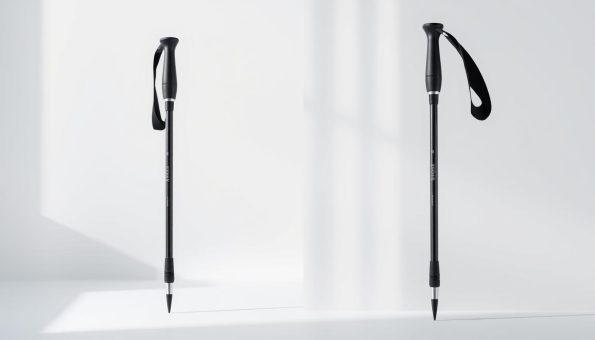
Black Diamond Distance Carbon Z
Why it stands out: reinforced fiber joints, push-button locks, long EVA grip, and interchangeable tips.
Specs: ~272 g per pair at 115 cm. Length range 100–130 cm. Folded 33–44 cm.
Leki Ultratrail / Neotrail FX.One Superlite
Why it stands out: race-focused Trail Shark system with cork grip and ultra-low weight.
Weights: ~268 g per pair (Ultratrail 115 cm); Neotrail about 226 g at 110 cm. Folded ~33 cm. Note: carbide tip only on many race configs.
REI Swiftland TT Carbon
Why it stands out: value-driven, chunky EVA grip, and easy button collapse for quick stow.
Specs: ~318 g per pair at 115 cm. Lengths 105/115/125 cm. Friendly replacement tips and strong U.S. retail support near $169–$170.
- Compare pair weights and folded lengths to match your vest quiver.
- Grip material affects sweat control—cork vs. EVA matters on long efforts.
- Confirm tip and basket compatibility and strap style before buying.
Best aluminum running poles: durable and affordable
Aluminum shafts give forgiving service and a clear path back to camp after a hard hit.
Black Diamond Distance Z
Workhorse design: 7075 aluminum, ~344 g per pair at 120 cm. The EVA grip is comfy on long days, and interchangeable rubber and carbide tips tune traction quickly.
The folded length sits around 33–44 cm, and snow baskets fit when winter travel appears. At about $140, it balances weight, durability, and packability for everyday use.
Budget-friendly options
Aonijie Folding 7075: ~350 g per pair, minimalist straps, firmer foam grips, internal nylon string. A great entry test if you want inexpensive trekking poles for smoother routes.
Camp Xenon Pro 2.0: 7075 alloy, ~340 g pair (115 cm), Kevlar tension cord, four-section fold, Velcro keeper, and interchangeable tips at roughly $110. Packs small for travel and tight quivers.
- Compare weight and folded length to match your pack and tolerance for grams.
- Check strap comfort and grip ergonomics to avoid hot spots on long days.
- Plan tip swaps (rubber vs. carbide) by surface and carry spare ends.
- Note warranty, parts support, and that alloy often bends, letting you finish an outing.
| Model | Material | Weight (g, pair) | Folded (cm) |
|---|---|---|---|
| Black Diamond Distance Z | 7075 aluminum | 344 | 33–44 |
| Aonijie Folding 7075 | 7075 aluminum | 350 | 34–42 |
| Camp Xenon Pro 2.0 | 7075 aluminum | 340 | 32–40 |
Use-case guide: match poles to terrain and goals
Select gear by the trip. Short races, alpine storms, technical ridgelines, and loaded fastpacks each ask different things from a shaft and locking system.
Ultrarunning and racing
Favor the lightest, fastest-deploying systems like the Leki Ultratrail / Neotrail FX.One Superlite, BD Distance Carbon Z, or REI Swiftland TT Carbon. These ride quietly in a vest and keep swing mass low.
Winter travel and snow
Prioritize adjustability and robust baskets. Models such as MSR DynaLock Ascent Carbon and BD poles that accept snow baskets give float and secure purchase on hardpack and soft snow.
Technical mountain routes vs. smooth singletrack
On jagged, rocky lines pick a stout, forgiving shaft—examples include the Black Diamond Distance Z or an adjustable FLZ alloy setup. On smooth singletrack, a light shaft maximizes efficiency with fewer lateral hits.
Fastpacking and shelter setup
Choose adjustable poles like the Leki Cross Trail FX Superlite or BD FLZ. They handle mixed terrain and double as tent support, but check folded length and how the grip stows in your pack or quiver.
- Test strap systems with gloves; they affect power transfer on steep climbs.
- Pick tips and baskets to match surface: carbide for hardpack and mixed dirt; rubber for long rock slabs.
- Weigh folded size versus carry method and plan spares for multi‑day trekking trips.
| Use | Top trait | Example | Why |
|---|---|---|---|
| Racing / ultras | Lowest mass | Leki Neotrail | Fast deploy, low swing weight |
| Snow / winter | Adjustable + baskets | MSR DynaLock | Float and secure locks in cold |
| Technical mountain | Durable, forgiving | BD Distance Z / FLZ | Bends, repairs, survives hits |
Sizing and fit: picking the right length for your body
Start sizing by standing naturally and holding the shaft so your elbow forms about a right angle. This gives a reliable baseline to match height and posture.
Fixed-length systems commonly span 100–130 cm (examples include Black Diamond Distance Carbon Z variants) while some models use 105/115/125 cm steps like the REI Swiftland TT Carbon.
Leki race sticks often offer 105–135 cm in 5 cm steps. The adjustable Leki Cross Trail FX Superlite covers compact 100–120 cm or standard 110–130 cm.
Shorter effective length helps on steep climbs by improving cadence and propulsion. Slightly longer settings aid reach and stability on descents when a pole can be lengthened.
- If between sizes, choose shorter for steep terrain, longer for mixed cruising.
- Factor hand size and grip diameter; comfort reduces fatigue and helps technique.
- Check folded length against your pack and quiver to avoid bounce or snagging.
- Longer grip extensions let you choke up or down quickly without adjusting locks.
| Fit test | Recommendation | Why it helps |
|---|---|---|
| Elbow ≈ 90° | Baseline length | Neutral posture, efficient stride |
| Steep climbs | Shorter setting | Better uphill cadence |
| Fast descents | Longer setting | Improved reach and control |
Reassess fit after a few outings; small tweaks improve comfort and reduce wasted energy. Avoid over-length shafts that raise your shoulders and cost effort over miles.
Care and maintenance: make your poles last many years
A few minutes of post-run care saves hours of grief and replacement cost down the line. Regular attention keeps grips comfy, locks reliable, and tips ready when you need them on long outings.
Quick inspection checklist
Inspect cords and joints. Foldable systems often fail at internal lines; MSR uses a plastic-sheathed wire that boosts durability. Check tension, sheath condition, and segment sockets for cracks.
Serviceable parts and simple swaps
Replace tips early. Worn rubber or carbide ends accelerate shaft wear. Brands like Black Diamond and Camp offer interchangeable tips; REI Swiftland’s full-size tip simplifies field swaps. Leki straps are removable—watch for fray and chafe.
- Rinse and dry segments after gritty or wet runs to protect buttons and locks.
- Retighten flip-lock screws and tensioners periodically.
- Swap baskets seasonally and ensure snug fit to avoid loss on the trail.
- Clean grips to remove salt that degrades foam and cork over time.
- Store dry and partly assembled to prevent corrosion and stuck fittings.
| Item | When to check | Field fix |
|---|---|---|
| Internal cord/wire | After heavy hits or yearly | Splice, replace, or send to service |
| Tip (rubber / carbide) | Every few outings | Carry spare tip and swap with mini driver |
| Straps & grips | Monthly during season | Replace straps; clean grips with mild soap |
Tip: carry spare tips and a small driver in your pack, keep proof of purchase, and check warranty steps for faster service when needed. Proper care extends useful life by many years and saves time and money.
Technique tips: how to use poles to engage the upper body
Learning proper technique moves load off tired legs and keeps pace steady. Small changes in planting, grip, and strap use let the upper body carry some effort so legs recover between steep pitches.
Uphill propulsion and efficient power hiking
Drive through the straps. Plant the tip slightly behind your foot and push down and back through the strap to transfer force into the shoulders and back.
Sync pole plants with your stride to build a steady cadence. Shift hand positions on long grips rather than changing length when using fixed shafts.
On sustained climbs, recruit the upper body to preserve leg strength and keep a constant forward tempo during long trekking efforts.
Downhill stability and cadence rhythm
Use poles as early warning sensors. Tap tips out front to check for loose rock or sudden drops and widen your stance slightly to increase balance on technical terrain.
Keep elbows relaxed and wrists neutral to avoid fatigue. Use straps to aid power transfer but avoid death-gripping the handles; this saves energy over time.
Practice these moves on moderate grades before race day so placement becomes automatic and reduces mistakes on rough ground.
- Plant tips slightly behind stance and push through straps to drive forward.
- Sync your plants with steps to maintain cadence on steep slopes.
- Adjust plant frequency to match speed—fewer, stronger plants at higher pace.
Brand spotlight and availability in the United States
Availability and after-sales support matter as much as specs when choosing a shaft system in the United States.
Where to shop: REI, Backcountry, brand sites, and specialty running stores stock top models and handle returns and warranties. Buying from a reputable U.S. retailer speeds repairs and gives easy access to replacement parts.
Black Diamond, Leki, REI: where to shop and support
Black Diamond offers wide U.S. distribution, a strong parts network, and many interchangeable tips and baskets. Expect easy service and solid parts availability from national dealers.
Leki focuses on race‑oriented models and length options. Many U.S. shops stock Ultratrail, Neotrail, and Cross Trail lines and can fit grips and straps in person.
REI Co‑op mixes value with nationwide returns and support. The Swiftland TT is easy to find and backed by REI’s return policy and in-store help.
- MSR — winter-ready DynaLock options at specialty shops.
- Camp — compact Xenon Pro 2.0 seen at outdoor retailers and online.
- Aonijie & Paria — budget entries sold through mass online channels.
| Brand | Representative models | Key advantage | Where to buy |
|---|---|---|---|
| Black Diamond | Distance Carbon Z, Distance Z, Distance FLZ | Parts ecosystem, interchangeable tips | REI, Backcountry, BD site |
| Leki | Ultratrail, Neotrail, Cross Trail FX | Race focus, many length options | Specialty run shops, Leki USA |
| REI Co‑op / Others | Swiftland TT Carbon; MSR DynaLock; Camp Xenon Pro | Returns, value, winter systems | REI stores, online retailers, local shops |
Practical tips: try grips in person to confirm diameter and strap comfort. Buy from reputable U.S. sellers to speed warranty work, access spare tips, and keep your gear serviceable season after season. Watch seasonal sales and support specialty shops to get expert fitting and local knowledge.
Conclusion
Decide what matters most: shaving minutes on long climbs or finishing rocky routes with gear intact.
Carbon picks reward speed and low weight on long efforts. Aluminum sets give resilience, easier field fixes, and value when terrain gets rough.
Match tips and baskets to conditions, keep cords, locks, and grips inspected, and buy from trusted U.S. retailers to ease repairs and parts. Let your typical routes and race calendar guide the final choice so your pole set makes climbs faster, descents steadier, and long days more enjoyable.
FAQ
Which material feels lighter during long miles?
Carbon fiber typically offers a lighter swing weight so arms fatigue less over many miles. Aluminum will feel heavier but adds durability that some runners prefer on rough routes.
Do aluminum shafts survive crashes better than carbon?
Yes. Aluminum tends to bend rather than snap, so you can often keep using a bent shaft. Carbon can crack or fracture under lateral loads, especially on rocks or falls.
Can I use the same poles for ultrarunning and winter travel?
You can, but choose wisely. Carbon race poles stay light for ultras. For winter or mixed terrain, aluminum or reinforced carbon with winter baskets and carbide tips gives better reliability.
Are foldable designs good for fastpacking and vests?
Foldable poles like the Black Diamond Distance Z stow compactly in packs and running vests. Fixed-length carbon poles pack small too, but adjustable telescoping models trade weight for versatility.
Which grips are best for sweaty hands or long efforts?
Cork offers comfort, sweat wicking, and less chafe on multi-hour outings. Foam is softer initially and cheaper but can compress and trap sweat, which may irritate skin on long runs.
When should I use rubber tips instead of carbide tips?
Use rubber tips on pavement, hard-packed trails, and rock to reduce noise and protect metal tips. Carbide tips give superior traction on ice, snow, and loose scree.
How do I pick the right length for my height?
For running, set poles so your elbow forms about a 90-degree angle when planted. Adjustable models let you tweak length for uphill, downhill, and terrain changes.
Do poles actually improve uphill speed and downhill stability?
Yes. Proper technique shifts load to the upper body, reducing leg fatigue uphill and adding balance and braking power on descents when timed with cadence.
How do I maintain folding joints and locking systems?
Rinse off grit after muddy runs, inspect cord and ferrules regularly, and apply a little dry lubricant to locks. Replace worn tips, straps, or baskets before they fail in the field.
Which models are top picks for lightweight performance?
Popular lightweight choices include the Black Diamond Distance Carbon Z, Leki Ultratrail or FX.One Superlite, and the REI Swiftland TT Carbon for fast runners seeking minimal weight.
What budget options give decent durability?
Aluminum models like the Black Diamond Distance Z (aluminum version), Camp Xenon Pro 2.0, and brands such as Aonijie offer strong reliability at lower prices.
How often do tips and baskets wear out?
Tip life depends on terrain and mileage; carbide lasts longer on rock, rubber wears faster on pavement. Inspect before long trips and carry spare tips and small tools to swap them.
Will poles break on technical mountain terrain?
They can. Lateral impacts and rock strikes increase failure risk, especially for carbon. Choose reinforced sections or aluminum if your routes include lots of scrambling and exposed traverses.
Are adjustable carbon options worth the trade-offs?
Adjustable carbon combines lightness with on-trail versatility but may increase snag points and cost. For varied use, many runners accept a small weight penalty for adjustability.
Where can I get support and parts in the United States?
Major retailers like REI and brand sites for Black Diamond and Leki offer replacement tips, straps, and warranty support. Local outfitters can also help with fittings and repairs.