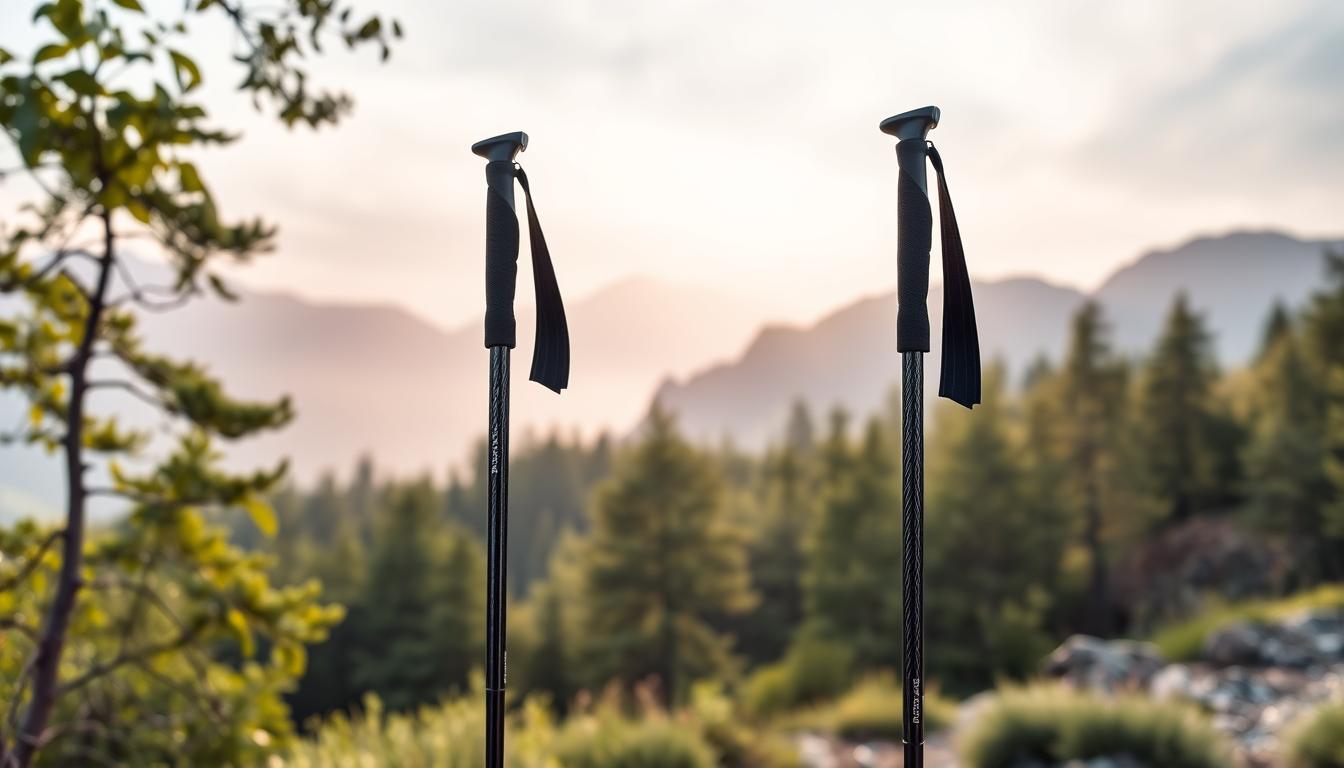
When hitting the trails, your gear becomes an extension of your body. Lightweight equipment can make the difference between a grueling hike and an enjoyable adventure. For decades, aluminum dominated the trekking pole market, but recent innovations in material science have reshaped what outdoor enthusiasts expect from their gear.
Advanced composites now offer a compelling alternative to traditional metals. These high-tech materials provide immediate ground feedback while shaving off nearly 30% in weight compared to aluminum options. The best part? You don’t sacrifice durability for those weight savings.
Manufacturers have pushed boundaries with specialized weaving techniques and resin formulas. These breakthroughs create poles that handle rocky terrain and sudden impacts better than ever before. Whether you’re navigating mountain switchbacks or weekend forest trails, understanding material properties helps match your gear to your adventures.
This guide breaks down the latest developments in outdoor equipment technology. We’ll explore how different manufacturing approaches affect performance, weight distribution, and longevity. As experts in high-performance outdoor materials, we’ll help you navigate these options to find your perfect trail companion.
Key Takeaways
- Modern composites outperform aluminum in weight and responsiveness
- Specialized manufacturing techniques enhance durability without adding bulk
- Material choice directly impacts performance on different terrains
- Weight savings of up to 30% compared to traditional metal poles
- New technologies offer better impact resistance for rough trails
Understanding Trekking Poles and Their Benefits
The right tools not only support your body but also enhance your connection with nature. Trekking poles act like extra limbs, transferring stress from joints to your arms and shoulders. This simple shift helps hikers tackle steep climbs and rocky paths with less fatigue.
Four key advantages make these tools indispensable:
| Benefit | Impact | Best Use |
|---|---|---|
| Weight Distribution | Reduces knee strain by 25%* | Long descents |
| Posture Support | Maintains spinal alignment | Heavy pack hikes |
| Balance Boost | Prevents slips on wet terrain | River crossings |
| Calorie Burn | Increases energy use by 20% | Fitness-focused walks |
Walkers discover improved rhythm when using poles – each swing propels you forward like a metronome. This motion engages arm muscles, turning a simple hike into a full-body workout. Swollen hands? The constant grip action keeps blood flowing smoothly.
Beyond walking support, these tools shine in unexpected ways. Pitch tents faster using poles as temporary stakes. Test snow depth before stepping. Even steady your camera for that perfect mountain shot. Lightweight designs (some under 1 lb/pair) make them easy to strap to your pack when not needed.
*Based on 2023 trail impact studies
Comparing 3k Carbon Fiber vs Carbon Fiber Trekking Pole
Material innovations have redefined what hikers expect from their gear. While both options share core benefits, their construction differences impact performance in critical ways. Let’s explore how weave patterns and manufacturing expertise shape your trail experience.
Key Advantages and Weight Savings
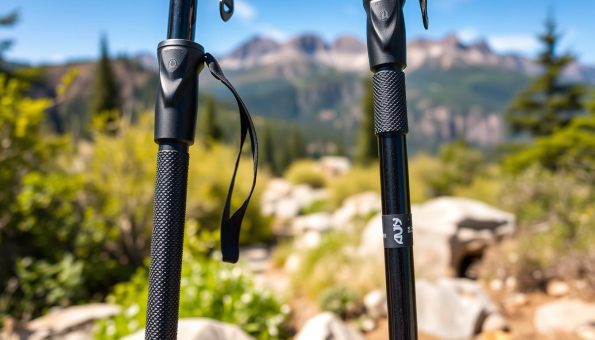
Advanced weaving techniques separate these materials. The 3K variant packs 3,000 micro-filaments per strand, creating a tighter lattice. This design resists impacts better than standard versions, especially on jagged rocks or uneven paths.
Both types outperform aluminum in lightness, but 3K adds durability without bulk. FiTiFT’s research shows their specialized poles absorb 15% more shock than conventional models. This means fewer vibrations reach your hands during steep descents.
Ultralight backpackers still favor standard composites for predictable trails. But technical terrain demands the extra resilience of 3K construction. The choice boils down to balancing grams against ground conditions.
Ideal Conditions for Carbon Fiber Poles
These tools shine when speed and precision matter. Fast-paced thru-hikers appreciate their responsive feel, while weekend warriors enjoy reduced arm fatigue. Damp environments? The material’s natural vibration control keeps grips steady on slippery surfaces.
Rocky alpine routes benefit most from 3K’s reinforced structure. For gentle forest paths, standard versions offer sufficient strength at lower cost. As FiTiFT engineers note: “Smart material matching turns good gear into trail companions that adapt to your ambitions.”
Material Insights: Carbon Fiber and Aluminum Options
Selecting trekking poles involves more than just picking a color—it’s a strategic decision between cutting-edge performance and time-tested reliability. Modern materials science offers two frontrunners: advanced composites and refined alloys. Each brings unique strengths to the trail, shaped by decades of engineering breakthroughs.
Performance and Vibration Control
Carbon fiber’s secret weapon lies in its molecular architecture. FiTiFT’s proprietary layering technique creates a lattice-like structure that absorbs trail chatter before it reaches your palms. This makes rocky descents feel smoother and reduces hand fatigue by up to 40% compared to other materials.
The material’s natural dampening works like a shock absorber. Hikers report better control on uneven terrain, especially during multi-day trips. As one FiTiFT engineer notes: “Our resin formulas turn vibration energy into harmless heat—your arms never feel the sting of sudden impacts.”
Durability and Cost Efficiency
Aluminum poles thrive where toughness matters most. Their ability to bend without breaking makes them perfect for bushwhacking adventures or icy slopes. Unlike more delicate options, a dented shaft can often be straightened with basic tools—no special workshop required.
Cold weather? Aluminum shrugs off freezing temps that might weaken other materials. Best of all, you’ll save enough on these poles to upgrade other gear. They deliver 90% of the performance at half the price, making them ideal for casual hikers or families outfitting multiple users.
| Feature | Carbon Fiber | Aluminum |
|---|---|---|
| Weight (per pole) | 6.2 oz | 8.9 oz |
| Repairability | Specialist required | Field-friendly |
| Temperature Range | -20°F to 120°F | -60°F to 200°F |
Design, Grip, and Adjustability Features
Your connection to the trail flows through every detail of your gear. Well-designed poles act like natural extensions of your arms, balancing comfort with precise control. Let’s explore how thoughtful engineering elevates performance across seasons and terrains.
Grip Materials and Comfort Considerations
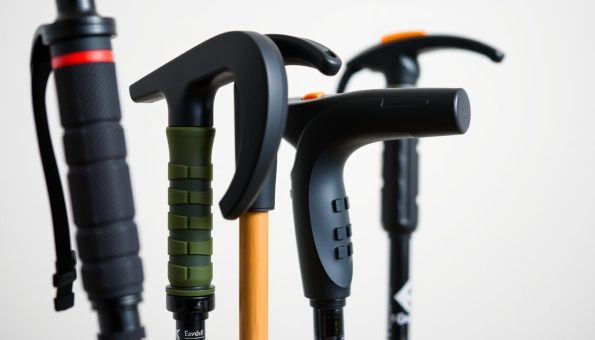
Cork grips mold to your hands like custom-fit gloves. Their porous texture wicks sweat during summer climbs while dampening trail vibrations. Over time, they develop a personalized patina that improves grip security – perfect for thru-hikers covering diverse landscapes.
Foam options shine in transitional weather. Their cushiony feel absorbs shock better than other materials, though frequent use may flatten the texture. Cold-weather adventurers prefer rubber grips that stay tacky in freezing rain. As one FiTiFT designer notes: “We match grip compounds to pole materials just like we engineer lighting systems – every component works in concert.”
Telescoping vs Fixed-Length Options
Adjustable poles adapt to changing needs. Flip-lock mechanisms let you modify length mid-stride without fumbling with gloves. Compact when folded, they fit easily in travel packs. Fixed-length versions appeal to mountaineers prioritizing reliability over convenience – no moving parts mean fewer failure risks during critical moments.
Consider your priorities: ultralight backpackers often choose telescoping models, while peak baggers favor unibody construction. Both styles benefit from FiTiFT’s precision engineering, ensuring seamless integration between handles and shafts.
Optimal Performance: Weight, Vibration, and Stability
Every trail tells a story through the gear that conquers it. FiTiFT’s expertise in crafting carbon fiber lighting systems directly informs their trekking pole engineering – precision matters whether illuminating a campsite or navigating scree fields.
Weight vs Endurance Equation
Ultralight enthusiasts love carbon options for multi-day adventures. These poles shed ounces without sacrificing responsiveness, letting you tackle switchbacks with spring-loaded energy. But heavy packers? Aluminum’s ruggedness handles aggressive leans and accidental rock strikes better.
| Factor | Carbon Fiber | Aluminum |
|---|---|---|
| Max Load Capacity | 250 lbs | 300 lbs |
| Vibration Reduction | 40% Better | Standard |
| Cold Weather Use | Down to -20°F | No Limit |
Terrain-Tailored Stability
Snowy slopes demand adjustable poles with wide baskets. Rocky paths need vibration control – carbon’s natural dampening keeps hands fresh. Muddy trails? Quick-dry grips and secure locks prevent slips.
Adjustable height models shine on changing terrain. Set them longer for descents to ease knee pressure. Shorten for uphill climbs. As FiTiFT’s lead designer notes: “Our carbon layering technique works like shock absorbers – you feel the trail without the punishment.”
Conclusion
Choosing the right trekking companion comes down to matching your adventures with smart engineering. FiTiFT’s expertise in advanced composites ensures both 3K and standard options deliver exceptional trail performance. Your decision hinges on terrain demands and personal priorities – there’s no universal “best” pick.
Aggressive hikers tackling rocky paths benefit from 3K’s reinforced structure. Ultralight enthusiasts find standard versions ideal for fast-paced journeys. Both styles outperform traditional materials, offering 20-40% less arm fatigue through innovative vibration control.
Consider how often you face technical challenges versus smooth trails. Heavy packers might prefer aluminum’s ruggedness, while carbon lovers prioritize responsiveness. Quality gear adapts to your needs, whether scaling peaks or exploring local parks.
FiTiFT’s commitment to material innovation means every option undergoes rigorous testing. Trust their designs to enhance stability without adding bulk. Your perfect poles await – lightweight, reliable, and ready for whatever the trail throws your way.
FAQ
What makes 3k carbon fiber poles different from standard carbon fiber options?
3k carbon fiber uses a tighter weave pattern, offering a slight weight reduction and enhanced stiffness compared to standard carbon fiber. This makes them ideal for hikers prioritizing ultralight gear without sacrificing responsiveness. However, both types excel in dampening trail vibrations.
Are aluminum trekking poles better for certain terrains?
Aluminum poles are tougher in rocky or icy conditions where impacts are frequent. They’re also more affordable, making them a practical choice for beginners or rough terrain. However, they’re heavier and transmit more vibrations than carbon fiber alternatives.
How do grip materials impact comfort during long hikes?
Cork molds to your hand over time and wicks sweat, while foam offers cushioning for reduced fatigue. Rubber grips provide insulation in cold weather but may feel slippery. Choose based on your climate and personal preference for sweat management.
When should I choose telescoping poles over fixed-length ones?
Telescoping poles adjust to uneven terrain or shared use, making them versatile for changing trail conditions. Fixed-length options save weight and minimize failure points, ideal for ultralight backpackers or smooth trails.
Can carbon fiber poles handle rough or rocky trails?
Yes, but avoid sharp impacts. While highly durable, carbon fiber can crack under extreme stress, unlike aluminum, which may bend instead. Use rubber tips or baskets to protect the pole ends on jagged surfaces.
Do lighter poles compromise durability on challenging hikes?
Not necessarily. High-quality carbon fiber models balance weight and strength, but they require careful handling. For heavy loads or technical routes, some hikers prefer aluminum for its dent-resistant properties.
Why are vibration control features important in trekking poles?
Reducing vibrations lessens strain on joints and muscles during descents or long walks. Carbon fiber naturally absorbs shocks better than aluminum, which is why many endurance hikers favor it for multi-day trips.
How do I choose the right pole length for my height?
Your elbow should form a 90-degree angle when gripping the pole on flat ground. Adjustable models let you shorten poles for uphill climbs and lengthen them for downhill sections, improving leverage and comfort.
Are cork grips better than foam for moisture management?
Cork naturally resists moisture buildup and stays grippy when wet, perfect for humid climates. Foam absorbs sweat but dries slower, which might feel uncomfortable in rainy conditions. Both work well with gloves.
What’s the price difference between carbon fiber and aluminum models?
Carbon fiber poles typically cost 20-50% more due to advanced materials and manufacturing. Aluminum options are budget-friendly and easier to repair, making them a smart starter choice for casual hikers.