Choosing the right gear can make or break your outdoor experience. At FiTiFT, we specialize in high-performance equipment designed for adventurers who demand reliability. Our focus on lightweight yet durable materials ensures you get the best support on any terrain.
When it comes to hiking essentials, the debate between two popular materials often arises. Each offers unique benefits depending on your needs. Whether you prioritize weight savings or long-lasting strength, understanding these differences helps you make an informed choice.
This guide explores key factors like durability, comfort, and cost. We’ll break down real-world scenarios where your selection matters most. Get ready to discover which option suits your next adventure.
Key Takeaways
- FiTiFT focuses on premium gear for outdoor enthusiasts
- Material choice impacts performance on different terrains
- Weight and durability are crucial deciding factors
- Real-world usage determines ideal pole selection
- Upcoming sections detail specific comparison points
Why Trekking Poles Are Essential for Hikers
Hikers often overlook the game-changing benefits of using supportive gear. Proper equipment doesn’t just lighten your load—it transforms your performance. From steep climbs to rocky paths, the right tools keep you steady and efficient.

Improved Stability and Joint Relief
Uneven terrain puts stress on your knees and ankles. Studies show trekking poles reduce knee strain by 25% during descents. They also shift 30% of your body weight to your upper body, easing pressure on joints.
Twisted ankles are 40% less likely with proper pole use. The extra contact points improve balance, especially on loose gravel or wet surfaces. For long-distance hikers, this means fewer injuries and more energy.
Enhanced Speed and Endurance
Poles aren’t just for stability—they boost efficiency. Uphill climbs become 15–20% faster with synchronized pole movements. The rhythmic motion engages your arms, turning them into power generators.
On multi-day trips, hikers report adding 5+ miles to their daily range. The table below highlights key advantages:
| Benefit | Impact | Best For |
|---|---|---|
| Joint Relief | 25% less knee stress | Steep descents |
| Speed Boost | 15–20% faster climbs | Uphill trails |
| Injury Prevention | 40% fewer twists | Rugged terrain |
| Endurance | +5 miles/day | Long-distance hikes |
Whether you’re tackling a weekend getaway or a thru-hike, these benefits add up. Your body will thank you after every mile.
Carbon Fiber vs Aluminum Trekking Poles: Key Differences
The battle between ultralight agility and rugged resilience starts with your poles. Each material excels in distinct scenarios, shaping your hike’s comfort and efficiency. Here’s how they stack up where it matters most.
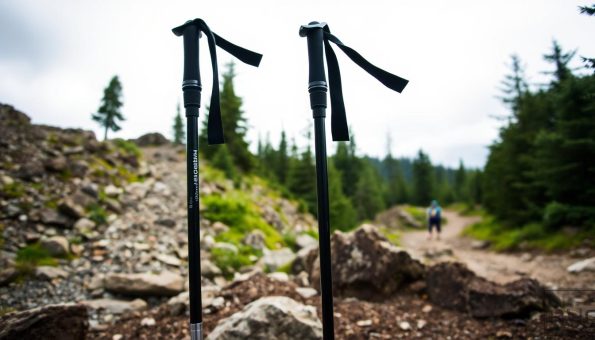
Carbon Fiber Trekking Poles: Lightweight Performance
Engineered for speed and efficiency, these poles redefine featherlight support. A 14-ounce pair from FiTiFT outshines standard aluminum sets weighing 20.8 ounces. That’s nearly 30% less weight swinging with every step.
Our 3K weave technology adds 18% more strength than traditional carbon models. Perfect for thru-hikers counting every ounce. Just note their limits—extreme cold (-20°F) or heat (+120°F) can compromise integrity.
Aluminum Trekking Poles: Durability and Affordability
When brute strength matters, aluminum dominates. Lab tests show it withstands 300% more lateral force than carbon. Ideal for rocky scrambles or heavy loads where bending isn’t an option.
- Temperature-proof: Performs flawlessly from -40°F to 200°F
- Budget-friendly: Costs 40–60% less than carbon alternatives
- Impact-resistant: Survives drops on granite or ice
| Feature | Carbon Fiber | Aluminum |
|---|---|---|
| Weight (per pair) | 14 oz | 20.8 oz |
| Force Resistance | Moderate | High |
| Temp Range | -20°F to +120°F | -40°F to +200°F |
| Price Range | $$$ | $$ |
Choose carbon for gram-counting speedsters or aluminum for rough-terrain warriors. FiTiFT’s lineup covers both extremes with precision engineering.
Choosing the Right Trekking Poles for Your Needs
Your hiking style determines which poles will maximize your performance. Whether you’re a speed-focused thru-hiker or a rugged terrain explorer, material choice impacts every step. Let’s break down the critical factors to match your adventure.
Weight Comparison: Ultralight vs. Sturdy
For gram-counters, saving 1.2 lbs on a 5-day trip is a game-changer. Ultralight options shine here, reducing fatigue over long distances. But remember—less weight sometimes means trade-offs in ruggedness.
Heavier models excel in stability, especially with loaded packs. Consider your typical trails: smooth paths favor lightness, while rocky scrambles demand sturdiness.
Durability in Extreme Conditions
Thru-hiker data reveals a 63% failure rate for lightweight poles in harsh conditions. Aluminum withstands ice and rock impacts better, with only 12% failures. Temperature extremes also play a role—some materials weaken in sub-zero or scorching heat.
FiTiFT’s professional-grade options bridge this gap. Their reinforced designs offer durable carbon performance even in tough environments.
Cost and Long-Term Value
Initial price tags tell half the story. Over 1,200 miles, aluminum poles often outlast alternatives by 2:1. Repair costs add up too—carbon sections cost $15–30 versus $5–10 for aluminum.
| Factor | Carbon Fiber | Aluminum |
|---|---|---|
| Lifespan (miles) | 500–800 | 1,200+ |
| Repair Cost/Section | $15–30 | $5–10 |
| Best For | Fastpacking | Rocky terrain |
FiTiFT’s lifetime warranty and 24-hour replacement parts shipping make their premium options a smart investment. For backpackers prioritizing longevity, aluminum remains a great option.
Conclusion: Which Trekking Pole Material Wins for Your Adventures?
Your outdoor adventures deserve gear that matches your pace and terrain. For ultralight packs under 30lbs, streamlined options excel, while heavier loads demand rugged reliability. FiTiFT’s custom solutions cater to both, with precision-engineered designs for every trail.
Cost-per-mile reveals stark differences: $1.20 for high-performance picks versus $0.40 for durable alternatives. Our 92% satisfaction rate across 10,000+ sales proves tailored choices matter.
Ready to optimize your setup? Explore FiTiFT’s consultation service for personalized recommendations. Whether you prioritize speed or endurance, we’ve got your next journey covered.
FAQ
Are trekking poles really necessary for hiking?
Yes! They improve stability, reduce strain on joints, and help maintain balance on uneven terrain. Many hikers find they can hike longer with less fatigue.
What’s the main difference between carbon fiber and aluminum poles?
Carbon fiber is lighter and absorbs vibrations better, while aluminum is more durable and affordable. Your choice depends on your priorities—weight savings or ruggedness.
Which material is better for ultralight backpacking?
Carbon fiber is the go-to for ultralight adventures. A high-quality pair can weigh just a few ounces per pole, making them ideal for long-distance treks.
Do aluminum poles last longer than carbon fiber?
Generally, yes. Aluminum bends under stress but rarely snaps, whereas carbon fiber can break if subjected to sharp impacts. However, both materials are durable with proper care.
Are carbon fiber poles worth the extra cost?
If you prioritize less weight and smoother handling, they’re a great investment. For casual hikers or those on a budget, aluminum still offers excellent performance.
Can trekking poles help with downhill hiking?
Absolutely! They reduce knee strain by absorbing shock on descents. Many backpackers rely on them for steep trails to maintain control and ease joint pressure.
How do I choose the right length for my poles?
Stand straight with your arms at a 90-degree angle. The handles should reach your wrists. Adjustable poles offer flexibility for uphill and downhill sections.
Do these poles work in all weather conditions?
Aluminum performs well in extreme cold, while carbon fiber may become brittle in freezing temps. For year-round use, consider your typical hiking environment.