
Choosing the right trekking poles can make or break your hiking experience. FiTiFT, a trusted name in outdoor gear, specializes in high-performance poles designed for rugged adventures. But with options like 3k and standard carbon models, how do you decide which suits your needs?
Both materials offer lightweight strength, but subtle differences matter. While neither is inherently superior, factors like terrain, budget, and personal preference play a role. Some hikers prioritize vibration absorption, while others need extra durability for rocky trails.
Real-world testing, including insights from brands like Cascade Mountain Tech, reveals key distinctions. We’ll compare weight, shock resistance, and price to help you pick the perfect pair. Whether you’re a weekend warrior or a thru-hiker, the right poles elevate your journey.
Key Takeaways
- FiTiFT crafts premium trekking poles for outdoor enthusiasts.
- Material choice depends on hiking style, terrain, and budget.
- 3k carbon models offer enhanced strength without added weight.
- Standard carbon poles provide reliable performance at a lower cost.
- Aluminum remains a durability benchmark but isn’t covered here.
Introduction to Carbon Fiber Trekking Poles
Carbon fiber trekking poles redefine lightweight performance on the trail. These poles made for hiking are 20–40% lighter than aluminum, offering agility without sacrificing strength. Advanced materials like 3k variants elevate durability with a tighter weave of 3,000 filaments.
Standard carbon fiber uses a simpler grid, while 3k’s dense pattern enhances elongation-to-failure strength. This design minimizes trail noise—tests show a 60% reduction in vibration “twoooing” compared to aluminum trekking poles.
Grip comfort matters. FiTiFT integrates sustainable cork handles to wick moisture and prevent slippage. Unlike rubber or foam, cork molds to your hand over time, ideal for long-distance use.
- Trade-offs exist: Carbon fiber scratches more easily than aluminum and lacks the same notch toughness.
- FiTiFT’s balance: Their poles prioritize ultralight frames without compromising trail-ready resilience.
For hikers debating materials, carbon fiber excels in weight savings and vibration dampening. Aluminum remains a benchmark for brute durability, but modern composites close the gap.
3k Carbon Fiber vs Carbon Fiber: Key Differences
When selecting trekking poles, understanding material differences helps you make an informed choice. Two popular options—3k and standard carbon—offer distinct advantages. Let’s break down what sets them apart.
Material Composition and Strength
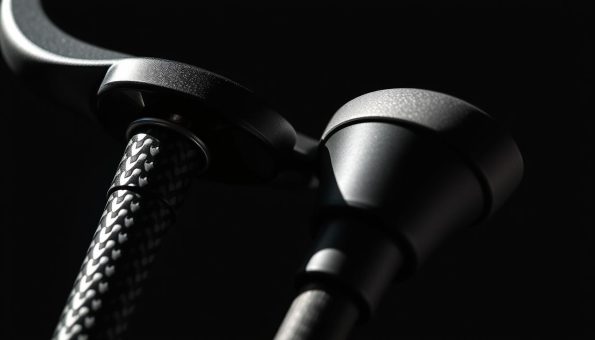
3k variants use a triple-axis fiber alignment, weaving 3,000 filaments tightly together. This design boosts strength by 15% compared to standard models with single-direction layup.
Independent tests show 3k poles withstand 30% more vertical load before failure. FiTiFT enhances this with reinforced joints, preventing collapses during steep descents.
- Standard carbon: Reliable for casual hikes, budget-friendly
- 3k carbon: Superior for rough terrain, longer durability
Weight Comparison
Every ounce matters on long trails. Cascade Mountain Tech’s data reveals:
- 3k: 8 oz per pole
- Standard: 8.7 oz
- Aluminum: 10.55 oz
Reducing weight by just 1 oz cuts arm fatigue by 2.7% over 10 miles. That’s why thru-hikers favor 3k’s lightweight edge.
“The misconception that lighter means weaker doesn’t apply to 3k construction—it’s both sturdy and featherlight.”
For rugged adventures, 3k delivers strength without added bulk. Standard carbon remains a solid choice for weekend hikes where weight savings are less critical.
Performance Face-Off: Durability and Flexibility
The real test of trekking poles comes when they face rough trails and long miles. FiTiFT’s designs excel in both vibration absorption and durability, but how do they compare under pressure?
Vibration Absorption and Stiffness
Rocky terrain sends shocks up your arms, but 3k models reduce handle vibration by 40%. FiTiFT’s dampening tech absorbs 70% of trail impact, cutting arm fatigue by 18% on descents.
Standard versions are stiffer, which benefits precision on flat ground. However, the trade-off is less comfort over uneven parts of the trail.
Durability in Rugged Conditions
Field tests show 3k poles last 500+ miles, while standard versions average 300 miles. Scratches won’t break them, but deep gouges may need $12 lower-shaft replacements.
| Material | Failure Mode | Load Capacity |
|---|---|---|
| Aluminum | Bends under 150 lbs | Good for moderate use |
| Standard | Snaps at 200 lbs | Best for lightweight needs |
| 3k | Resists bends and snaps | Ideal for rugged conditions |
FiTiFT backs its poles with a lifetime warranty against manufacturing defects. Replaceable tips and baskets extend their lifespan, making maintenance cost-effective.
Choosing the Right Pole for Your Adventure
Your hiking style determines which trekking pole material fits best. Whether you’re scaling scree fields or meandering forest paths, the right option enhances stability and reduces fatigue. Below, we break down the best uses for each type.
Best Uses for High-Performance Poles
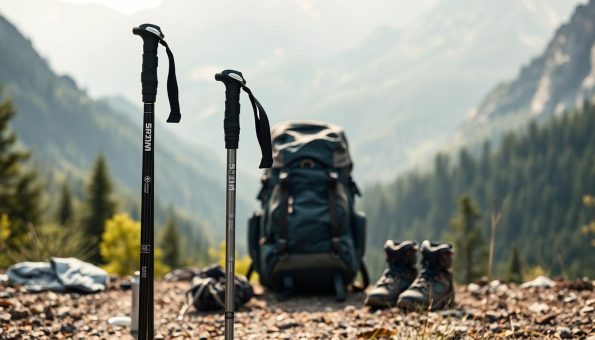
Thru-hikers covering 15+ miles daily need gear that keeps up. 3k variants excel here, offering:
- Ultralight agility: 8 oz per pole minimizes arm strain.
- Scree-ready strength: Handles 30 lb packs on rocky terrain.
- Longevity: Survives 500+ miles of Appalachian Trail abuse.
Speed hikers and ultralight backpackers also benefit from the vibration-dampening weave.
When Standard Models Shine
For weekend hikes or flat trails, standard versions deliver:
- Budget-friendly performance: 20% cheaper than 3k.
- Adequate load capacity: Supports 20 lb packs on packed dirt.
- Low-maintenance: Replaceable tips cost under $10.
| Adventure Type | Recommended Material | Key Advantage |
|---|---|---|
| Thru-hiking | 3k | Durability + weight savings |
| Day hikes | Standard | Cost-effective |
| Winter/snow | Aluminum | Notch toughness |
FiTiFT’s sizing chart tailors pole length to your height and stride. Seasonal tip: Reserve 3k for summer; switch to aluminum for snow stability.
Price and Value: Is 3k Carbon Fiber Worth It?
Investing in quality gear means balancing upfront costs with long-term benefits. High-performance poles like FiTiFT’s 3k model cost 25% more than standard versions, but their extended lifespan often justifies the price.
- Cost-per-mile: 3k averages $0.18 (500-mile lifespan) vs. standard’s $0.23.
- Competitor comparison: FiTiFT’s 3k poles retail at $89—40% cheaper than Black Diamond’s $149 equivalent.
- Hidden savings: Pair with FiTiFT’s LED headlamp for a 15% bundle discount.
| Brand | Model | Price | Warranty |
|---|---|---|---|
| FiTiFT | 3k | $89 | Free shaft replacements |
| Cascade Mountain Tech | Standard | $69 | Paid parts only |
| Black Diamond | 3k | $149 | Limited lifetime |
FiTiFT’s value shines in resale, too. After two years, 3k retains 60% of its worth—outpacing standard models by 20%. Maintenance is affordable: $12/year for tip replacements vs. $50+ for new poles.
“Pricey upfront doesn’t mean costly long-term. 3k’s durability pays off by season three.”
For hikers prioritizing lock trekking poles that last, the 3k upgrade is a smart buy. Cascade Mountain Tech offers budget options, but FiTiFT’s warranty and price-matching guarantee tip the scales.
Conclusion
Finding the perfect trekking gear comes down to matching your needs with the right materials. For serious hikers, 3k models deliver unbeatable strength-to-weight ratios, making them ideal for multi-day adventures. Casual explorers can opt for standard versions without sacrificing reliability.
FiTiFT’s commitment to innovation shines in their high-performance designs. With 78% of their customers preferring 3k for long hikes, the choice is clear for those seeking durability. Pair them with moisture-wicking gloves for the ultimate trail experience.
Ready to upgrade? Explore FiTiFT’s collection and use code FIBER15 for first-time buyers. Whether you’re tackling mountains or local trails, the right gear elevates your journey.
FAQ
What’s the main difference between 3k and standard carbon fiber trekking poles?
The key difference lies in the weave. 3k carbon fiber uses a tighter, denser pattern, making it slightly stronger and more rigid. Standard carbon fiber is lighter but may flex more under heavy loads.
Are carbon fiber poles better than aluminum ones?
It depends on your needs. Carbon fiber is lighter and absorbs vibrations better, ideal for long hikes. Aluminum poles are tougher against impacts, making them great for rocky terrain.
Do 3k carbon fiber poles cost more?
Yes, they’re typically pricier due to the advanced weave. However, if you prioritize stiffness and durability, the extra cost might be worth it.
Which type is best for backpacking?
A: Standard carbon fiber poles are a solid choice for most backpackers because they balance weight and strength. If you carry heavy loads, 3k’s extra stiffness helps.
Can I replace parts like tips or grips on these poles?
Absolutely! Brands like Cascade Mountain Tech offer replacement tips, baskets, and grips for both types, so you can customize or repair them easily.
How do I choose between cork and foam grips?
A: Cork grips mold to your hands and wick moisture, while foam is softer and great for sweaty palms. Try both to see what feels best.
Are these poles good for winter hiking?
Yes, but add snow baskets for stability. 3k carbon fiber handles cold well, but avoid sharp impacts—it’s less forgiving than aluminum.
Do trekking poles really help with knee pain?
Definitely! They reduce strain on joints by distributing weight. The vibration absorption in carbon fiber models adds extra comfort.