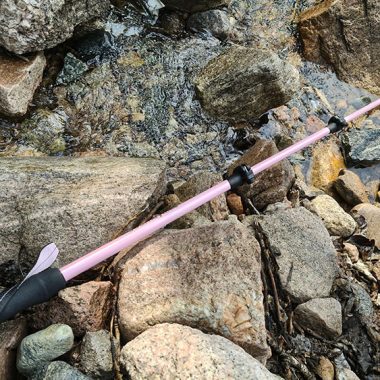
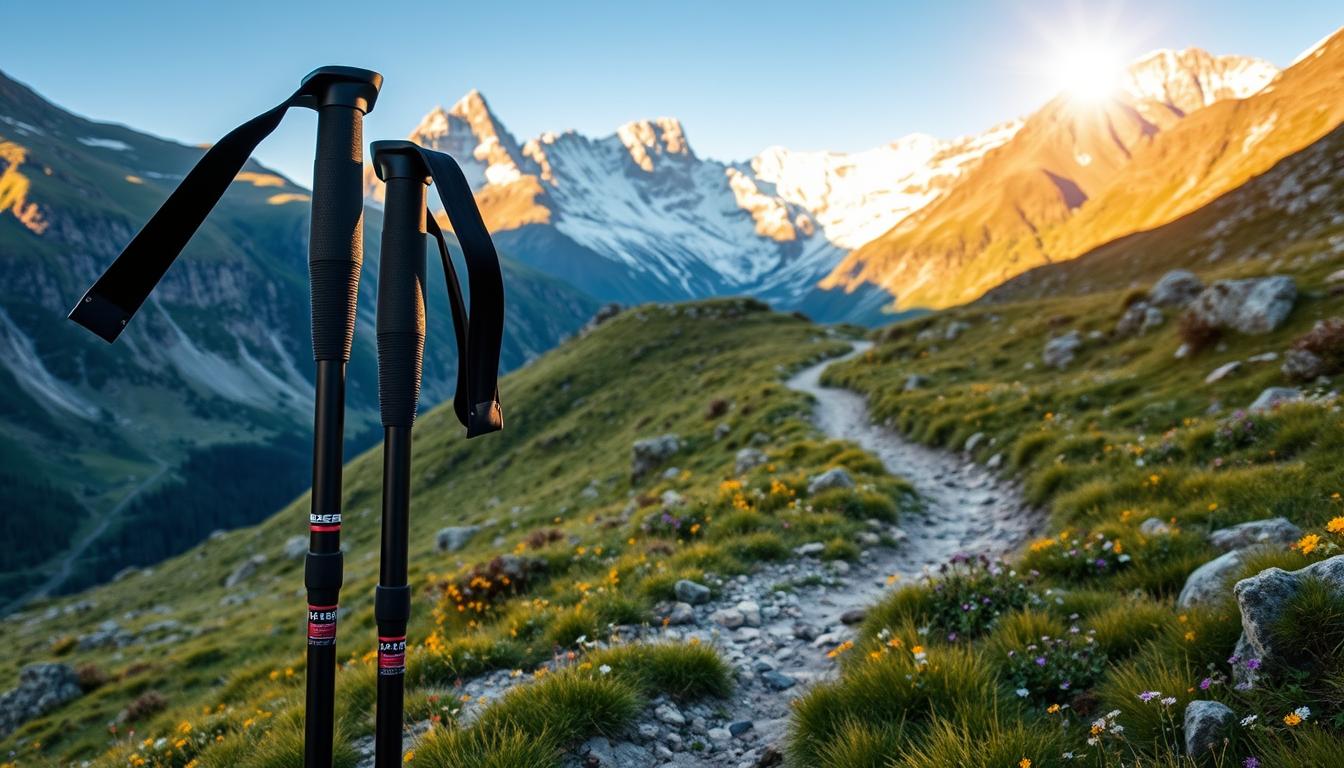
Quick guide: We tested eight leading running poles across mixed terrain, from smooth dirt to steep slabs. Our hands-on work checks adjustability, packability, comfort, and durability so you can pick gear that fits your goals.
Highlights: Winners cover everyday use, racing, ultras, winter, and value. Notable picks include Black Diamond Distance FLZ for daily use, Leki Neotrail/Ultratrail FX.One Superlite for race speed, REI Swiftland TT Carbon for fastpacking, MSR DynaLock Ascent Carbon for snow and backcountry, and Aonijie Folding Aluminum as a budget option.
We explain trade-offs like carbon vs. aluminum, fixed versus adjustable shaft, folded length for vest storage, and grip style. Expect clear spec snapshots—pair weight, set vs adjustable length, foam or cork grip, and wrist systems—so comparisons are fast.
Key Takeaways
- Choose a durable daily workhorse for mixed trails; pick a superlight carbon set for races.
- Adjustable poles help with varied terrain; fixed length often saves weight and simplifies use.
- Packability matters for ultra and fastpack vests—check folded length before buying.
- Grip and wrist system affect comfort on long, hot, or cold days.
- Swap tips and baskets to match local terrain and season.
- Poles cut joint load, boost uphill power, and add stability on technical ground.
Editor’s take: how we picked the best trail running poles in the United States
We put popular running poles through Pacific Crest Trail miles and White Mountains peak days to see how they hold up.
Our process blends long training days, a 100-mile race simulation, and hard peak runs. We scored adjustability, packability, durability, and grip comfort with real use in mind.
Who this guide serves: U.S.-based trail runners and racers looking for clear buying signals, honest MSRP context, and gear that fits vests and quivers.
We weighted swing feel and pair weight because runners move poles at cadence. We also tested fold length (33–44 cm common), cord wear, and lock resilience by folding and redeploying repeatedly.
What “best” means for race, ultra, and everyday use
Best blends stability, comfort, and durability at realistic weights and prices. Fixed-length carbon may win races; adjustable options often serve mixed terrain and fastpacking better.
“Poles that survive a trip, a catch on a rock, or a wet stream crossing earn our highest marks.”
- We checked grips (EVA vs cork) and wrist systems for chafe and slip.
- We noted when trekking features added true value for runners.
Quick comparison: carbon vs aluminum, fixed length vs adjustable
Deciding material and adjustability early saves surprises on long climbs and technical descents. Choose by matching gear to terrain, storage needs, and how often you’ll stow a pair.
Packability and folded length for vest or quiver storage
Folding designs usually collapse into three sections. Folded lengths commonly sit between 33–44 cm, which fits most vest quivers.
Four-section aluminum models can fold shorter, ideal when pack space is tight. Remember that handle bulk matters as much as folded length. A thick cork grip can jam while a slim foam handle slips in easily.
Durability trade-offs: bend vs break in real mountain terrain
Carbon saves weight and aids fast cadence, but it can snap under lateral load from a rock strike. Aluminum adds grams but bends instead, often letting you limp to safety.
Pick carbon if every gram counts; pick alloy when you expect rock strikes and tumbles.”
| Feature | Carbon | Aluminum |
|---|---|---|
| Weight | Lowest — best for racing | Higher — noticeable in long cycles |
| Failure mode | Can snap under side load | Tends to bend, repairable in field |
| Packability | Often Z-fold 33–44 cm | Three- or four-section, can fold shorter |
| Best use | Speed-focused running and racing | Tough mountain use, trekking, and value |
- Adjustable locks add weight but give quick length changes for steep ups, long descents, and shelter setup.
- Choose based on local terrain severity, how often you stow gear, and whether every extra gram matters.
Best overall: Black Diamond Distance FLZ (adjustable aluminum workhorse)
This aluminum Z-fold pair balances day-to-day durability with quick on-trail tweaks. It shines on rocky and rooty stretches where a lighter carbon set might snap.
Why it wins for daily trail use and technical terrain
Durable build: The alloy shaft tolerates side-loads and catches better than many carbon options. That resilience matters on technical terrain.
Pack-friendly: The Z-fold stows short and slides into most vest quivers without snagging thanks to low-profile grips.
Key specs
- Length: Adjustable across common ranges (sizes vary by model).
- Weight: ~390–450 g per pair depending on size.
- Grip: Firm foam that offers control but can feel slick when very sweaty.
- Wrist system: Nylon straps—fast to set, though they can chafe in humid conditions.
- Extras: Snow basket compatibility and MSRP around $179.
“Great option for newer runners and fastpackers who need forgiving hardware that won’t fail at the first rock strike.”
Best lightweight/racing: Leki Neotrail / Ultratrail FX.One Superlite (carbon)
If every gram counts on steep climbs, this carbon pair trims swing weight so you can hold a fast cadence. These fixed-length sticks tip the scale at roughly 226–268 g per pair depending on length, making them among the lightest options for race day.
Strap and grip details
Trail Shark on the Ultratrail model locks your hand to the grip for direct power transfer without squeezing. The Neotrail variant uses minimalist straps that dry fast and cut chafe.
- Cork grips with flattened sides aid control and precise tip placement on technical sections.
- Compact folded length (~33–35 cm) fits most vest quivers for quick deploys at aid stations.
- MSRP sits near $200–$250; designed for racers and experienced users, not constant rock abuse.
“These are featherweight carbon rockets built to save energy on long ascents.”
Tip: If you expect frequent scrambles or need adjustability, consider a more robust or telescoping option like a Black Diamond model instead.
Best for ultrarunning and fastpacking: REI Swiftland TT Carbon
REI’s Swiftland TT Carbon is a clear value pick when long miles and simplicity win over micro-weight savings. The fixed-length option comes in 105, 115, and 125 cm and weighs about 318 g per pair at 115 cm.
The molded EVA foam grip feels comfortable and ambidextrous. Nylon wrist straps stay secure on multi-hour efforts. A quick-deploy push-button makes collapsing and re-extending faster than many Z-fold designs.
Field-friendly features include full-length trekking-style tips that simplify on-trail maintenance. Swap tips quickly if carbide wears out during a long push. That practicality helps when you need a dependable pole pair far from aid.
- Weight: ~318 g per pair (115 cm)
- Grip: EVA foam molded, wide for some hands
- Deployment: Push-button quick-deploy
- Price: ~ $169 at REI — easy sizing and return options in the U.S.
A practical carbon choice for ultrarunners and fastpackers who want comfort, serviceable tips, and simple use.”
| Feature | Swiftland TT Carbon | Notes |
|---|---|---|
| Length options | 105 / 115 / 125 cm | Pick fixed length to match height and terrain |
| Weight | 318 g per pair (115 cm) | Light enough for ultras, stiffer than many race carbon sets |
| Grip & strap | EVA foam + nylon loops | Comfortable, may sit tight in some vest quivers |
| Tip type | Trekking-style full-length | Easy field replacement |
| MSRP | ~$169 | Good value vs. distance carbon race sticks and Black Diamond options |
Best for winter running and mixed snow: MSR DynaLock Ascent Carbon Backcountry
Winter use calls for gear that resists cold, sheds snow, and locks length without fuss. MSR’s DynaLock Ascent Carbon Backcountry answers that brief with stout features built for snow travel and mixed mountain days.
Key fit and function: available in 100–120 cm and 120–140 cm ranges, they weigh about 470 g per pair (100–120 cm). Flip-locks include an external tensioner so you can adjust length with gloved hands.
The foam grip has a lower choke for varied hand positions on sidehills. A hooked handle beak helps lift snowshoe heel risers during mixed trips.
- Built for cold runs and fast-and-light snowshoeing with robust snow baskets.
- Plastic-sheathed wire cord resists stiffness and abrasion in low temps.
- Accepts quick tip and basket swaps for ice, packed snow, or wet shoulder-season ground.
“Excellent crossover gear when winter training blends with backcountry travel.”
Bottom line: If winter is a major training block, choose these as a single adjustable solution that holds up in storms. For lighter three-season use, a fixed carbon option or a compact Black Diamond race pair will feel snappier and pack smaller.
Best budget pick: Aonijie folding aluminum poles
If you want to test pole-assisted pacing without spending much, Aonijie’s folding 7075 aluminum set is a practical starter. At roughly 350 g per pair, these folding poles sit near name-brand alloy weight while staying very affordable.
The low-profile foam grip and minimalist straps make them easy to stash in a vest or pack. Fixed lengths (110/120 cm) keep use simple, so double-check sizing before you buy.
These sticks work best on smoother singletrack, fire roads, and runnable climbs. The internal cord is unlined nylon, so expect limited durability under heavy side loads and frequent rock strikes.
- Price: ~ $56 — great value for first-time users.
- Use case: short to mid-distance runs, group loaners, and occasional ultras.
- Trade-off: light and compact, not built for high-load technical abuse.
| Feature | Aonijie 7075 | Notes |
|---|---|---|
| Length | 110 / 120 cm | Fixed — measure before buying |
| Weight | ~350 g per pair | Competitive vs. entry alloy sets |
| Grip | Firm low-profile foam | Stows easily in most quivers |
| Durability | Good for smooth terrain | Internal nylon cord limits heavy-use lifespan |
Bottom line: Aonijie’s folding aluminum set is the cheapest sensible way to try running poles without committing to a premium pair.
Also worth a look: other models we tested
If you like options, a few additional models filled niche roles during testing. These picks may suit racers, fastpackers, or anyone who swaps gear depending on the day.
Black Diamond Distance Carbon Z and Distance Z
Distance Carbon Z is a featherweight fixed-length carbon Z-folder. At roughly 272 g per pair (115 cm) it feels airy in hand swing. EVA grips and a quick push-button fold make stow-and-go simple, but it costs more and breaks easier under side-loads.
Distance Z trades savings and toughness for a bit of extra weight (~344 g per pair at 120 cm). Its alloy shaft accepts interchangeable carbide and rubber tips and works well in mixed terrain or winter with snow baskets.
Leki Cross Trail FX Superlite
Leki’s adjustable carbon option folds compact and folds to about 42 cm. The Cross/Trail Shark strap system boosts power transfer and fits snugly for long climbs. Expect a pair weight near 372 g and fast, on-the-fly length changes.
Camp Xenon Pro 2.0 and Paria Tri-Fold Carbon Cork
Camp Xenon Pro 2.0 uses 7075 aluminum in a four-section, four-fold design that packs very small (33–36 cm). A Kevlar tension cord and strong lock add confidence; pair weight sits near 340 g.
Paria Tri-Fold Carbon Cork brings adjustable folding carbon with cork grips and roomy straps at a friendlier price. It’s heavier than ultralight race sticks and the screw-on lever can loosen, but it’s comfortable and versatile for mixed hiking and running.
- Quick take: distance carbon models suit racers; aluminum and four-section designs win on rockier routes.
- Tip: carry rubber tips in your pack if you cross slabs or pavement.
What are the best poles for trail running? Here’s the short answer
Quick summary: choose by use-case, not just the lightest label. Pick a durable adjustable set if you mix hiking and steep, fixed carbon if you race and size precisely, and a stout alloy if you want a low-cost starter.
Top picks by use-case: racing, ultras, winter, value
- Daily / technical: Black Diamond Distance FLZ — adjustable aluminum, ~390–450 g per pair, foam grips.
- Racing / weight savings: Leki Neotrail / Ultratrail FX.One Superlite — fixed carbon, ~226–268 g per pair.
- Ultras / fastpacking: REI Swiftland TT Carbon — fixed 105/115/125 cm, ~318 g per pair.
- Winter / snow: MSR DynaLock Ascent Carbon Backcountry — adjustable 100–120 / 120–140 cm, ~470 g per pair, snow baskets.
- Budget: Aonijie folding aluminum — fixed 110/120 cm, ~350 g per pair.
Quick size and fit guidance by runner height
Most runners between 5’7″–5’10” prefer 115–120 cm. Taller runners often like 125–130 cm. Drop about 5 cm on technical descents to avoid tip catches.
- If you race often, prioritize the lightest carbon you can size correctly.
- If you mix trek and run, choose adjustable even if it adds some weight.
- For winter, favor flip-locks and baskets over minimal grams.
Final note: test feel and folded length with your vest. The right pair should match cadence, storage, and terrain—not just spec sheets.
Buyer’s guide: the factors that actually matter on trail
A solid buyer’s checklist keeps you focused on what really matters on varied trails.
Material: carbon vs aluminum in the real world
Carbon saves grams and helps cadence, but it can snap under side loads. Aluminum adds weight yet usually bends and lets you limp out of trouble.
Weight and swing: cadence, fatigue, and pair weight
Pay attention to pair weight, not single-pole specs. Extra grams increase arm fatigue and slow cadence over long miles.
Adjustability and range: climbs, descents, water crossings
Adjustable shafts help on steep climbs and long descents. Fixed length suits predictable, fast courses and often shaves weight.
Grip materials and ergonomics: cork vs foam, extended grips
Cork molds to hands and wicks sweat. Foam is lighter but can feel slick when drenched. Extended grips give alternate hand positions on sidehills.
Wrist straps and systems: classic loops vs Trail Shark
Simple loops are easy to swap and dry fast. Systems like Leki’s Trail Shark boost power transfer but can complicate glove changes.
Tips, baskets, and rubber tips for mixed terrain
Carbide tips bite rock and dirt; rubber tips protect pavement and slabs. Small trail baskets avoid snags; winter baskets stop sinking in snow.
- Quick checks: fold length (33–44 cm) and grip bulk for vest storage.
- Inspect cord sheathing and lock quality—those parts fail long before shafts on many models.
Pole length and fit: dialing in fixed length for your height and terrain
Dialing pole length to match your height and route cuts fatigue and tip catches. Start with a simple flat-ground test: hold a pole tip beside your shoe and bend your elbow to about 90 degrees. That gives a reliable baseline length for most runners.
How to choose 100–135 cm sizes
Fixed carbon options commonly span 100–130/135 cm in 5–10 cm steps. Adjustable ranges (for example, 100–120 cm or 120–140 cm) suit mixed terrain and seasonal shifts.
- Techy trails: drop ~5 cm from flat-ground length to avoid tip jams on rocks and switchbacks.
- Flats and long dirt climbs: prefer the baseline or a slightly longer shaft for better push.
- Height guide: shorter runners: 100–110 cm; mid-height: 110–120 cm; 6’0″+ often pick 125–130 cm.
- If between sizes: pick by terrain—shorter for tight, longer for mellow climbs.
- Race vs multi-use: fixed carbon optimizes feel and weight; adjustable helps trekking and mixed routes.
Quick tip: test both uphill and downhill on the same outing, note any wrist or shoulder strain, and re-measure after changing shoes or midsole stack.
Packability and storage: quiver, belts, and vest integration
Match folded length to quiver depth and most transition headaches disappear. Z-fold designs commonly collapse to 33–44 cm, which fits most race vests and quivers.
Push-button Z-folds deploy faster than cord-lock fiddles. Practice a few reps so you can stash or pull a pair without slowing your pace.
Four-section aluminum options pack even shorter (about 33–36 cm), which helps if your vest has a shallow pocket or you carry a belt. Wide foam grip profiles like on some carbon sticks can snag; test insertion before race day.
- Aim for folded length that matches your vest’s quiver; 33–44 cm is typical.
- Belt carry works for frequent stow/deploy but test at race pace to avoid bounce.
- Keep baskets minimal for quiet, snag-free storage; swap to big baskets only in mud or snow.
- Ensure segments align and tension cords run parallel so the pole pair carries cleanly.
- Practice stowing while jogging — saved seconds add up over long distances.
Performance benefits on trail: why poles help trail runners
Poles turn two-foot contact into four points of support, which shifts how you tackle rough ground. That simple change gives measurable gains: less joint stress, more traction, and easier climbs on long mountain days.
Stability, traction, and confidence on rocks, roots, slab
Extra contact points boost balance on loose dirt and slick slabs. With a pole or two planted, you can adjust micro-footing without breaking stride.
Crossings and wet rocks feel safer because you have reach and a bracing option when footing is dicey.
Reduced joint impact and better uphill efficiency
Sharing load with your upper body lowers force on knees and quads during long descents. That helps protect legs late in ultras and long hikes.
On climbs, poles let you push with arms to keep pace and cut perceived effort. Studies back lower exertion when runners use proper technique, and many users report faster power-hike splits once they adapt.
- Poles add traction and stopping power downhill.
- They help posture, reducing back and hip strain on big days.
- Engaging arms aids circulation and can reduce hand swelling on long efforts.
- Sharp tips allow micro-adjustments that prevent stumbles from turning into falls.
“Two extra points of contact change how you read and move over technical ground.”
Techniques that make poles faster: from alternating to double-plant
Efficient pole technique saves energy and keeps your pace steady on long climbs. Small changes in timing, grip, and strap use turn an ordinary pair into a speed tool.
Alternating and offset plants for runnable climbs
The alternating plant mirrors your natural arm-leg swing: opposite arm, opposite leg. This keeps rhythm and conserves energy on moderate grades.
Use an offset pattern on sustained runnable inclines. Plant every third stride to hold speed without tiring your shoulders.
Double-pole plants for very steep grades
On very steep sections, set both tips ahead and drive as one unit. Lean forward, push down through the straps, and take three strong steps to gain ground.
Grip and strap tips: thread your hand bottom-to-top so you push the strap rather than squeeze the handle. Choke down on the shaft for awkward steps or high rocks to keep momentum.
- Tip angle: point tips slightly back to avoid catching in loose ground; stabbing straight down can jam a tip between rocks.
- Practice fast stow/deploy so you can switch techniques without breaking stride when terrain changes.
- On rolling trails, use poles for micro-boosts—avoid heavy planting on every step.
- During a race, alternate techniques and switch hands if one arm grows tired faster.
- Film a climb session to spot leaks: posture, strap push, and tip placement are common fixes.
“Timing, strap use, and tip angle make the biggest difference in speed and fatigue on climbs.”
Care, maintenance, and field fixes
A short maintenance routine after wet or muddy outings keeps shafts and locks working when you need them most.
Start each session with a quick visual check. Look for nicks in cord sheaths, loose locks, and worn tips. Catching small issues saves a long walk out.
Replacing carbide and rubber tips; adjusting locks
Carry a spare set of carbide and rubber tips. Swap rubber tips when you hit slabs or pavement and use carbide on dirt and roots.
Flip-locks and adjustable levers can loosen. Tighten tension screws a quarter turn to restore clamp strength. For push-button and corded joints, rinse grit and dry fully before reassembling.
Cleaning cords, checking joints, drying straps and grips
Wipe internal cords (Dyneema, nylon, or plastic-sheathed wire) with a damp cloth. Avoid harsh solvents that dry the sheath. Inspect joints for wear and re-seat any loose section mid-run.
Dry wrist straps and foam or cork grips after rain to prevent mildew and loss of feel. Store poles extended now and then so trapped moisture can evaporate from joints and cord sheaths.
- Field fixes: carry a tiny multi-tool or mini screwdriver to tweak levers and tighten tips.
- Replace baskets before they crack; winter baskets should fit snugly with no wobble.
- Log mileage on your gear—pre-race checks stop surprises.
| Issue | Quick fix | When to workshop |
|---|---|---|
| Loose flip-lock | Tighten tension screw; test | If it re-loosens after a few outings |
| Worn tip | Swap carbide or rubber tip | When carbide feels rounded or rubber splits |
| Dirty joints/cord | Rinse, dry, lubricate per manual | After muddy runs or salt exposure |
“A little care after every outing keeps your poles ready and your miles safe.”
Our testing process and why you can trust these picks
We logged long miles and steep climbs to see how real-world use reveals strengths and weak spots in each stick. Testing blended smooth dirt road tempo efforts with technical mountain routes to mirror U.S. ultrarunners’ needs.
Terrains covered: smooth dirt to technical mountain routes
Fieldwork included long White Mountains outings and a 100-mile Pacific Crest Trail run. That mix stressed locks, cords, and tips across loose dirt, slabs, and alpine gullies.
How we evaluated adjustability, durability, and comfort
We graded adjustability in real conditions — flip-lock strength, push-button reliability, and ease of changes with cold or sweaty hands.
Durability tests replicated stumbles, rock strikes, and brush hits to note whether a pole bent, broke, or shrugged it off. Packability measured folded length, grip bulk, and segment alignment in vest quivers.
Comfort audits compared foam versus cork, strap chafe, and feel at hour six. We also tracked pair weight against field feel to see when added grams paid off on rough descents.
- Editorial independence: picks reflect miles underfoot; affiliate links do not change ratings.
- Selection considers U.S. availability, warranty support, and serviceability.
“These recommendations come from miles underfoot, not just spec sheets.”
Conclusion
Your ideal setup blends weight, toughness, and packability to match how and where you run. Choose a durable daily driver like the Black Diamond Distance FLZ, an ultralight carbon racer such as the Leki Neotrail/Ultratrail FX.One Superlite, the REI Swiftland TT Carbon for long ultras, MSR’s adjustable winter model, or an Aonijie set to test the water.
Carbon gives cadence and efficiency; aluminum buys resilience and value. Fixed length keeps things simple and fast; adjustability helps on steep grades, water crossings, and snow. Confirm folded length and handle bulk fit your pack or vest before race day.
Size for comfort, practice alternating and double-plant technique, and keep locks, cords, and tips in good order. For most trail running, the stability, traction, and reduced impact justify carrying running poles. Use this guide to buy today and train with confidence tomorrow.
FAQ
Which pole materials work best on mixed mountain trails?
Carbon offers light weight and low swing weight, which helps on long climbs and races. Aluminum wins for durability and cost; it bends instead of snapping on bad hits. For mixed terrain, many runners favor a carbon main shaft with reinforced tips or an aluminum lower section for a balance of weight and resilience.
How long should fixed-length poles be for my height?
Choose fixed lengths so your elbow forms about a 90-degree angle when the pole tip is planted at your foot under load. Common sizing charts map heights to lengths in 5 cm steps—100–110 cm for shorter runners, 115–125 cm for average heights, and 130–135 cm for tall runners or steep climbs. Test in person when possible.
Are folding or telescoping poles better for race vests and quiver storage?
Folding poles like tri-fold designs pack smallest and clip easily to vests. Telescoping poles fold to a moderate length and adjust on the fly, which suits mixed terrain. If vest fit or quiver carry is critical, choose a pole with a short folded length and secure latch or strap system.
Do wrist strap systems really matter for speed and comfort?
Yes. Traditional loop straps give control and push power; modern Trail Shark or minimalist strap systems let you release quickly and reduce hand fatigue. Choose straps that match your racing style—secure loops for strong poling, minimalist for fast transitions and less bulk.
How important are grips when choosing poles?
Very. Cork grips wick sweat and mold to the hand, reducing blisters. Foam stays warm and cushioned in cold weather. Extended grips help on steep climbs or low hand positions. Try different grip shapes to find one that suits your hand size and glove use.
Should I use rubber tips or carbide tips on trails?
Carbide tips bite well on rock and hard-packed dirt but wear down faster on pavement. Rubber tips dampen noise, protect trails, and offer better traction on smooth surfaces; they also preserve carbide tips. Many runners carry rubber covers for aid stations and use carbide for technical sections.
How much does pole weight affect long runs and ultras?
Every ounce counts over hundreds of miles. Lighter poles reduce swing weight and cumulative arm fatigue. For ultras, racers often choose carbon models under 200 g per shaft. For shorter or rougher races, slightly heavier, tougher poles can be a better trade-off.
Can poles help reduce knee and joint pain?
Yes. Poles transfer load to the upper body on descents and technical downhills, cutting impact by a noticeable percentage. They also improve balance and distribute effort on long climbs. Proper technique maximizes these benefits—plant earlier and use poles to steady rather than overreach.
What locking systems hold up best: flip locks or twist locks?
Flip locks are quick to adjust and work well in cold or with gloves. Twist locks can be lighter and sleeker but need cleaner threads and more care. High-quality flip locks with robust cams are preferred for frequent adjustments on variable terrain.
How do I maintain and repair poles in the field?
Keep joints clean and dry; rinse grit out of collapsible sections. Carry spare rubber tips and a small multi-tool for cam tightening. If a carbide tip breaks, a short length of hard plastic or duct tape can protect the shaft until you reach a shop. Replace worn straps and tips promptly to avoid worse damage.
Which pole features matter most for winter and snow use?
Look for adjustable length, compatible snow baskets, and cold-weather grips or foam that insulates. Quick-release locks that work with gloves and a durable shaft that resists cold brittleness are also key. Removable carbide tips prevent ice buildup when needed.
Are there budget poles that still perform well?
Yes. Budget folding aluminum poles and basic telescoping models from reputable brands can offer solid value. They may weigh more and lack fancy straps, but they provide reliable support and durability for everyday training and less technical routes.
How do I pick pole length for steep climbs versus flat sections?
Shorten poles slightly for steep climbs to increase power and cadence, and lengthen when tackling flats to maintain rhythm and propulsion. Adjustable poles with a broad length range let you quickly fine-tune for changing pitch and river crossings.
Which brands consistently deliver solid trail running poles?
Black Diamond and Leki lead with options across aluminum and carbon lines. REI, MSR, Camp, and Paria also make competitive models that balance weight, durability, and price. Test feel and carry if possible—brand strengths show in lock systems and strap ergonomics.
How do poles change running technique on technical terrain?
Poles increase contact points, improve balance, and let you use the upper body to stabilize on slabs and roots. Alternate planting keeps momentum; double-planting helps on very steep pitches. Practice transitions and quick stows to maintain pace while using poles effectively.