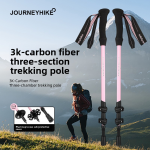
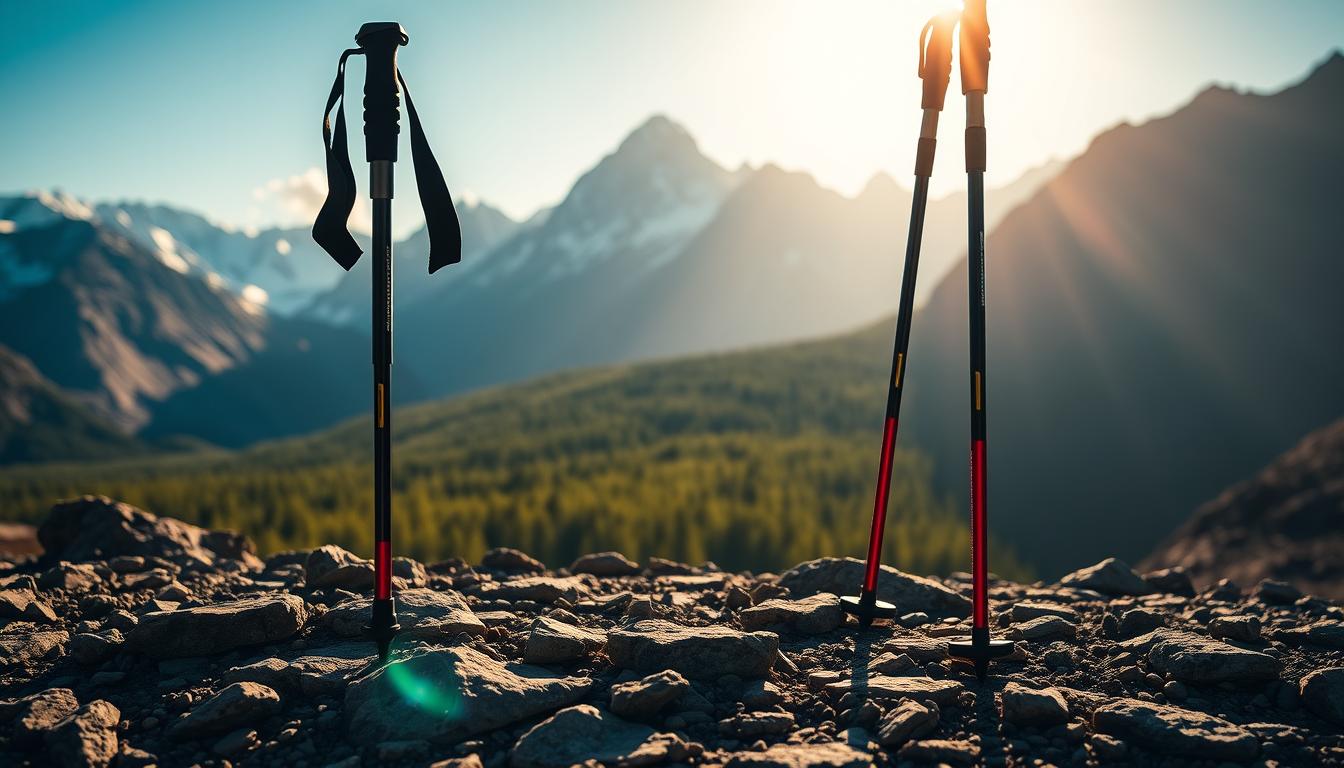
This quick intro helps hikers pick the right gear for 2025. We focus on weight, durability, comfort, and price to match each trail need.
Trekking poles cut joint impact on descents, steady balance on technical ground, and set an easy hiking rhythm. They also double as tent supports for many ultralight shelters.
Our product roundup highlights top picks: Black Diamond Pursuit for all-around use, ultralight picks like Distance Carbon Z and Gossamer Gear LT5, women’s-specific Leki Cressida, and rugged four-season Alpine Carbon Cork.
We tested locking systems (FlickLock, DynaLock, twist), materials (carbon vs aluminum), collapsed length for travel, grip feel, and per-pair weight. Expect concrete numbers and real-use notes so you can match a pole to day hikes, thru-hikes, winter use, or fastpacking.
Key Takeaways
- Poles reduce strain on hips, knees, and ankles, especially downhill.
- Choose carbon for low weight; pick aluminum for durability and cost.
- Lock type and grip material matter most for wet and cold conditions.
- Black Diamond Pursuit is our top all-around pick for 2025.
- Match features to use case: travel, winter, ultralight, or four-season.
Quick answer: What type of trekking poles are best? Our top picks at a glance
For fast buying decisions, here are four proven pole choices and who they suit. Each pick balances weight, packability, adjustability, and grip comfort so you can match gear to goals quickly.
Best overall: Black Diamond Pursuit
Black Diamond Pursuit pairs aluminum durability with FlickLock+ reliability and cork grips for all-day comfort. It weighs ~1 lb 0.4 oz (S/M), collapses to ~24.4 in, and includes handy snow baskets and a hex tool. Ideal for most hikers who want dependable feel and value.
Best ultralight folding: Black Diamond Distance Carbon Z
Black Diamond Distance (Distance Carbon Z) is a folding carbon design at ~9.6 oz per pair (115 cm). Non-adjustable fixed lengths keep weight tiny and collapse length ultra-compact for runners and minimalists.
Best ultralight telescoping: Gossamer Gear LT5
Gossamer Gear LT5 is a telescoping carbon option (~10.9 oz per pair) with twist locks and premium feel. It’s excellent for thru-hikers who want lightweight adjustability but may need occasional retightening.
Best 4-season: Black Diamond Alpine Carbon Cork
Black Diamond Alpine Alpine Carbon Cork combines carbon rigidity, metal FlickLock Pro, and cork handles. At ~1 lb 1.1 oz per pair it’s built for year-round reliability in mixed snow and rock terrain.
- Quick decision tip: choose weight savings (Distance Carbon Z), adjustability (LT5), durability (Pursuit), or cold-weather confidence (Alpine Carbon Cork).
- All four are well-tested, widely used, and solve most shoppers’ needs. Move on for full comparisons of collapsed length, straps, and baskets.
How to choose trekking poles in 2025
Material, locking, and pack size decide how a pole performs on trail and in transit. Carbon fiber gives the lightest swing weight and saves energy on long climbs, while aluminum trekking poles trade a few grams for much greater bend-before-break durability.
Carbon fiber vs aluminum: weight, durability, and cost
Carbon fiber cuts per-pair weight and reduces arm fatigue on big-vert days. It is stiffer and can fail under lateral hits, so avoid brittle carbon setups for heavy scrambles.
Aluminum feels heavier but usually bends instead of breaking. Choose aluminum for rocky, year‑round use or for poles that double as tent supports to meet 125–135 cm shelter requirements.
Locking mechanisms: FlickLock, DynaLock, and twist locks
External lever locks like BD FlickLock and FlickLock Pro are quick and secure. MSR DynaLock levers give reliable field tightening—even with gloves—while twist locks save grams but may need occasional retightening.
Telescoping vs folding: packability and adjustability
Telescoping poles offer broad adjustability and tent compatibility; expect collapsed length near 61 cm for models like BD Alpine Carbon Cork. Folding designs (Distance Carbon Z ~33 cm, Distance Carbon FLZ ~34–40 cm, MSR DynaLock Ascent ~36.2 cm) excel for travel and running vests.
Grips, straps, and length tips
Cork dampens vibration and stays comfortable in heat; EVA foam is soft and manages sweat. Check wrist straps for padding and easy micro-adjustment so weight transfers through the loop, not just your grip.
“Pick materials and locks that match your terrain and carry plan—light for fast miles, tough for rough ground.”
- Collapsed length matters for carry-on travel and stashable poles between climbs.
- Swap baskets seasonally: small summer vs snow float for winter.
- Try different handle shapes to avoid hot spots on long days.
Best overall trekking poles for most hikers and backpackers
If you hike most weekends and want one reliable pair, these picks balance comfort, durability, and value. They hold up across dirt, rock, and occasional snow while staying comfortable on long descents.
Black Diamond Pursuit: feature set, comfort, and value
Black Diamond Pursuit sits at the top for everyday use. At ~1 lb 0.4 oz per pair it uses aluminum with FlickLock+ levers and cork grips for lasting comfort.
The ergonomic shape plus supportive wrist straps and vibration-dampening cork reduce hand fatigue on long miles. Practical extras include a built-in hex tool, included snow baskets, and carbide tips for traction.
Trade-offs are small: the collapsed length is longer than folding Z-poles, and the price is above basic aluminum models. Even so, the Pursuit’s durability and refined feel make it worth the cost for frequent hikers.
REI Co-op Traverse: strong mid-range alternative
The REI Co-op Traverse is a solid choice for shoppers on a budget who want more features than entry-level gear. It weighs ~1 lb 3.5 oz and uses cam-style lever locks with cork grips plus foam extensions.
Traverse feels sturdier than cheap sticks and offers reliable adjustability across common height ranges. It’s a great step up if you want value without paying premium for every feature.
“Pick the Pursuit for premium comfort and reliability; choose the Traverse to get solid performance at a lower price.”
- Who should buy which: pick black diamond pursuit for frequent, comfort-focused hikers; choose REI Traverse for budget-minded users stepping up from basic gear.
- Both are three-section telescoping designs — consider external pack carry if collapsed length matters.
- Either model performs well on weekend backpacking and long day hikes thanks to dependable locks and grips.
Lightest trekking poles for minimalists
When every ounce and centimeter count, ultralight gear choices make a big difference.
Black Diamond Distance Carbon Z: Z-fold speed and packability
Black Diamond Distance (Distance Carbon Z) is a fixed-length folding design that weighs roughly 9–10 oz per pair. Its non-adjustable five-length system packs exceptionally short, so the collapsed length disappears in a running vest or carry-on.
Pick the correct fixed length before buying. That choice locks in comfort and tent compatibility.
Gossamer Gear LT5: ultralight telescoping with caveats
Gossamer Gear LT5 is a telescoping carbon option at about 10.9 oz per pair with twist locks and 105–130 cm adjustability. The LT5 gives useful length range for varied terrain and tent pitching.
Note: twist locks save grams but may need a daily retighten under heavy use. Replacement sections are available if a piece gets damaged.
REI Co-op Flash Carbon: lightweight value play
REI Flash Carbon sits near 13.6 oz per pair and blends carbon composite shafts with metal lever locks and foam grips. It’s a cost‑conscious choice that still keeps weight low while managing sweat and vibration.
- Key contrast: fixed folding (Distance Carbon) vs adjustable telescoping (Gossamer Gear LT5) — both keep weight at or below ~11 oz per pair for true ultralight setups.
- Grip note: foam grips on the Distance and Flash handle sweat well during fast efforts; cork shows up on heavier models.
- Carbon caution: carbon poles are light but can fail under lateral torque — avoid prying on loose talus.
- Practical tips: confirm packed length fits your vest, consider spare baskets and tip protectors, and test strap fit to prevent hot spots.
“Distance Z for pure speed and tiny packed size; LT5 for adjustability without a big weight penalty; Flash Carbon for value-minded weight savings.”
Most durable and 4-season-ready poles
Choose poles that stand up to winter storms, heavy packs, and steep, technical terrain.
Black Diamond Alpine Carbon Cork: premium build for rough terrain
Black Diamond Alpine Carbon Cork pairs stiff carbon fiber shafts with metal FlickLock Pro levers for dependable clamp force. At ~1 lb 1.1 oz per pair, it feels solid under load and holds up on mixed snow and rock.
Cork grips plus foam extensions give control with gloves, and included snow baskets expand winter utility. The telescoping design packs to about 61 cm (24 in), so it stays simple to set for shelter support.
MSR DynaLock Ascent: rugged folding design for winter use
MSR DynaLock Ascent brings a different strength: a folding format that collapses to ~36.2 cm (14.3 in). Kevlar-reinforced carbon and the DynaLock levers never slipped in tests, so trust this model in cold, icy conditions.
It weighs near ~1 lb 1 oz per pair (S size) and offers two size ranges. The short packed length makes it easier to stash on pack fronts or in carry-on luggage.
“These are the ‘trust your life’ options for heavy packs, alpine scrambles, and snow travel.”
| Model | Weight (per pair) | Fold/Collapsed | Key features |
|---|---|---|---|
| Black Diamond Alpine Carbon Cork | ~1 lb 1.1 oz | ~61 cm / 24 in | Carbon fiber, FlickLock Pro, cork grips, snow baskets |
| MSR DynaLock Ascent | ~1 lb 1 oz | ~36.2 cm / 14.3 in | Kevlar-reinforced carbon, msr dynalock levers, folding |
| Quick comparison | — | BD longer / MSR shorter | Telescoping vs folding; packability vs traditional adjustability |
Both models excel when stiffness and a secure locking mechanism matter. Swap baskets and protect tips when shifting from summer trails to white season.
Choose black diamond alpine if you want telescoping adjustability and classic cork comfort. Pick msr dynalock if a short packed length and fail-safe folding matter most. Either can serve as an all-season quiver for hikers who face rugged conditions year-round.
Best budget trekking poles that still perform
You don’t need premium price tags to get reliable performance on common trails.
REI Co-op Trailmade: entry-level essentials
REI Trailmade sells for about $80 and weighs ~1 lb 1.0 oz per pair. It uses aluminum shafts, simple lever locks, and foam grips.
The adjustable 41–55 in range fits most hikers. It’s a solid starter set for casual use and occasional backpacking.
Black Diamond Trail Back: proven durability under $100
Black Diamond Trail Back runs near $90 and comes in around ~1 lb 2.8 oz per pair. It uses FlickLocks and includes trekking and snow baskets plus choke-up extensions.
This model gives a durability bump and multi-season versatility at a friendly price.
Cascade Mountain Tech Carbon Fiber Quick Lock: value with carbon
Cascade Mountain Tech Carbon Fiber Quick Lock is the rare low-cost carbon option at about $65 and ~16 oz per pair. It features external quick locks and offers EVA or cork grips.
“Budget sticks can be dependable spares or a first pair—just check collapsed length and lock tension regularly.”
- Comfort: foam grips sweat less; cork feels nicer on long descents. Check the wrist strap padding and choke-up options.
- Trade-offs: expect heavier weight and simpler locks versus mid-range models.
- Who to buy: Trailmade for lowest cost, Trail Back for season-ready durability, Cascade for lighter carbon fiber poles under $100.
| Model | Price | Weight (per pair) | Key highlights |
|---|---|---|---|
| REI Trailmade | $80 | ~1 lb 1.0 oz | Aluminum, lever locks, foam grip, 41–55 in |
| Black Diamond Trail Back | ~$90 | ~1 lb 2.8 oz | FlickLocks, choke-up extensions, trekking & snow baskets |
| Cascade Mountain Tech Carbon Fiber Quick Lock | ~$65 | ~16 oz | Carbon, external quick locks, EVA or cork grips, collapsed ~76 cm |
Upgrade path: step up to REI Traverse or Black Diamond Pursuit for cork grips, stronger cams, and improved ergonomics.
Women’s-specific trekking poles worth considering
Dials that match hand size and pack space make daily miles easier. Women’s-specific designs give slimmer grips, shorter straps, and compact adjustments for smaller hands and shorter users.
Leki Cressida Cork Lite: fit, straps, and compact size
Leki Cressida Cork Lite blends comfort and control. It runs about $150 and weighs ~1 lb 0.9 oz per pair with aluminum shafts and Speed Lock 2+ levers.
The ergonomic mostly-cork grips feel secure on long descents and in heat. Narrow grips plus shorter wrist straps suit smaller hands and reduce bulk under gloves.
Another perk: the collapsed length is shorter than comparable unisex models, so it packs tidily for travel and small packs. Note one quirk — levers can slowly loosen over a long day. Periodically check and retighten lever tension to keep sections from creeping.
Leki Jannu: a budget-minded women’s option
The Leki Jannu mirrors Khumbu Lite ergonomics but at a lower price. It uses aluminum, reliable lever locks, and carbide tips for secure placement on varied trail surfaces.
Quick tip: try strap fit with gloves and in warm weather to confirm comfort across seasons. For hikers who want a tuned fit out of the box, these models beat adapting larger unisex sticks like some black diamond designs.
| Model | Weight (per pair) | Key fit advantages |
|---|---|---|
| Leki Cressida Cork Lite | ~1 lb 0.9 oz | Slim grips, cork comfort, Speed Lock 2+, shorter packed size |
| Leki Jannu | ~1 lb 2 oz (approx) | Budget price, women’s ergonomics, sturdy aluminum, carbide tips |
| Fit takeaway | — | Better out-of-box fit for smaller hands; test straps with gloves |
Poles for trekking-pole-supported tents
A secure shelter pitch begins with poles that hold their length under fabric tension. Many shelters ask for adjustable pole length between 125–135 cm; that range gives the right shape and clearance for most trekking-pole-supported tents.
Why this matters: a firm, non‑slipping lock at full extension keeps the fly taut in wind and rain. If a lock slips, the tent walls sag, letting water collect and stress seams.
Length and rigidity requirements for shelters
Always check your tent’s minimum and maximum pole length before buying. Fixed folding models may be too short or lack the needed adjustment.
Telescoping poles generally give broader adjustment and better rigidity for nightly use. They resist lateral flex when you tension guylines.
Leki Khumbu Lite: stable locks and reliable support
Leki Khumbu Lite (~$120; ~1 lb 1.4 oz per pair) is a strong mid‑range choice. Its aluminum shafts and Speed Lock+ levers hold well under load, and ergonomic cork/rubber handles stay comfy while you pitch.
Compare the model to diamond pursuit if you want snow baskets and proven FlickLock+ performance. Both can serve as solid shelter partners when lock integrity matters.
- Bring larger or snow baskets on soft ground to stop poles sinking and slackening the pitch.
- Ultralight folders like Distance Carbon Z may lack necessary adjustability or rigidity; consider adjustable folding options or FLZ variants.
- Before a trip, set poles to tent height, tension the pitch, and let them sit for an hour to confirm locks don’t slip.
“Tip protectors save grommets and cut noise on rock; clean and retension lever locks regularly to keep hold strength in dusty or wet conditions.”
Trekking poles for trail running and fastpacking
Runners and fastpackers need gear that stows tiny, deploys quick, and stays quiet at speed. Choose between fixed minimalism and small adjustability based on terrain and vest fit.
Distance Carbon FLZ vs Distance Carbon Z
Black Diamond Distance Carbon Z is the pure minimal option: ~10 oz per pair with a folded length near 33 cm (13 in) for the 110 cm size. Its fixed length keeps weight down and stowage tiny.
Distance Carbon FLZ adds FlickLock Pro adjustment and runs ~11–13 oz per pair, folding 34–40 cm. FLZ suits runners who need to shorten poles on steep climbs or to pitch a shelter mid-route.
Collapsed length and carry options
Short collapsed length (13–16 in) matters. It fits front or rear quivers without bouncing and speeds redeploys between climbs and descents.
- Grip: foam grips are light and manage sweat during long efforts.
- Carry tips: practice quick stow/deploy, use bungees or quiver mounts, and secure locks to stop rattle.
- Durability: folding carbon saves weight but avoid levering on talus; place poles deliberately.
| Model | Weight (per pair) | Folded length | Best for |
|---|---|---|---|
| Distance Carbon Z | ~10 oz | ~33 cm / 13 in | Maximal packability, minimal weight |
| Distance Carbon FLZ | ~11–13 oz | ~34–40 cm | Adjustability on varied terrain |
| Carry note | — | 13–16 in ideal | Quiver and vest compatibility |
“Practice cadence and plant timing to keep rhythm and save energy on steep grades.”
Carbon fiber trekking poles: who should choose them?
Carbon shafts shine where light weight and stamina matter most on long outings. These sticks trade a few ounces for big energy savings on steep climbs and long days.
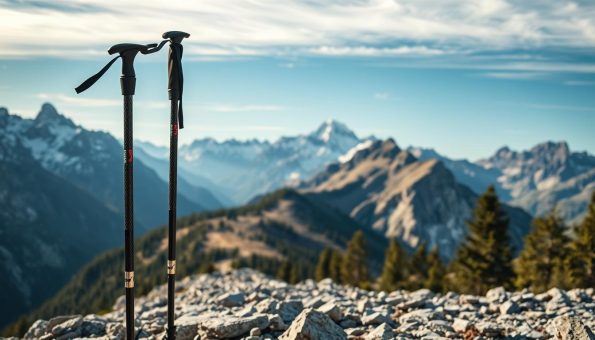
When carbon shines: long days, big vert, and low fatigue
Ideal buyers include runners, thru‑hikers, and fastpackers who prize the lowest per‑pair mass. Models like the Distance Carbon Z (~9–10 oz per pair), Gossamer Gear LT5 (~10.9 oz), and REI Flash Carbon (~13.6 oz) cut swing weight and lower hand and shoulder strain.
Managing brittleness and field care
Handle carbon with care. Avoid levering shafts between rocks, twisting under load, or planting at extreme angles. Plant poles vertically in talus and avoid wedging tips in cracks.
- Use the wrist strap to transfer load into the forearm and save grip energy.
- Light builds often pair with foam grips for sweat control during hard efforts.
- Inspect shafts after hits for cracks or delamination and replace damaged sections when possible.
- For adjustable models, retension external lever locks if any slip appears; they hold length well under dynamic movement.
“Carbon gives precise placements and less vibration, but aluminum still wins for repeated abuse off-trail.”
Aluminum trekking poles: when “tough” beats “light”
Aluminum shafts win when durability and certainty matter more than shaving grams. They bend under impact instead of snapping, which matters on rocky scrambles and when you carry heavy loads.
Heavy use, rocky trails, and 4-season reliability
Aluminum models like the Black Diamond Pursuit (~1 lb 0.4 oz per pair) and Leki Khumbu Lite (~1 lb 1.4 oz) resist lateral hits and stay usable after hard impacts.
External lever locks give confidence when planting hard in snow or bracing on loose talus. A solid locking mechanism holds length under load and reduces slip in cold conditions.
Snow baskets and carbide tips add winter traction and float. Swapping baskets is quick and extends a pair’s year‑round utility.
“Aluminum is the ‘workhorse’ choice—easy to field‑repair and forgiving when routes get ugly.”
| Model | Per-pair weight | Key durability notes |
|---|---|---|
| Black Diamond Pursuit | ~1 lb 0.4 oz | FlickLock+, cork grips, bends before breaking; accepts snow baskets |
| Leki Khumbu Lite | ~1 lb 1.4 oz | Speed Lock levers, sturdy aluminum, good for shelter support |
| Practical value | — | Often cheaper than carbon with similar features and easier field maintenance |
Maintenance is simple: clean cams, check lever screws, and straighten mild bends or replace sections when needed. For hikers who go off‑trail, carry heavy packs, or rely on poles as tent supports, aluminum offers a reliable, long‑lived choice.
Grips, straps, and baskets: small details, big differences
Small hardware choices change how a hike feels from mile one to the last summit. The right handle, strap, and basket can cut fatigue and boost control.
Cork vs foam grips in heat, sweat, and long descents
Cork grips damp vibration and warm to the touch. They conform over time and reduce hotspots on long descents. The Black Diamond Pursuit pairs cork with foam extensions for extra control.
Foam grips stay lighter and manage sweat well, which is why the REI Flash Carbon uses them. Foam is easier to grab fast and dries quickly.
Wrist straps: support, padding, and adjustability
Good wrist straps transfer load to the forearm so your fingers can relax. Look for breathable, padded webbing and easy micro-adjusters.
Leki’s slightly tilted grips help keep the wrist neutral and lower strain on long miles. Practice threading your hand up through the loop and gripping down to form a supportive cradle.
Snow baskets and year-round versatility
Swap to larger snow baskets in winter to prevent sinking and preserve balance. Baskets and tips wear over time; replace them to protect shafts and keep traction.
“Clean grips and straps regularly; cork develops a helpful patina, and external cams or glove-friendly buckles keep adjustments simple on the trail.”
- Use choke-up foam extensions for steep climbs without changing total length.
- Experiment with strap length for different glove thicknesses to maintain circulation and comfort.
- Wash straps to remove sweat and salt; inspect baskets and tips before long trips.
Locking mechanism deep dive
Locks decide whether your pole holds under load or slips when you need it most. A solid locking mechanism keeps length steady on steep descents, under tent tension, and in wet or cold conditions.
Lever locks (external cams) are the on-trail workhorses. Brands use slightly different hardware, but the idea is the same: quick, repeatable adjustments with high clamp force. Black Diamond’s FlickLock+ on the Pursuit proved very reliable in testing and clamps predictably when you set it.
FlickLock Pro takes that concept further with metal hardware for premium feel and extra security. You see this upgrade on models like the Alpine Carbon Cork, where the metal cam resists wear and feels firmer in cold, wet use.
Twist locks: light and simple, with caveats
Twist locks save grams and keep shafts sleek. The trade-off is routine care: clean, dry internals and periodic retightening prevent slippage. On models like the Gossamer Gear LT5, expect to check tension daily during heavy use.
DynaLock: field-tightening and cold-weather use
MSR’s msr dynalock levers stand out for glove-friendly, in-field tightening. They held without slipping in testing and let you bump tension on the fly—useful in snow or when moisture reduces friction.
- Troubleshooting: clean debris from cams, dry wet shafts, and increase cam tension slowly.
- Caution: over-tightening can stress carbon fibers; tighten just enough to hold your typical load.
- Maintenance: lever cams need screw checks; twist systems need dry, grit-free internals.
- Field tool: carry a mini tool or use an integrated hex (like on some Black Diamond models) for quick tweaks.
“Pick lever cams for winter and frequent adjustments; choose twist locks if you prefer minimal weight and don’t mind occasional checks.”
What type of trekking poles are best? Matching poles to your use case
Match pole features to trips: comfort for day outings, low weight for long miles, and strong locks for winter. Below are quick, scenario-based picks to help hikers and backpackers choose fast.
Day hikes and weekend trips
Pick balanced aluminum telescopers for reliability and comfort. The black diamond Pursuit shines here with cork grips and FlickLock+ levers. The REI Traverse is a solid, value-forward alternative with good cam locks and comfort for long descents.
Thru-hiking and ultralight goals
For sustained miles, favor the lightest trekking poles that still match your shelter needs. The Distance Carbon Z from black diamond (~10 oz per pair) trims grams and packs tiny. Gossamer Gear LT5 adds adjustability at low weight for tent duty and varied terrain.
Winter hiking and snowshoeing
Choose stiff shafts and metal cams for cold, wet use. The Black Diamond Alpine Carbon Cork offers FlickLock Pro security and cork comfort. The msr dynalock Ascent folds small yet holds tension in snow, making either option smart for shuttles and steep winter routes.
Travel and carry-on constraints
Collapsed length matters for flights and fastpacking. Folding models pack to roughly 13–16 in; FLZ variants collapse to ~34–40 cm and the MSR folding Ascent to ~36.2 cm. Check airline rules for tips and stow baskets, and practice quick deployment for fast transitions.
| Use case | Recommended models | Why |
|---|---|---|
| Day/weekend | Black Diamond Pursuit, REI Traverse | Comfortable grips, reliable lever locks, durable |
| Thru/ultralight | Distance Carbon Z, Gossamer Gear LT5 | Lowest per-pair weight; FLZ adds adjustability |
| Winter/snow | Black Diamond Alpine Carbon Cork, MSR DynaLock Ascent | Stiff shafts, metal cams, snow basket options |
| Travel | Distance Carbon Z/FLZ, MSR Ascent | Short collapsed length, easy carry-on packing |
“Rank your priorities — weight, durability, adjustability, packability — then choose the model that best matches your top two.”
Size, fit, and adjustability: getting pole length right
Picking the right pole length makes hiking safer and more comfortable. A few simple checks before you hit the trail save time, reduce strain, and keep your tent pitched properly at night.
Recommended ranges for height and terrain
Start with a 90-degree elbow angle on flat ground. That gives a neutral baseline for hiking and balance.
Shorten poles for steep climbs to keep your rhythm and reduce shoulder load. Lengthen them slightly for descents to protect knees.
Taller hikers often need poles that extend to 130–140 cm. Confirm a model’s max length before buying, especially if you plan to use poles as tent supports; many shelters require 125–135 cm for peak height.
Per pair weight and collapsed length trade-offs
Per pair weight matters. Ultralight sticks (~9.6–10.9 oz per pair) cut fatigue but demand careful use on rock and talus. Sturdier designs near 1 lb per pair add confidence in dicey terrain.
Collapsed length affects travel and carry. Folding designs pack ~13–16 in, fitting vests and carry-ons. Telescoping models often collapse to ~24 in (61 cm); check this if airline stow or vest fit matters.
Fit tips: test wrist strap fit and grip diameter with the gloves you’ll wear. Adjust strap length looser on flats for freedom, tighter on climbs to transfer load into the forearm and save grip energy.
Quick field habits: mark favorite lengths on the shaft for fast redeploy, measure tent peak height before a trip, and re-tension lever locks periodically. External cams give faster adjustments in cold hands, while twist locks need routine checks for smooth extension and secure clamping.
“Set length for comfort, test straps with gloves, and keep locks clean for easy use on the trail.”
Conclusion
In short, match a pole’s strengths to your trips and you’ll gain comfort and control every mile.
For many hikers backpackers the Black Diamond Pursuit wins for everyday use. Ultralight fans will like Distance Carbon Z and Gossamer Gear LT5. For four‑season trust, pick Alpine Carbon Cork or the MSR DynaLock Ascent.
Balance per‑pair weight with durability, adjustability, and collapsed length. Prioritize comfy grips and supportive wrist straps. Swap snow baskets for winter and keep lever locks clean and tensioned.
Final checklist: material (carbon vs aluminum), lock style, adjustment range, packed length, grip fit, and price. Choose the model that fits your routes, care for it in the field, and get out there with more confidence and less joint strain.
FAQ
Which poles suit most hikers for day hikes and backpacking?
Choose midweight aluminum or carbon hybrid poles with reliable locks and comfortable grips. Black Diamond Pursuit and REI Co-op Traverse offer a solid mix of durability, adjustability, and value for general hiking and multi-day trips.
What makes ultralight folding models like the Black Diamond Distance Carbon Z popular?
Folding designs collapse very small and pack fast into running vests or backpacks. Distance Carbon Z models use carbon fiber to cut weight while Z-fold hinges deliver quick setup for fastpacking and trail running.
When should I pick telescoping poles such as the Gossamer Gear LT5?
Telescoping poles shine when adjustability matters and minimal pack length is acceptable. The LT5 balances low weight and secure length locking, but telescoping sections can be slightly longer when collapsed than Z-fold options.
Are carbon fiber poles fragile in rough terrain?
Carbon fiber offers excellent weight savings and vibration damping but can be more brittle than aluminum under point loads. For rocky, technical routes or heavy winter use choose reinforced carbon or aluminum models like Black Diamond Alpine Carbon Cork or MSR DynaLock.
How do locking mechanisms compare: FlickLock, DynaLock, and twist locks?
External lever locks such as FlickLock provide quick, tool-free adjustment and strong clamping. DynaLock systems add field-tightening for cold use. Twist locks save weight but can slip if dirty or overloaded.
Which grips are best for sweaty hands and long descents?
Cork grips wick moisture and mold to your hand over time, reducing hotspots on long descents. EVA foam grips handle cold better and resist abrasion. Many hikers prefer cork on premium models like Alpine Carbon Cork.
What grip and strap features assist during steep climbs?
Padded, adjustable wrist straps transfer load into your forearms and palms, improving control on long climbs. Quick-release straps and ergonomic grips help during repeated pole planting.
How much should I shorten or lengthen poles for varied terrain?
For uphill sections shorten poles by 5–10 cm from your neutral walking length. Extend them 5–10 cm downhill for stability and reduced knee stress. Pick poles with an adjustability range that covers those needs.
What collapsed length works best for air travel and pack carry?
Z-fold poles like Distance Carbon Z collapse to the shortest packed length, ideal for carry-on and tight pack space. Telescoping models collapse longer but still fit many packs; check manufacturer specs before travel.
Which models hold up in snow and icy conditions?
Look for robust shafts, secure locks, and large snow baskets. Black Diamond Alpine Carbon Cork and MSR DynaLock Ascent are built for four-season use and cold-weather reliability.
Are budget carbon options worth it?
Budget carbon poles can save weight, but check for solid locking systems and reinforced tips. Cascade Mountain Tech and REI Co-op Flash Carbon offer decent entry-level carbon choices if you accept some trade-offs.
Do women need gender-specific poles like Leki Cressida Cork Lite?
Women-specific poles often have shorter length ranges, smaller grips, and narrower strap fit. If those features improve comfort and fit, models such as Leki Cressida Cork Lite or Leki Jannu are worth considering.
Can one pole support a trekking-pole tent or tarp?
Yes, but choose poles with strong shafts and reliable locks. Models like Leki Khumbu Lite and MSR DynaLock Ascent provide the length and rigidity needed for shelter support.
Which poles suit trail running and fastpacking?
Runners want very short collapsed length, low weight, and fast deployment. Distance Carbon FLZ and Distance Carbon Z prioritize compactness and speed for fastpacking and trail running.
How do I care for carbon shafts to prevent damage?
Avoid prying poles under heavy lateral loads, store dry, and inspect for cracks after impacts. Replace tips and baskets as needed; field tape can temporarily manage small nicks until repair.
When is aluminum the smarter choice over carbon?
Pick aluminum for rugged use, frequent impacts, and four-season abuse. Aluminum bends rather than snapping and performs reliably under heavy loads and rocky trails.
What small features make a big difference in everyday use?
Foam or cork grip extensions for off-trail scrambling, ergonomic wrist straps, easy-to-change baskets, and clear length markings speed adjustments and boost comfort on long days.
How should I match poles to my height and activity?
Use manufacturer length charts as a starting point, then adjust so your elbow forms roughly a 90-degree angle on flat ground. Choose a length range that covers uphill and downhill adjustments for your intended use.