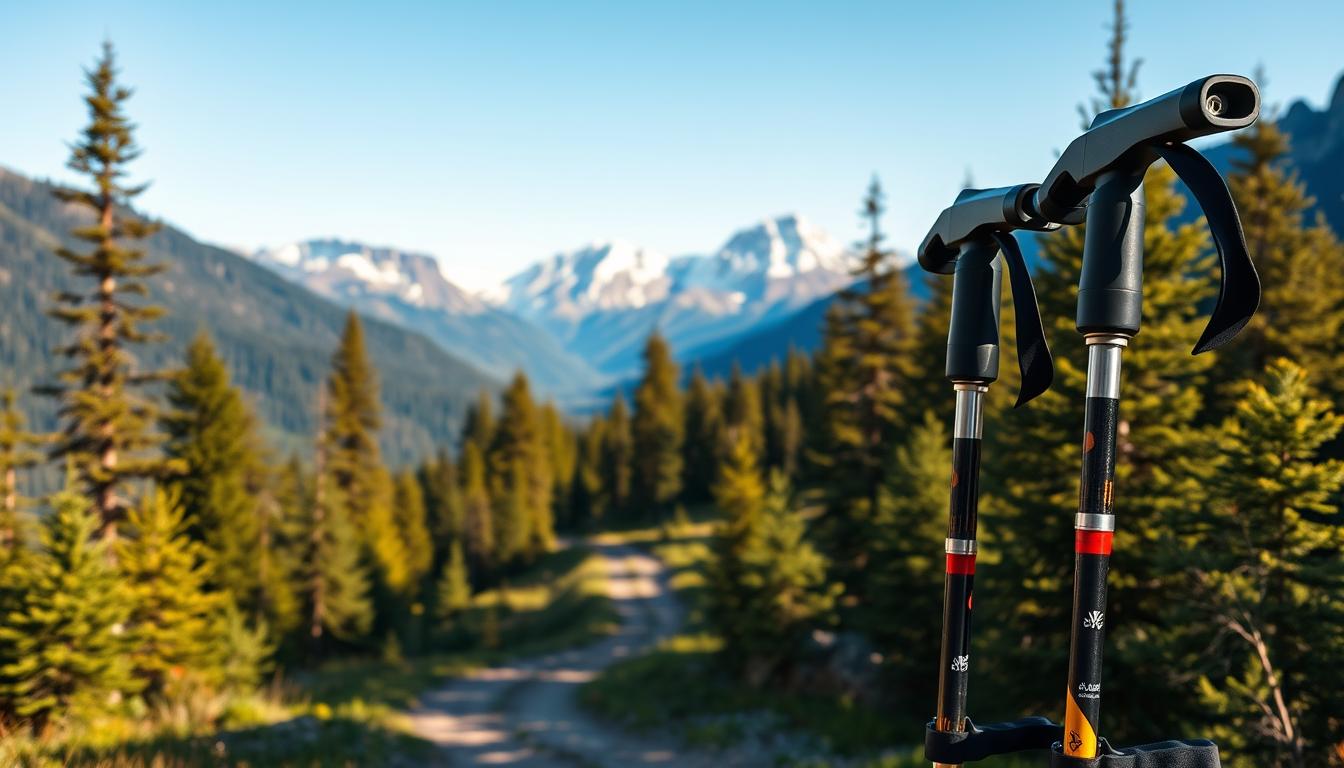
Choosing the right shaft can change your hike. Good poles invite your arms into the effort on climbs, ease pressure on descents, and steady you on creek crossings. They even double as tent supports on lightweight shelters like the Gossamer Gear The One or Durston X-Mid 2.
Prices range from about $20 to $200. Cost often tracks the shaft: aluminum bends and can be bent back, while carbon fiber saves ounces but snaps without warning. That difference affects durability and comfort on long trips.
This buyer’s guide will cut through noisy price tiers and explain how materials shape real-world hiking feel. We’ll compare aluminum and carbon fiber, and note how grips, straps, locks, and section count influence long-term satisfaction.
The big idea: the best trekking poles balance weight, strength, cost, and comfort to match your typical hikes and travel plans.
Key Takeaways
- Aluminum offers toughness and value; carbon fiber saves weight.
- Pole choice changes load sharing and reduces knee strain.
- Check grips, straps, and locking features, not just shafts.
- Price reflects compactness, warranty, and packability.
- Pick gear that fits your hike type and travel needs.
Buyer’s Guide Overview: How material choice shapes comfort, weight, and durability
Picking the right shaft changes how a hike feels. Using trekking poles can shift up to 20% of each side’s load as you step. That reduces knee stress and boosts balance over long miles.
Light materials cut swing weight and lower arm fatigue on repeated plants. Tougher alloys resist dents and rough use, so they suit rocky routes or heavy packs.
Grip compounds matter for comfort. Cork wicks sweat, foam stays warm, and rubber helps on wet rock. Locks and section count also shape real-world use: three-section designs fold small for travel, while two-section shafts can be stiffer for ski or mountaineering work.
Durability trade-offs: aluminum may bend and stay serviceable; carbon saves ounces but can snap under side loads. Combine the right shaft with reliable locking features to get the most out of weight savings.
- Tip: match alloy-based shafts to rough, technical terrain.
- Tip: pick carbon if pack carry time and weight matter most.
- Tip: learn basic pole technique early to unlock balance and knee relief.
Quick answer: What material is best for trekking poles?
When miles add up, every gram you remove from a pair counts toward fresher arms. For ultralight backpacking, carbon fiber usually wins on sheer weight savings and lowers swing effort. That makes long days and pack carry easier.
If budget and rough use matter, aluminum delivers dependable value. Aluminum shafts often bend instead of snapping and can be straightened in the field. That toughness keeps a pole usable after mishaps.
- Choose carbon fiber if you prioritize lowest swing weight and long mileage.
- Choose aluminum for rugged routes, lower cost, and repairability.
- Most hikers should match shaft choice to terrain, budget, and how often a pair rides on the pack.
Remember: good grips and proper technique can matter as much as shaft choice. The main difference you’ll feel is in weight savings and how a pole handles side impacts — pick the option that fits your trips and budget to find the best trekking poles for you.
Aluminum vs. carbon fiber: The core materials compared
A clear split between aluminum and carbon shows up when you test poles on long miles and rough routes. The choice affects swing weight, how much vibration you feel, and how a pair behaves after a mishap.
Weight, fatigue, and efficiency on long hikes
Light carbon designs cut swing weight and save energy over thousands of plants. Less swing weight means less arm and shoulder fatigue on multi-day hikes.
Note: some carbon models, like Black Diamond Alpine Carbon Cork, are heavier than other carbon offerings, so read specs, not labels.
Durability, bend vs. break, and real-world mishaps
Aluminum tends to deform before failing. A bent section can sometimes be straightened trailside and kept in service.
Carbon fiber resists small dents but can crack or snap when levered between rocks or in a fall. That failure mode is sudden.
Cost, warranties, and value over time
Carbon typically sits in the premium tier, often paired with compact folding designs and stronger warranties. Aluminum dominates budget, telescoping styles and costs less up front.
Practical rule: if you count ounces or carry poles on your pack daily, carbon’s weight savings may pay off. If you abuse gear or need repairability, aluminum often gives better long-term value.
Vibration and trail feel: metal vs. carbon damping
Many users report aluminum transmits more chatter on rock and pavement. Carbon can damp vibration and feel smoother under repetitive impact.
“On long, rocky miles the damping of carbon made the day feel easier,” said a frequent thru-hiker.
- Swing weight compounds: lighter designs feel noticeably faster after hours on trail.
- Durability trade-off: aluminum bends, carbon breaks.
- Brand note: Black Diamond shows carbon isn’t always ultralight—component choices matter.
When to choose aluminum trekking poles
When trails turn rough, a tougher shaft can mean the difference between finishing a day and ending early. Aluminum shines on routes where hits, scrapes, and heavy packs are normal. Budget aluminum pairs often last seasons and can be field-repaired after dents or bends.
Rocky routes, off-trail travel, and budget priorities
Recommend aluminum for rocky trails, talus slopes, or when you lean hard to catch a slip. A metal shaft tolerates side loads and keeps going after a creek-crossing mishap that bends a section.
Sturdiness for mountaineering, skiing, and heavy loads
For winter travel or mountaineering, the slightly heavier feel can boost confidence under a heavy pack. Many climbers and skiers pick aluminum because it resists crushing and can be straightened in the field.
Practical tips to extend life:
- Inspect sections for dents and cracks after tough days.
- Check locks for tightness; loose clamps wear faster.
- Rinse grit from tubes and threads to prevent abrasion.
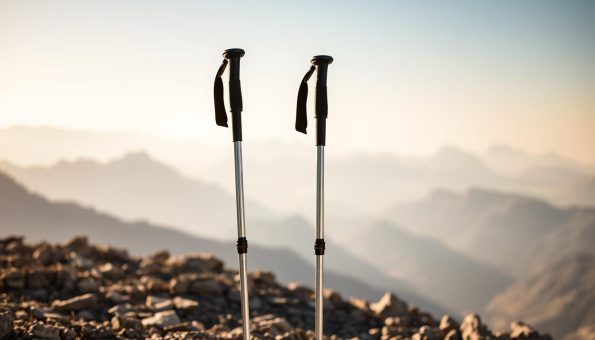
When to choose carbon fiber trekking poles
For long miles and fastpacking, carbon saves effort by shaving ounces where it counts.
Ultralight backpacking and thru-hikes reward tiny gains. Over days and weeks, lower swing weight reduces shoulder and arm fatigue. Hikers who lash a pair to a pack often notice the savings most on long routes.
Ultralight trips and daily carry
Carbon excels when every gram matters. A super-light design cuts repeated effort on high-mileage days. The Gossamer Gear LT5 is a common example: it favors packability and near-minimal weight.
Examples and practical comparisons
Not all carbon is equal. Some models add features and a few extra ounces. For instance, heavier carbon options like Black Diamond Alpine Carbon Cork feel heftier than ultralight alternatives and can increase swing fatigue.
“On thru-hikes, saving weight on repetitive gear makes a daily difference.”
| Model | Type | Use case | Notes |
|---|---|---|---|
| Gossamer Gear LT5 | Ultralight carbon | Fastpacking, thru-hikes | Very light, packs small, less durable around rocks |
| Black Diamond Alpine Carbon Cork | Heavier carbon | General trekking, mixed terrain | More features, slightly heavier swing weight |
| Generic rugged carbon | Reinforced carbon | Hybrid use | Balance of weight and durability |
Match selection to style: pick the lightest carbon if pack carry time dominates. Choose a sturdier carbon if you want added comfort and durability. And remember: carbon resists dents but can fail under high leverage, so avoid levering shafts between rocks.
Beyond the shaft: Grips, straps, and comfort materials
A small change at the handle can make long days feel easier on your wrists. Grip and strap choices affect how much load your hands bear and how long you stay blister-free.
Cork vs. foam vs. rubber grips
Cork molds to your hand over time and stays less slippery when wet. It wicks sweat and often reduces blister risk.
Foam feels soft and cool in heat. It soaks up sweat but remains gentle on long days.
Rubber insulates in cold weather and repels moisture when winter hiking. It’s grippier on wet rock but can feel sticky in heat.
Straps, technique, and padding
Slide your hand up through the bottom of the loop, then wrap down to let the wrist carry load. This method adds power while keeping your hands relaxed.
“Good wrist straps let you push without squeezing the handle all day.”
Some hikers favor padded, quick-release straps for extra comfort and safety. Others skip straps to avoid chafing. Try both styles to learn what helps your wrists last the longest.
| Feature | Best use | Comfort note |
|---|---|---|
| Cork grip | Long days, sweaty conditions | Molds to hand, wicks moisture |
| Foam grip | Hot weather, light trekking | Soft, cool feel, low blister risk |
| Rubber grip | Cold, wet routes | Insulates and repels moisture |
Pole design that affects material performance
Section count and locks change how a shaft behaves on trail and in travel.
Three-section designs compress small and fit carry-on luggage or a daypack pocket. They keep everyday usability while shrinking length for flights and buses.
Sections and packability
Three-section poles fold shorter without much sacrifice in feel. That makes them ideal for travel and fastpacking.
Two-section shafts usually feel stiffer. That extra rigidity gives confidence when skiing, winter hiking, or carrying heavy loads.
Locking mechanisms and ease of use
Lever locks are simple and glove-friendly. They work well in cold or wet conditions and let you fine-tune length quickly.
Twist locks can shave grams and stay sleek, but they need regular cleaning and technique to avoid slip. Common systems include Lever Lock, DuoLock, Twist Lock, Super Lock System, and Stop Lock.
Design matters: sturdy locks and tight joints help carbon or aluminum perform at their best. Practice adjustments at home so you can change length fast and safe on variable terrain.
| Design | Pack length | Best use | Lock type |
|---|---|---|---|
| Three-section | Short (carry-on friendly) | Travel, fastpacking | Lever or Twist |
| Two-section | Longer when collapsed | Mountaineering, ski touring | Lever Lock or Super Lock |
| Folding hybrid | Very compact | Flight travel, ultralight trips | DuoLock or proprietary systems |
Use trekking poles the right way to protect knees and boost balance
A few small adjustments to how you plant a pole can cut joint stress and boost steadiness. Proper technique moves some workload off your legs and onto your upper body. That reduces impact on knees and ankles while improving endurance on long days.
Uphill technique
Shorten poles slightly and plant them rhythmically. Let your arms drive part of the climb so legs share the load.
Downhill technique
Lengthen poles a few centimeters to brace yourself. A subtle plant takes shock away from knees and steady your descent.
Uneven ground and posture
Alternate plants for four points of contact on rough terrain. Use the wrist straps so your hands stay relaxed while your wrists absorb pressure.
Keep shoulders down and elbows at a natural angle. Avoid overreaching; a steady cadence preserves energy and balance.
Practice and habit
Practice on local trails to build muscle memory. Repetition helps you automatically place poles where they add the most stability on hikes.
- Quick tip: let the arms and chest push, not just your grip.
- Quick tip: adjust length as the grade changes to protect knees and improve balance.
Travel and TSA: Packing poles, carbon vs. aluminum considerations
Bringing a pair on a flight usually requires extra planning and often a checked bag.
Current airport rules generally prohibit poles in carry-on luggage. Some travelers try and sometimes succeed, but don’t count on luck. Prepare to check your bag or use an alternate plan to avoid delays at security.
Smart options include checking gear, shipping ahead, or renting at your destination. Shipping can save time on arrival. Renting avoids handling and potential damage.
Compact folding and telescoping lengths
Three-section and folding designs pack down smaller and fare better in transit. Disassembled shafts often fit diagonally in luggage and reduce stress on locks and tips.
Packing tips and material notes
Disassemble and sleeve sections. Wrap tips and locks with padding and place the pair inside a protective bag to prevent scratching other items.
Carbon saves a little weight in your bag, which helps on flights with strict allowances. Aluminum handles rough baggage better and may survive knocks without catastrophic failure.
“Plan to check a bag if you’re bringing poles — it’s the easiest way to avoid last-minute hassle.”
| Option | Travel pros | Travel cons |
|---|---|---|
| Check luggage | Simple, secure in hold | Risk of rough handling; longer arrival time |
| Ship to lodging | No gate hassles; arrives ready to use | Extra cost; requires planning ahead |
| Rent locally | Light travel load; flexible | May lack preferred grip or fit |
Quick tips: stow sections diagonally, pad locks and tips, and consider a protective sleeve. If time is tight, ship or rent to keep your itinerary smooth.
Accessories that interact with materials
A few simple add-ons keep your pair quieter, safer, and more versatile on varied terrain.
Rubber tips and when to remove them
Rubber tip protectors cut clicking noise on pavement and protect trail surfaces. Some parks and trails even require them to limit wear.
Tip removal: pull covers off before walking on dirt, mud, snow, or ice so carbide points can bite and hold.
Baskets: snow, sand, and narrow trails
Choose wide snow baskets for winter travel to stop postholing. Use small baskets or none on rocky, rooty routes so the shaft slips through tight spots.
- Recommend: rubber covers on hard surfaces to reduce noise and comply with local rules.
- Remove covers when you need point contact in soft or icy ground.
- Pick baskets by season: large for snow, small for mixed trails, minimal for technical rock sections.
Note that metal shafts can transmit more road buzz without protectors, while carbon tends to damp vibration and feel quieter. Still, protect either type during travel with tip covers to avoid damage in luggage.
Practical gear tip: carry spare tip protectors and a season-appropriate set of baskets so you can adapt quickly to changing conditions.
| Accessory | Best use | Quick note |
|---|---|---|
| Rubber tip | Pavement, rock, campgrounds | Reduces noise; protects trails; remove on soft ground |
| Snow basket | Snow, deep soft ground | Prevents postholing; larger diameter preferred |
| Small trail basket | Rocky, rooty, narrow trails | Less snagging, better maneuverability |
Real-world scenarios: Budget to premium choices done right
Choose gear that matches your trips and timeline, not just the spec sheet. A reliable, inexpensive aluminum set can handle weekend trail use and last seasons with basic care. If you rarely carry poles on your pack, a $20 pair often gives great value and simple durability.
When weight and packability matter, premium carbon shines. Models like the Gossamer Gear LT5 trim ounces and fold small, saving energy on long days and freeing space in a light pack. Expect trade-offs: carbon fiber poles can be less forgiving under side loads than metal alternatives.
Trusted makers cover the spectrum. Black Diamond and Leki span rugged backcountry designs to lighter trail-focused options. Other notable picks include Cascade Mountain Tech for value, TSL Connect Carbon 5 for fast deployment, and Diorite Gear with user-friendly flip-locks.
| Price Tier | Example Model | Key benefit | Best use |
|---|---|---|---|
| Budget (~$20) | Cascade Mountain Tech | Durable, low cost | Weekend hiking, casual use |
| Mid-range | Black Diamond Alpine Carbon Cork | Balanced weight and features | Mixed terrain, serious trekking |
| Premium | Gossamer Gear LT5 | Ultra-light, very compact | Fastpacking, long backpacking trips |
| Compact carbon | TSL Connect Carbon 5 | Quick deployment, light | Travel, day hikes, minimalist packers |
“Compare per-pole weight and folded length alongside price — those numbers tell the real story over time.”
Quick buying checklist:
- Decide how often you’ll carry a pair and how much weight you’ll shave each day.
- Compare per-pole weight, collapsed length, and warranty by brand.
- Pick aluminum when rough use and repairability matter; pick carbon when ounces and pack size drive choices.
Alternative paths: Ski poles and DIY options
Many hikers repurpose downhill ski shafts as a light, low-cost alternative on summer trails. Ski-market gear can be strong, surprisingly light, and cheaper if you already own a set.
Aluminum and carbon ski shafts adapted for use
Aluminum ski shafts like K2 models can weigh about 224 g each with small baskets. That can beat some trekking-specific pairs on raw weight.
Carbon ski shafts often offer excellent stiffness-to-weight and may cost less due to larger production volumes. Brands such as Black Diamond also sell stiff, light options.
- Appeal: low cost, high stiffness, and ready availability.
- Trade-offs: fixed length complicates travel and steep up/down adjustments.
- DIY tweaks: swap grips, add bicycle handlebar tape, or fit better straps to boost comfort.
Try adapted gear on local hikes first to confirm swing feel and grip comfort before a long trip.
| Option | Pros | Cons |
|---|---|---|
| Aluminum ski shaft | Cheap, tough | Non-adjustable length |
| Carbon ski shaft | Light, stiff | Can snap under side load |
| DIY-upgraded shaft | Improved comfort | Minor cost, time |
Decision framework: Match material to your hike, body, and budget
Start by picturing the route, pack load, and how many hours you’ll carry a pair; those three facts point clearly to a smart choice.
Terrain, trip length, pack weight, and hand comfort
Rugged routes reward a tougher shaft that tolerates knocks and side loads. Choose a stiffer option when you expect rock, scree, or heavy packs.
On long backpacking trips, every saved gram reduces shoulder and arm fatigue over time. Lighter setups help on multi-day miles and fastpacking.
Grip and locks matter — a cork handle and secure clamp can improve comfort and confidence more than shaving a few grams.
Balance weight savings with durability and cost
- Start with terrain: favor aluminum on abusive trails; favor light carbon on smooth routes and long miles.
- Factor trip length: longer hikes amplify weight benefits and comfort choices.
- How you use them: if you stash a pair often, prioritize compact weight; if you lean on a pole constantly, value sturdiness.
- Budget vs lifespan: invest in fit, grips, and locks — a midrange pair often delivers the best long-term value.
- Listen to your body: tired hands point to better straps and technique; sore knees call for quick length changes on descents.
Conclusion
Pick what helps you walk farther with less fatigue and fewer sore knees.
Carbon trims weight and raises efficiency on long miles, while aluminum brings forgiving toughness and simple value. Add comfort upgrades — cork or foam grips and well-adjusted wrist straps — and a short day can feel much easier.
Compare actual weights, folded length, and lock quality across brands from Black Diamond to Gossamer Gear (the Gossamer Gear LT5 shows how light a setup can go). Try a pair on local trails and practice technique so you use them well.
Final nudge: choose the right pair, treat your gear with basic care, and those poles will pay back every hike and backpacking trip.
FAQ
Which shaft option should I pick for long thru-hikes?
Pick carbon fiber if saving ounces matters and you carry a light pack. Carbon cuts fatigue and swing weight on long days. Choose aluminum when rough terrain, frequent impacts, or a lower budget make durability a priority.
How do grip materials affect comfort and sweat?
Cork molds to your hand and wicks moisture, making it great for warm, sweaty conditions. Foam stays soft and affordable but soaks up sweat over time. Rubber grips work well in cold or wet weather and provide grip on steep sections.
Do wrist straps really help reduce knee strain?
Yes. Properly used wrist straps transfer some push force from the hands to the forearms and torso. That reduces load on knees during descents and helps maintain balance on uneven ground.
Are carbon poles more likely to break than bend?
Carbon tends to snap under a sharp lateral load, while aluminum usually bends. That makes aluminum more forgiving in rockfall or when a pole takes an awkward hit, but modern carbon poles remain durable for typical hiking use.
Which locking system is easiest in cold or wet weather?
External lever locks (folding or clamp style) are fast, reliable, and easier to operate with gloves or wet hands. Twist locks can seize if muddy or frozen and require more maintenance.
Can I use trekking poles for snow and sand?
Yes, with the right accessories. Add larger snow baskets for powder and wider sand baskets for dunes. Many poles accept screw-on baskets to match conditions.
How compact should folding poles be for travel?
Look for poles that pack down to about 12–16 inches (30–40 cm) for carry-on or easy stuffing in pack lids. Foldable models like the Gossamer Gear LT5 style compress very small; telescoping poles may not pack as short but adjust easily for height.
Are premium carbon poles worth the price for weekend hikers?
If your weekend hikes are long, steep, or you prioritize less arm fatigue, premium carbon can be worth it. For casual day hikes on rough trails, a well-made aluminum pair often delivers better value.
How much weight difference should I expect between aluminum and carbon?
Carbon shafts often shave 100–300 grams per pair versus aluminum. That adds up over a multi-day trek, but consider the tradeoffs in cost and impact resistance when choosing.
Can ski poles be used as trekking poles?
Many ski poles work for hiking when you swap in hiking baskets and tips. Ski shafts may be less adjustable and heavier than dedicated trekking models, so evaluate packability and weight first.
What tip and rubber combo is best for mixed terrain?
Carbide or steel tips give traction on rock and ice. Add small rubber tips for pavement to reduce noise and protect the metal. Swap tips as conditions change to protect both trails and gear.
How do I choose between two-section and three-section designs?
Two-section telescoping poles offer quick length changes and fewer weak points. Three-section poles pack smaller but add another junction that can be a failure point. Pick based on desired packability versus simplicity.
Are wrist straps adjustable or replaceable?
Most straps are adjustable and removable. Look for padded, quick-release straps if you want easy swaps and washing. Durable webbing and strong attachment points extend strap life on heavy-use trips.
What brands should I consider across budgets?
For reliability and parts availability, consider Black Diamond and Leki for a wide range. Gossamer Gear offers ultralight options like the LT5. Budget aluminum choices come from many outdoor retailers with solid entry-level value.
How should I pack poles through airport security?
Airlines often treat poles as sporting equipment. Check carrier rules—folding poles that pack under carry-on length may be allowed, but many travelers check poles to avoid issues. Protect tips and locks with padding if checking.