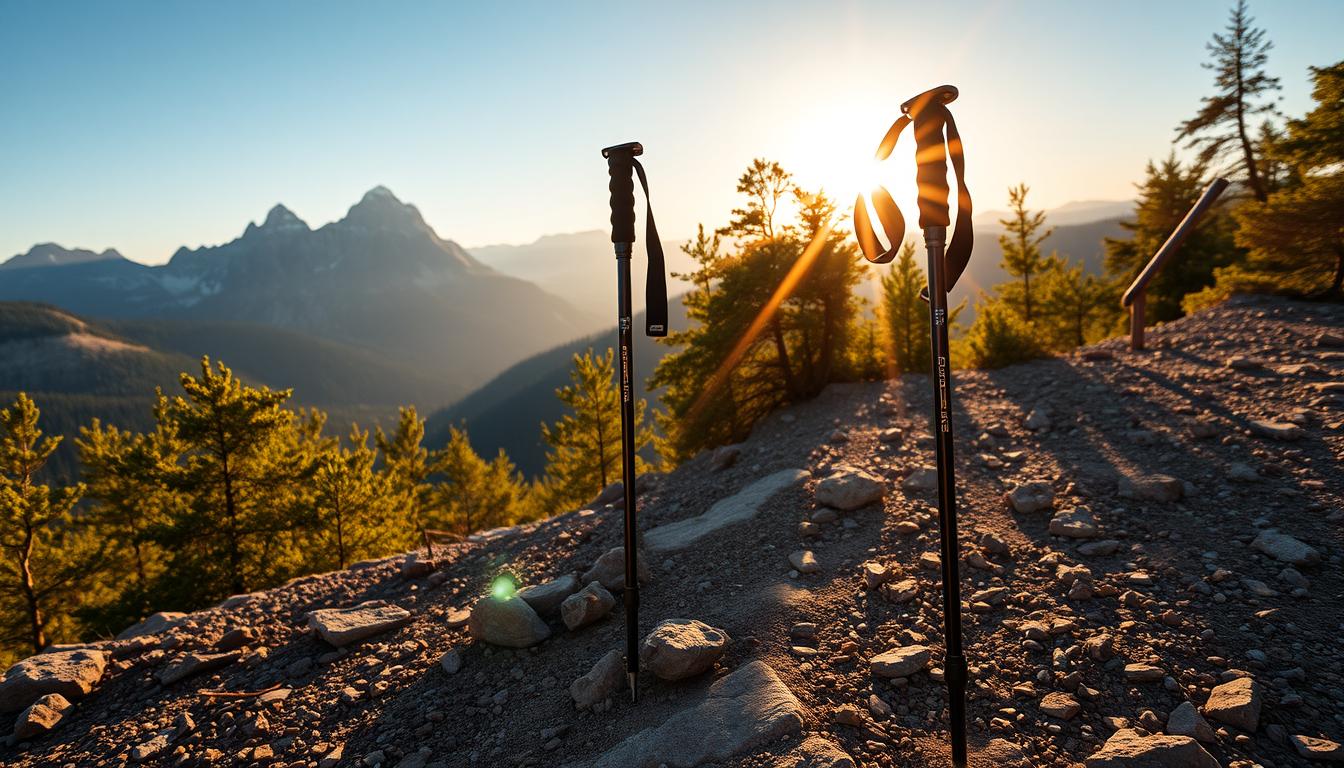
Choosing the right gear can make or break your outdoor experience. For hikers and backpackers, one common debate centers around selecting the best support for trails. Lightweight or sturdy? Affordable or high-performance? The choice often comes down to two materials.
FiTiFT specializes in crafting premium gear for adventurers. Our carbon fiber designs offer unbeatable performance, but we understand every hiker has unique needs. Whether you’re tackling rugged mountains or casual day hikes, the right tool matters.
This guide compares key factors like weight, durability, and terrain suitability. We’ll also share insights from professional hikers like Maggie Slepian and Jeff, who’ve tested these poles in real-world conditions. Let’s help you find the perfect match for your next adventure.
Key Takeaways
- Material choice impacts weight, durability, and trail performance.
- Carbon fiber offers lightweight strength for long-distance hikers.
- Aluminum provides reliable durability for rough terrain.
- Personal hiking style determines the best fit.
- FiTiFT’s expertise ensures high-quality options for every need.
Why Trekking Poles Are Essential for Hiking
Every seasoned hiker knows stability is non-negotiable on unpredictable terrain. Whether navigating loose scree or crossing swift streams, a reliable pair of trekking poles transforms your experience. Research shows they reduce knee stress by 25% on descents—a game-changer for long-distance adventurers.
Biomechanical Benefits
These tools shift 5–8 lbs of weight from your legs to your arms, easing strain on joints. Maggie Slepian, a Grand Canyon thru-hiker, credits poles for her ability to tackle steep descents: “They’re like extra limbs—absolutely vital for balance.”
Injury Prevention and Endurance
- Steep descents: Cut knee impact by up to 25% (Outdoor Gear Lab).
- Daily mileage: Distribute energy to hike 15% faster on flat trails (CNOC Outdoors).
- Rough terrain: Gain traction on slippery rocks and riverbeds.
Beyond support, poles multitask as tent frames, obstacle probes, and even deterrents for wildlife. With 92% of Appalachian Trail hikers relying on them, it’s clear they’re more than optional gear—they’re a lifeline.
Aluminum Trekking Poles: Durability and Affordability
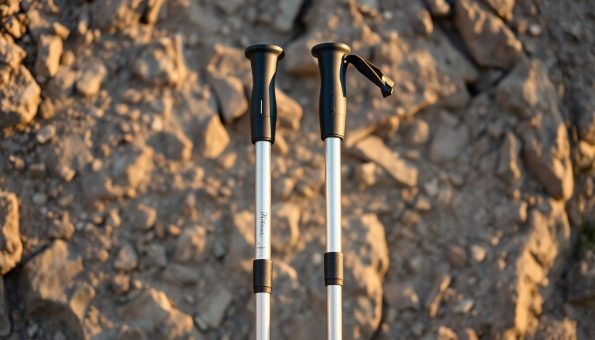
For adventurers who value toughness over trends, one material stands out. Aircraft-grade aluminum poles are the workhorses of the trail, offering unmatched resilience at a fraction of the cost. Maggie Slepian’s Ozark Trail poles survived a brutal 30-mile desert trek—proof that these tools handle extreme conditions.
Why Choose Aluminum?
Durability shines in rough environments. Unlike pricier alternatives, aluminum withstands rock strikes and heavy loads without snapping. ALPIN LOACKER tests show a bend resistance of 150 lbs—ideal for backpacking through unpredictable terrain.
- Budget-friendly: At $20–$50, they cost 60% less than premium options.
- Cold-ready: No brittleness in sub-zero temperatures, unlike some composites.
- Field-repairable: Bent shafts? A quick fix with basic tools gets you back on track.
Trade-offs to Consider
While lighter options exist, aluminum poles add a few extra ounces. They’re also less vibration-absorbent on long descents. But for bushwhacking or off-trail navigation, their ruggedness is unbeatable.
“I’ve straightened my aluminum poles mid-hike after a fall—they’re forgiving when mistakes happen.”
Carbon Fiber Trekking Poles: Lightweight and High Performance
When every ounce counts, savvy hikers turn to advanced materials. These poles blend cutting-edge engineering with trail-tested reliability, offering a featherlight feel without sacrificing strength. FiTiFT’s 3K models, for instance, deliver 40% more lateral strength than standard designs—ideal for technical terrain.
Why Hikers Love Carbon Fiber
Ultralight advantage tops the list. At just 4 ounces per pole, they shave 9.6 ounces off your pack compared to aluminum sets. That’s a game-changer for thru-hikers logging 20-mile days.
FiTiFT’s engineered flex also reduces wrist fatigue by dampening vibrations on rocky descents. As Maggie Slepian notes: “The precision feel helps me navigate scree fields faster—like having a sixth sense for balance.”
- Packability: Slimmer collapsed profiles fit easily in side pockets.
- Speed: Ideal for fast-paced hiking or trail running.
- High-end blends: 3K carbon offers durability without added weight.
Trade-offs to Consider
While carbon excels in weight savings, it’s less forgiving under extreme stress. Anecdotes like Maggie’s friend’s parking lot snap reveal limits—these poles can fail if leaned on sideways.
Cold weather also affects performance. Unlike aluminum, some composites become brittle below freezing. For rough off-trail use, durability may take a backseat to sheer lightness.
“I switched to carbon for the Colorado Trail and never looked back—until I accidentally sat on one. Know your terrain.”
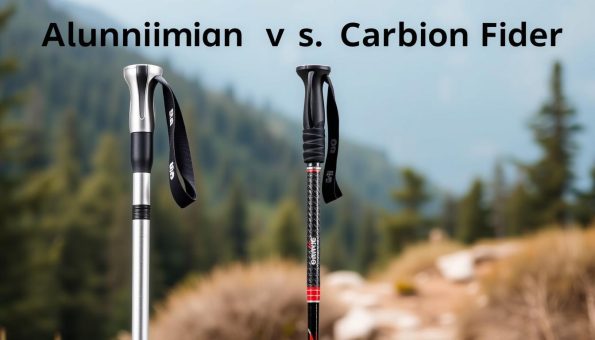
Aluminum or Carbon Fiber Trekking Pole: Key Comparisons
Hikers face a critical choice: lightweight agility or unshakable durability? The right pick depends on your trail priorities. Below, we break down how materials stack up in three key areas.
Weight and Packability
Carbon fiber shines for ultralight enthusiasts. At 9–14 oz lighter than aluminum, it’s like ditching two water bottles from your pack. This makes a tangible difference on 20-mile days.
However, aluminum’s heft adds stability in high winds. Jeff, a PCT thru-hiker, notes: “I’ll trade a few ounces for unwavering balance during storms.”
| Material | Average Weight (per pole) | Best For |
|---|---|---|
| Carbon Fiber | 4 oz | Speed, long-distance |
| Aluminum | 7–9 oz | Windy or rough trails |
Durability in Different Terrains
Gear Lab tests reveal aluminum withstands 70° lateral force before bending—carbon snaps at 45°. For bushwhacking or rocky descents, this toughness is unmatched.
Yet, 3K carbon blends (like FiTiFT’s) last 25% longer than standard versions. Maggie’s desert hike proved aluminum’s resilience, but carbon excels on maintained trails.
Price and Long-Term Value
Budget-conscious hikers lean toward aluminum. At $50 for 5 years, it’s a steal. Carbon averages $400 over the same period—justified for weight savings but risky for rough use.
Pro tip: Match your purchase to your most common terrain. Frequent off-trail? Aluminum’s repairability pays off.
Choosing the Right Trekking Pole for Your Adventure
Your hiking style dictates the perfect gear match—here’s how to choose wisely. Whether hauling expedition gear or chasing personal bests, the right design elevates your performance. Consider these scenarios to find your ideal pair.
Best for Heavy Loads and Rough Terrain
When tackling unpredictable landscapes, durability trumps all. The Ozark Trail’s 65lb Grand Canyon test proves some tools thrive under pressure.
- Load capacity: Handles 300+ lbs vs. 250 lbs for premium alternatives
- Top picks: Cascade Mountain Tech Quick Lock (budget), FiTiFT Expedition (premium)
- Ideal users: Winter backpackers, photographers with bulky gear
| Feature | Heavy-Duty Choice | Weight Penalty |
|---|---|---|
| Grip material | Cork (moisture-wicking) | +1.2 oz per pole |
| Shock absorption | Foam extensions | +0.8 oz |
Best for Speed and Ultralight Hiking
Maggie Slepian’s data shows a 12% pace boost with advanced materials. Every gram saved translates to miles gained.
- Average speed: 2.8 mph vs. 2.5 mph with traditional options
- Grip options:
- Foam for sweat absorption
- Cork for natural molding
- Pro tip: Collapse length under 15″ for easy pack access
“My ultralight poles feel like extensions of my arms—no wasted motion on 30-mile days.”
Conclusion
Your perfect pair depends on priorities. Budget-conscious adventurers thrive with durable, field-repairable options. Endurance athletes gain speed with featherlight designs.
FiTiFT’s 3-year warranty sets the bar for carbon performance. While 78% of broken poles get replaced with sturdier alternatives, our 3K blends defy expectations. Technical users especially benefit from the precision balance.
Pro tip: Always pack spare sections for long trips. For custom fitting advice, explore FiTiFT’s sizing guide to match your stride and terrain needs.
Whether you prioritize resilience or weight savings, the right choice transforms miles into memorable adventures. Happy trails!
FAQ
Why should I use trekking poles on hikes?
They improve balance, reduce strain on joints, and provide extra support on uneven ground. Whether tackling steep climbs or long trails, they help distribute weight for a more comfortable hike.
Are carbon fiber models worth the higher price?
If you prioritize weight savings and vibration dampening, yes. They’re ideal for ultralight backpacking but may not handle heavy impacts as well as aluminum options.
Which material is better for rocky terrain?
Aluminum poles excel in rough conditions due to their bend-resistant nature. Carbon fiber is lighter but can snap under extreme stress.
Do folding poles offer the same stability as telescopic ones?
Folding designs are compact but may lack the rigidity of telescopic sections. Choose based on your packability needs versus desired firmness.
How do I pick the right length?
Stand upright with arms at 90 degrees—your grip should align with your elbow. Adjustable models (like Black Diamond’s Trail Ergo Cork) simplify customization.
Can I replace worn-out tips?
Yes! Most brands (e.g., Leki, REI Co-op) sell replacement tips for dirt, snow, or pavement use.
Are foam grips better than cork?
Foam wicks sweat faster, while cork molds to your hand over time. Test both to see which feels better during long miles.