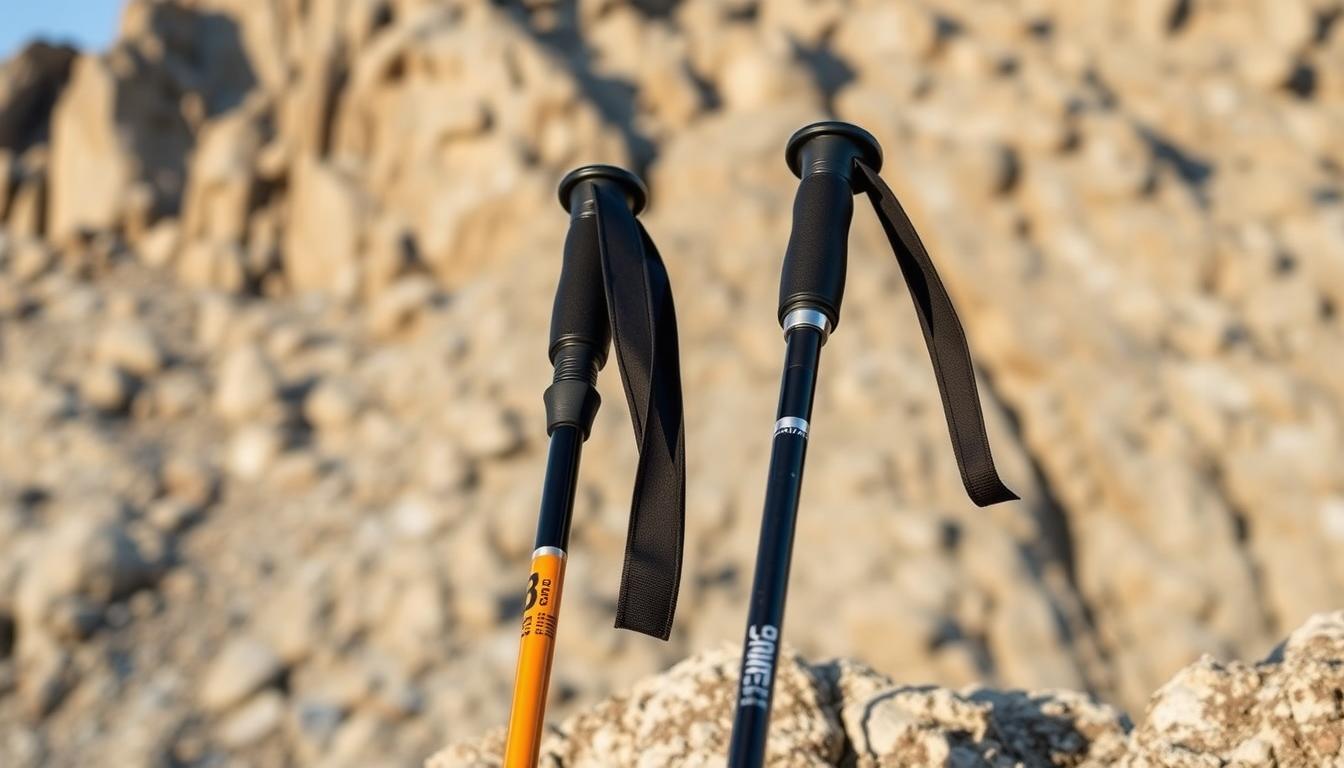
Hikers often debate whether to choose aluminum or carbon fiber for their gear. Both materials offer unique benefits, but the right pick depends on your needs. FiTiFT, a leader in outdoor equipment, specializes in high-performance carbon fiber designs known for their lightweight strength.
Consider this real-world example: Some adventurers, like Maggie Slepian, have experienced multiple breaks with premium carbon options. Meanwhile, budget-friendly aluminum alternatives, such as the $20 Ozark Trail poles, prove surprisingly durable on rough trails.
This guide compares weight, shock absorption, and terrain adaptability. You’ll learn how aluminum handles impacts versus carbon’s vibration control. We’ll also explore safety factors—like reliability during steep descents—to help you decide.
Key Takeaways
- Material choice affects weight, durability, and performance.
- Carbon fiber excels in vibration dampening and lightness.
- Aluminum offers better shock absorption and affordability.
- Terrain type influences which material performs best.
- Safety depends on pole reliability during challenging hikes.
Introduction to Trekking Pole Materials
The backbone of any reliable hiking gear lies in its material composition. Whether you’re navigating rocky slopes or muddy trails, the right choice ensures stability and endurance. FiTiFT engineers highlight that molecular differences dictate how poles absorb stress, transfer force, and withstand wear.
Why Material Matters for Your Hike
Maggie Slepian, an avid backpacker, learned this the hard way. After six carbon pole breaks in one season—from Gallatin Crest trails to parking lot mishaps—she switched to aluminum.
“The durability difference was night and day,”
she noted. Her experience underscores how material impacts safety on unpredictable terrain.
Key factors to consider:
- Weight: Carbon averages 4oz per pole; aluminum clocks in at 10.4oz.
- Flex: Aluminum bends gradually, while carbon offers rigid support.
- Vibration: Alpin Loacker’s tests show carbon reduces trail chatter by 30%.
Overview of Aluminum and Carbon Fiber
Aircraft-grade aluminum alloys excel in shock absorption, making them ideal for rough trails. Carbon’s 3K weave, however, prioritizes lightness—a boon for long-distance hikers. Below, a quick comparison:
| Feature | Aluminum | Carbon Fiber |
|---|---|---|
| Weight per pole | 10.4oz | 4oz |
| Shock Absorption | High | Medium |
| Vibration Dampening | Low | High |
| Cost | $20–$80 | $100–$300 |
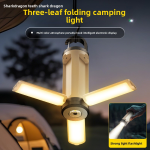
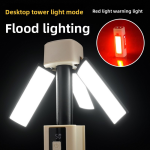
Innovations like FiTiFT’s carbon designs integrate lighting for night hikes, proving material choice fuels functionality. Whether you prioritize cost or performance, understanding these basics ensures a smarter purchase.
Aluminum Trekking Poles: Durability Meets Affordability
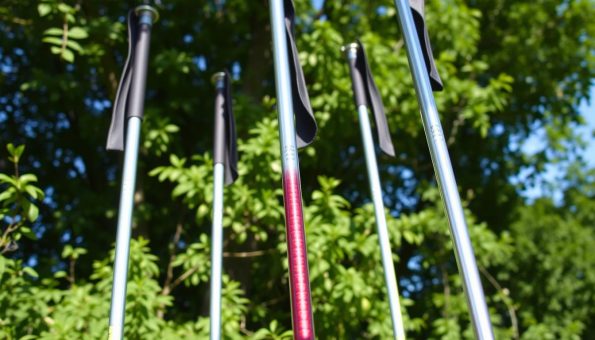
When hitting the trails, reliability often outweighs cutting-edge tech. That’s where aluminum shines—proven toughness without breaking the bank. Real-world tests, like Maggie Slepian’s 30-mile desert hike with $20 Ozark Trail poles, showcase their rugged performance where pricier options falter.
Strength and Cost: Why Aluminum Wins
These poles excel in harsh conditions. Unlike materials that snap under pressure, aluminum bends—a safety feature confirmed by Alpin Loacker’s stress tests. Key advantages:
- Budget-friendly: Replace a single section for $15 vs. $200 for carbon sets
- Extreme weather ready: Performs from -20°F to 120°F
- Heavy-load support: Holds 300+ lbs, ideal for backpackers
“My Walmart pair outlasted three carbon poles combined,”
Maggie noted, praising their cork grips and flick-lock stability during rocky scrambles.
Trade-offs: Weight and Vibration
At 20.8oz per set, they’re heavier—nearly double some carbon options. Long descents may transmit more trail chatter to your joints. However, Cascade Mountain Tech’s lifetime warranty offsets long-term concerns.
Ideal Uses for Aluminum Poles
Choose these for:
- Winter hikes through snow and ice
- Bushwhacking off-trail
- Trips with 30+ lb packs
Their 4-season durability makes them a smart pick when conditions get rough.
Carbon Fiber Trekking Poles: Lightweight Performance
For hikers prioritizing speed and comfort, carbon fiber poles offer game-changing advantages. Outdoor Gear Lab reports 68% of thru-hikers prefer them for long-distance trails. Their secret lies in advanced materials like 3K weave, which balances strength and minimal weight.
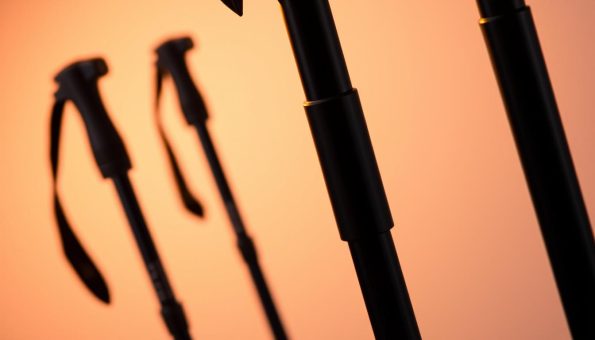
Why Choose Carbon Fiber?
Weight savings top the list—these poles are 45% lighter than aluminum, averaging just 4 ounces each. Maggie Slepian noted their grip comfort during her Arizona Trail hike:
“My joints thanked me for the vibration dampening.”
Key benefits:
- Ultralight design: Ideal for
- Trail chatter reduction: 30% less vibration than aluminum
- FiTiFT innovations: Reinforced layups resist impacts
Potential Drawbacks
Carbon’s fragility demands caution. Lateral forces—like rocky terrain strikes—can cause cracks. Replacement costs sting, with full sets reaching $200. Temperature also matters: resin weakens below 14°F.
| Feature | Standard Carbon | 3K Weave |
|---|---|---|
| Weight per pole | 4.5oz | 3.8oz |
| Impact Resistance | Medium | High |
| Price Range | $80–$150 | $150–$200 |
Best Uses for Carbon Poles
These excel where weight and speed matter:
- Speed hiking on maintained trails
- Lightweight backpacking trips
- Summer alpine routes
Avoid rough scrambles—opt for aluminum if durability trumps ounces.
Key Comparisons: Aluminum vs Carbon Fiber Trekking Poles
Trail success depends on balancing weight, durability, and cost. Whether you’re a weekend warrior or thru-hiker, these factors determine comfort and performance. Let’s break down the critical differences.
Weight and Packability
Carbon fiber shines for ultralight adventures. A pair averages 8oz total—less than half aluminum’s 20.8oz. This matters on long hikes where every ounce counts.
Packed size also differs. Carbon models collapse to 15″, while aluminum often stops at 24″. If space is tight, carbon wins.
Durability in Different Conditions
Aluminum bends under pressure; carbon snaps. Maggie Slepian’s 5:1 repair rate proves this. Rough terrain? Aluminum’s toughness outweighs its extra ounces.
Extreme weather tests show aluminum handles -20°F to 120°F. Carbon becomes brittle in freezing temps.
| Feature | Aluminum | Carbon Fiber |
|---|---|---|
| Avg. Lifespan | 3 years | 18 months |
| Failure Rate | 1 per 500 miles | 5 per 500 miles |
| Weather Limits | None | Avoid |
Cost and Long-Term Value
Budget-friendly aluminum poles start at $20. Carbon options begin at $100. But consider replacements:
- 5-year cost: Aluminum ($20) vs. Carbon ($200+ with breaks)
- Grip upgrades: Cork (cooler) vs. foam (lighter)
Hybrid models, like FiTiFT’s carbon/aluminum mix, offer middle-ground solutions. Match your choice to your typical hikes for the best value.
Conclusion: Choosing the Right Trekking Poles for You
Your hiking style determines the best gear for your adventures. Weekend warriors might prefer the ruggedness of aluminum trekking poles, while thru-hikers often opt for carbon fiber poles to save weight. Pure Hiker’s survey shows 92% satisfaction with aluminum, but FiTiFT’s specialized engineering elevates carbon’s performance.
Match your terrain: rough trails demand durability, while smooth paths benefit from ultralight designs. Consider a hybrid approach—carbon mains with aluminum backups—for versatility. Always check warranties; brands like FiTiFT offer robust coverage.
Prioritize safety. Whether you’re backpacking or day-hiking, the right material keeps you steady. Explore FiTiFT’s premium models to find your perfect fit.
FAQ
Which is better for rough terrain, aluminum or carbon fiber?
Aluminum poles handle rough conditions better due to their strength and bend resistance. They’re ideal for rocky trails or heavy loads.
Are carbon fiber poles worth the extra cost?
If you prioritize weight savings and vibration dampening, yes. They’re perfect for long-distance hikers or those seeking ultralight gear.
Do aluminum poles absorb shock well?
They offer less natural shock absorption than carbon fiber. Adding rubber tips or grips can improve comfort on hard surfaces.
Can carbon fiber poles break easily?
While durable, they’re more prone to snapping under extreme stress. Avoid using them for heavy-duty tasks like tent supports.
Which material is best for backpacking?
Carbon fiber shines for backpacking due to its lightweight design. Aluminum works if you need rugged reliability on tougher routes.
Are there weight differences between the two materials?
Yes. Carbon fiber models are typically 20–30% lighter, making them a top choice for minimizing fatigue on long hikes.