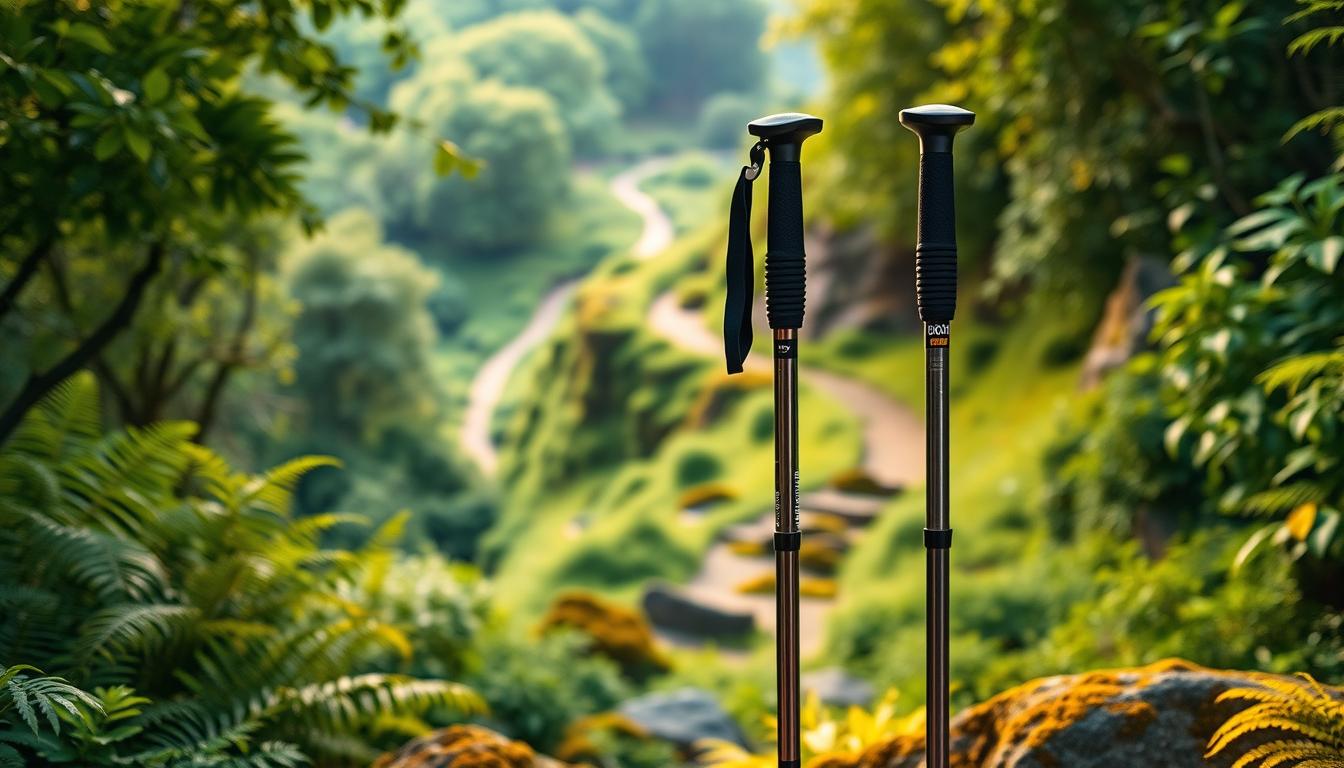
Choosing the right walking gear changes how a day on the trail feels. Poles help you balance on rough ground, ease stress on knees, and push uphill with less effort. Small weight differences add up over miles, so material matters.
Light models often cut fatigue: many carbon options save several ounces per pair, while metal choices usually weigh more but cost less.
Carbon brings stiffness and vibration damping that can make long miles smoother. Metal alloys tend to bend under side loads instead of shattering, which can save a hike when rocks and roots bite.
In this guide you’ll get a quick look at weight ranges, failure modes, price differences, and real-world tips for choosing the best fit for your pace and terrain.
Key Takeaways
- Poles boost balance, reduce joint strain, and improve confidence on tricky trails.
- Weight affects fatigue—lighter gear helps on long hikes, while heavier gear can add durability.
- Carbon offers low weight and smooth feel; metal often bends instead of breaking in crashes.
- Budget, terrain, and distance should guide the choice more than brand hype.
- We’ll show clear scenarios so you can pick the right setup for your next hike.
Understanding the trekking pole debate and who this comparison is for
My goal here is simple: help you match gear to goals. Your typical trail, pack weight, and pace matter more than brand claims about any single shaft type.
This guide helps three groups:
- Beginners picking their first trekking poles for steady support on mixed routes.
- Backpackers refining kit choices for multi-day trips and lighter packs.
- Day hikers seeking better support on roots, talus, mud, and snow.
Neither material wins every test. One side brings lower weight and better vibration damping, while the other tends to bend under side loads and withstand rough handling without catastrophic failure.
Think about your pack weight, fitness, and usual terrain when you decide. Budget matters too: aluminum poles often cost less, while higher-end carbon fiber draws ounce-counters willing to pay more for every pound saved.
Later sections will map use cases—long-distance speed, rough trails, and cold-weather needs—so you can pick the right option for comfort and real-world support.
Aluminum vs. carbon fiber: key differences that matter on the trail
Small differences in construction change how a pole behaves after hours on the trail. Below we break down the trade-offs so you can match gear to terrain and pace.
Weight and fatigue on long hikes
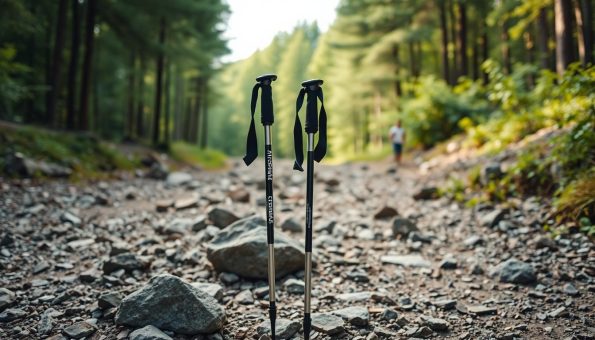
Carbon designs commonly weigh 12–18 oz per pair, while aluminum options often fall between 18–22 oz per pair. A Hiker Hunger example shows 15 oz per pair for carbon versus 18 oz for aluminum.
Those extra ounces add up over miles, so ounce-counters favor lighter shafts for long hikes and faster days.
Durability and reliability
Carbon resists straight compressive loads but can shatter under side impacts, especially when resin ages or in cold weather.
7075 alloy metal bends instead of breaking and can often be straightened after a rough hit on rocks or roots.
Comfort, vibration, and value
Carbon offers better vibration damping and a firmer planted feel. Metal transmits more buzz unless grips or shock features help.
Price-wise, carbon generally costs more ($75–$120+), while aluminum trekking poles remain budget-friendly and practical for first-time buyers.
Which is better, aluminum or carbon fiber trekking poles?
Trail goals decide the right shaft: heavy packs and rock gardens need forgiving metal, while speed hikers prize low weight. Below are clear, scenario-based recommendations to match material to terrain, temperature, and tempo.
Best option for heavy loads, rough trails, and going downhill
Choose a shaft that bends instead of snapping when it hits a rock. For heavy loads and steep descents, predictability and durability matter more than ounces.
Metal shafts offer reliable support during aggressive braking going downhill and when you lean on your grip for balance. They handle side impacts and can often be straightened after a bad hit.
Best option for ultralight, long-distance hikes and faster pace
Go light to reduce fatigue over long miles. Low-weight shafts cut swing weight and reduce joint strain, making long days feel smoother and faster.
If your main priority is covering big distances on maintained tracks, the reduced vibration and weight savings pay off despite a higher price tag.
Cold weather, temperature sensitivity, and trail conditions
In cold and mixed terrain—mud, talus, snow—temperature stability matters. Metal maintains its properties in low temps, while lighter shafts can get brittle under severe side loads.
Budget also factors in: metal options stay affordable and dependable; premium lightweight models carry a premium that some hikers gladly pay for speed gains.
| Use Case | Durability | Weight | Best For |
|---|---|---|---|
| Heavy packs & rough trails | High—bends, can be repaired | Moderate | Stability, downhill braking |
| Ultralight & long-distance | Moderate—can be brittle under side loads | Very low | Reducing fatigue, speed |
| Cold or mixed conditions | Stable in cold | Varies | Winter hikes, technical terrain |
What to consider beyond material: pole types, grips, and fit
Beyond shaft choice, fit and function shape real-world comfort. Quick decisions about collapse style, locks, and grips affect pack space and trail handling.
Telescopic vs. foldable
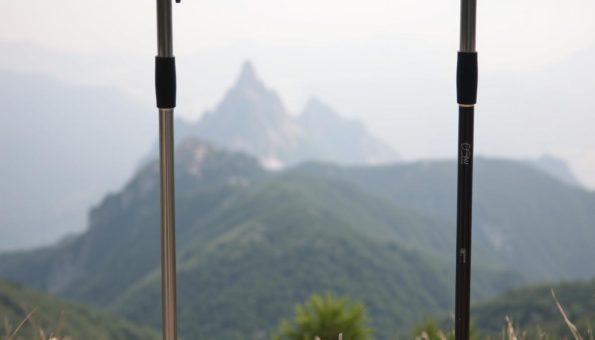
Telescopic designs collapse with screw or clamp locks and deliver strong, adjustable support for scrambles and snow. They pack larger but feel stable.
Foldable models use an internal cable. They pack smaller and often save weight, making them ideal for travel and fast outings.
Grips and vibration
Cork grips and quality foam keep hands drier and reduce blisters. Rubber can trap sweat and wear skin on long days.
“A good grip can cut hand fatigue more than a few ounces of weight.”
Fit and on-trail adjustment
Set length so your elbow is about 90° with the tip planted. Lengthen poles slightly for sustained descents to aid braking and posture.
| Feature | Best for | Benefit | Notes |
|---|---|---|---|
| Telescopic | Technical terrain | Strong locks, adjustable | Heavier, more pack space |
| Foldable | Travel & fast hikes | Packs small, lighter | Quick setup, less bulk |
| Grip types | All-day use | Cork/foam = comfort | Rubber best for wet grip |
| Fit options | Different heights | Better control | Short models for under 165 cm |
Real-world examples to guide your choice
Hands-on examples cut through specs to show how a set performs day after day.
Carbon fiber highlight: LEKI Micro Vario for ultralight versatility
LEKI’s Micro Vario folds small and sets up fast with an External Locking Device and SpeedLock adjusters. The thermo-foam grip soaks up vibration, helping you feel steadier on long hikes.
The pack size (about 44″-55″ range when extended) makes this pair ideal for fast, light outings where minimal bulk matters. Carbide tips and swap-ready baskets let you adapt to mud, snow, or rock.
Aluminum standout: Black Diamond Trail Ergo for robust support
Black Diamond Trail Ergo uses a telescoping design with heavy-duty flick locks for solid feel on technical ground. The angled cork grips at 15° keep wrists neutral and reduce strain on climbs and descents.
This aluminum pole offers easy length range from 27″ to 55″, sturdy carbide tips, and 38 mm baskets that swap for snow or rubber options. It’s built to take hits and keep working day after day.
| Model | Design | Length Range | Key Strength |
|---|---|---|---|
| LEKI Micro Vario | Folding, ELD + SpeedLock | 44″–55″ | Packability, low weight, quick deployment |
| Black Diamond Trail Ergo | Telescoping, flick locks | 27″–55″ | Durability, ergonomic grip, reliable locks |
Purchase cue: choose the folding carbon option if small packed size and low weight matter most. Pick the telescoping aluminum pole when you want long-term durability and a comfy grip for mixed terrain.
Conclusion
Match your shaft choice to how you hike most days — that will pay off in comfort and safety. For rugged routes and heavy packs, choose aluminum for proven resilience and an affordable price. It bends under side loads and keeps working.
For long hikes where every ounce matters, a carbon fiber shaft cuts weight and vibration. Higher-end, made carbon builds last longer and feel livelier on clean tread.
When compared carbon to aluminum in cold or rocky ground, the metal gets the nod for predictable field fixes. When compared carbon fiber to aluminum on smooth trails, the lighter pair carbon fiber option shines.
Quick checklist: consider terrain, temperature, load, and price to pick the right option for your next trek.
FAQ
Which material is lighter for long hikes and faster paces?
Carbon fiber poles are typically lighter per pair, reducing arm fatigue on long miles and at a faster pace. That weight saving helps on alpine traverses and thru-hikes.
Which option holds up better under heavy loads and rough trails?
Aluminum poles excel for heavy loads and rocky, aggressive terrain. They bend under extreme stress instead of shattering, so they often give a warning before failing and are easier to repair in the field.
How do the two compare for vibration damping and comfort?
Carbon fiber tends to transmit less vibration to the hands, giving a smoother feel on hard surfaces. Aluminum can feel harsher, though decent cork or foam grips help reduce hand fatigue.
Are there safety differences in how they break?
Yes. Aluminum usually bends, which can be safer and salvageable. Carbon fiber can snap suddenly on severe impact, so consider conditions and backup plans if you rely on them in remote areas.
Which choice gives better value for casual hikers and beginners?
Aluminum offers strong value for most beginners. It’s affordable, durable, and forgiving if you hit rocks or roots. For weekend hikers, it’s often the sensible pick.
Are carbon fiber poles more expensive per pair?
Generally yes. Carbon models command a premium for lighter weight and vibration damping. Budget-conscious buyers often find aluminum delivers more dollars-per-durability.
Do either material perform differently in cold weather?
Aluminum conducts cold more, which can chill hands when gripping metal. Carbon fiber doesn’t transfer temperature as much, making it a slightly nicer feel in frigid conditions—though good gloves and cork grips matter more.
Which poles are better for technical downhill sections?
For steep, technical descents with heavy load, many hikers trust aluminum for its forgiving bend and predictable failure mode. Carbon can still work if you prioritize weight, but it’s less tolerant of sudden lateral impacts.
How should I choose between telescopic and foldable poles regardless of material?
Telescopic poles offer adjustable length and simple repairability; they compress small but can be heavier. Foldable poles pack very small and are great for scrambling or travel, but hinge points must be checked regularly for wear.
Which grip material pairs best with each shaft type?
Cork grips suit long days and sweaty palms, reducing blisters and absorbing moisture. Foam stays comfy in cold weather. Rubber grips give the most control on short hikes and wet conditions. These work across both shaft materials.
Any real-world model examples to test?
For ultralight versatility try carbon models like the LEKI Micro Vario series. For robust value and field toughness, look at aluminum choices such as the Black Diamond Trail Ergo lineup.
How should I set pole height for descents and uneven terrain?
Shorten poles by a few inches for downhill to avoid overreaching and use slightly longer length for uphill for added propulsion. Quick-adjust locks make on-trail changes faster and more precise.