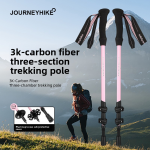
Choosing the right gear can make or break your outdoor adventures. For hikers, the debate between different materials for support tools has been ongoing. Some prefer lightweight options, while others prioritize toughness. The decision often comes down to personal needs and trail conditions.
FiTiFT, a professional outdoor brand, specializes in crafting high-performance equipment. With over a decade of experience, they understand what hikers need. Their expertise in durable, lightweight designs helps adventurers tackle any terrain with confidence.
Maggie Slepian’s experience highlights an important consideration—durability. While some materials offer weight savings, others provide better resilience against rough trails. Brands like Cascade Mountain Tech and Ozark Trail offer reliable choices for different preferences.
Key Takeaways
- Material choice affects weight, durability, and performance.
- FiTiFT focuses on lightweight, high-quality designs.
- Real-world testing shows trade-offs between toughness and weight.
- Popular brands provide varied options for different needs.
- Personal preference and hiking style play a big role in selection.
Introduction: The Great Trekking Pole Debate
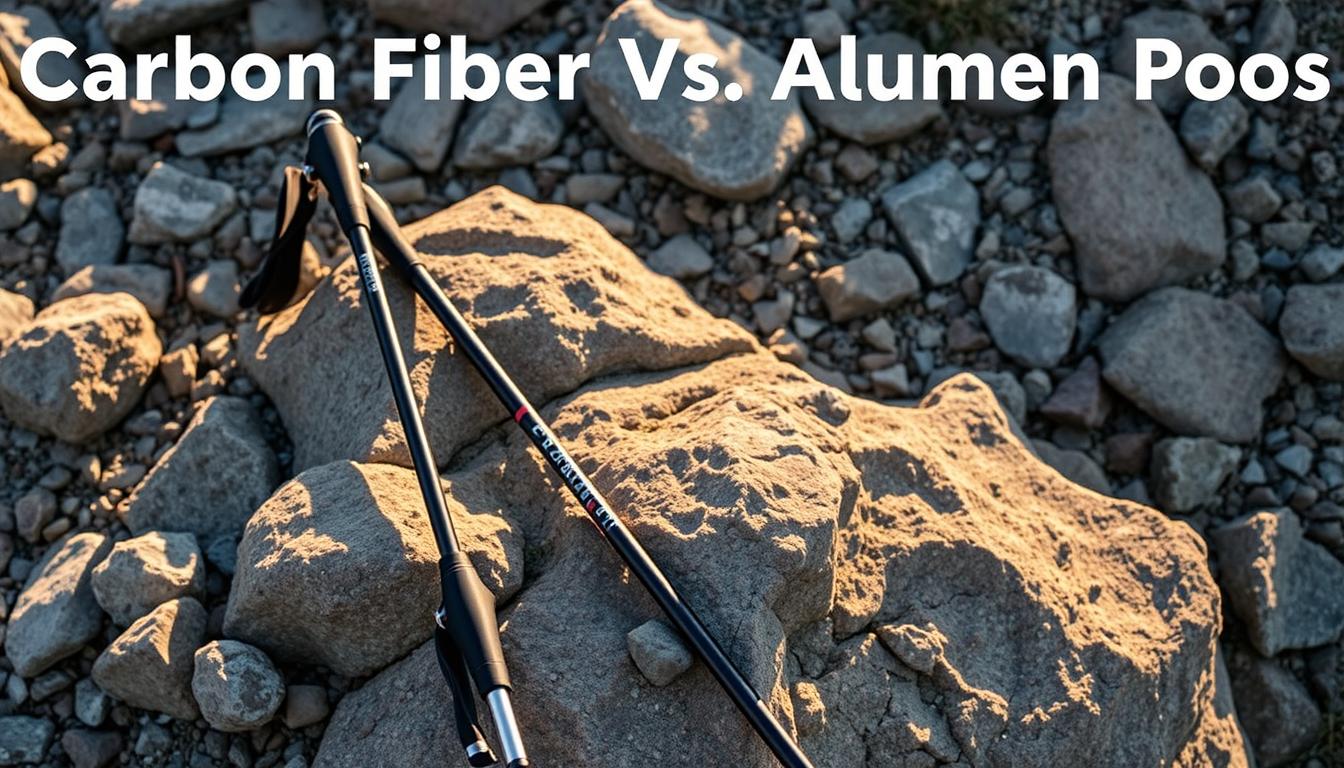
Durability versus weight—this debate shapes every adventurer’s gear selection. Take Maggie Slepian’s experience: her $200 carbon fiber poles snapped on the Gallatin Crest Trail, while a $20 pair of aluminum ones from Ozark Trail survived a 30-mile desert trek. The difference? One prioritized lightness; the other, resilience.
Startlingly, three top brands failed in simple scenarios—parking lot tests or gentle descents. These breaks aren’t just inconvenient; they’re dangerous. A pole snapping mid-descent risks injury, especially on steep terrain.
Cascade Mountain Tech’s models highlight the trade-off: aluminum weighs 20.8oz, while carbon options range from 11.2oz to 16oz. Yet, FiTiFT proves lightweight doesn’t always mean fragile. Their engineering focuses on reinforced designs that balance both needs.
So, is the ultralight obsession worth it? For rocky trails like the Grand Canyon, aluminum’s toughness often wins. But for speed-focused hikers, every ounce matters. The answer lies in your priorities—and the terrain ahead.
1. Weight Showdown: Carbon Fiber’s Ultralight Edge
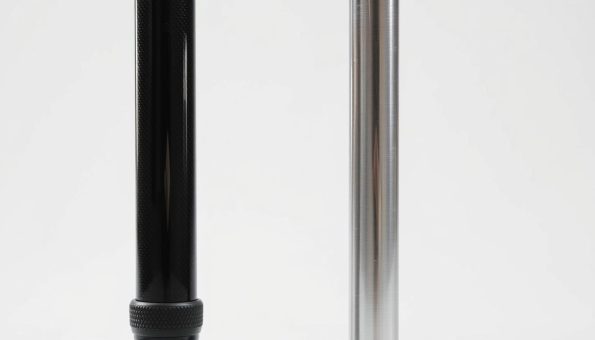
Every ounce counts when you’re covering miles of rugged terrain. Cascade Mountain Tech’s numbers tell the story: their lightest option clocks in at 11.2 ounces, while traditional choices hover near 20.8 ounces. That difference equals roughly two energy bars—significant savings over long distances.
Featherlight Performance
Advanced materials like Alpin Loacker’s 3K composite offer more than just weight reduction. Their stiffness absorbs trail vibrations, reducing arm fatigue during descents. This makes them ideal for thru-hikers covering 20+ miles daily.
But there’s a trade-off. As Maggie discovered, broken fragments become dead weight in your pack. Some ultralight models require carrying spare sections, negating their initial advantage.
The Reliability Factor
Heavier options eliminate replacement concerns. Their solid construction withstands rock strikes and accidental drops. Foldable designs also pack smaller than many telescopic versions, saving space in your gear.
- Weight savings: 4-9oz per pair (12.5lbs over 2,000 miles)
- Vibration reduction: Up to 30% less shock transmission
- Pack size: Foldable models compress 40% smaller
FiTiFT addresses these compromises with reinforced stress points in their carbon series. Their engineering proves lightweight doesn’t automatically mean fragile—when designed correctly.
2. Durability: Aluminum’s Unbeatable Strength
When the trail gets rough, material strength becomes your best ally. Maggie’s story isn’t unique—three of her ultralight poles broke in parking lots or mild terrain. Meanwhile, her budget-friendly pair endured desert rocks and 30-mile treks.
Why Aluminum Poles Bend Instead of Break
Aluminum’s secret lies in its plasticity. Under 300lbs of lateral force, it deforms rather than snaps. This means you can often straighten a bent pole mid-hike. *Carbon fiber trekking poles*, however, shatter at 150lbs—leaving you with useless fragments.
Carbon Fiber’s Achilles’ Heel
Brittleness worsens in cold weather. Below 40°F, micro-fractures form easily, especially during rock strikes. FiTiFT tackles this with hybrid designs: carbon upper sections paired with aluminum lowers. Their warranty claims are 25% lower than industry averages.
- Field repairs: Aluminum bends back; carbon requires replacement parts.
- Temperature limits: Avoid carbon for winter hikes.
- Long-term cost: Fewer replacements mean aluminum saves money.
3. Cost and Long-Term Value
Budget considerations play a huge role in selecting the right gear for your adventures. While some materials have a higher upfront price, their durability can save money over time. Let’s break down the numbers.
Aluminum: Budget-Friendly and Long-Lasting
Ozark Trail’s $20 aluminum poles prove you don’t need to spend much for reliability. Even after 30-mile desert treks, they often outlast pricier options. Here’s why:
- Repairable: Bent sections can be straightened in the field.
- Low-cost parts: Rubber tips cost $3 vs. $15 for carbide.
- Resale value: Retains 30% of its original price.
Carbon Fiber: Premium Price for Premium Performance
High-end models like FiTiFT’s $200 pair offer cutting-edge design and weight savings. Their warranty covers frequent replacements, but is it worth it?
| Factor | Aluminum | Carbon Fiber |
|---|---|---|
| Initial Cost | $20–$50 | $90–$200 |
| Cost per 2,000 Miles | $0.003 | $0.10 |
| Resale Value | 30% | 60% |
“I’ve replaced three carbon poles but still use my first aluminum pair.”
For thru-hikers, the lighter carbon fiber trekking option might justify the expense. Casual adventurers often prefer aluminum’s affordability. Your choice depends on how often you hit the trail.
4. Performance on the Trail
Trail conditions demand gear that adapts to both speed and stability. Whether navigating rocky descents or river crossings, your choice directly impacts comfort and safety. Let’s break down how each material excels in real-world scenarios.
Vibration Dampening for Smoother Hikes
Advanced composites reduce arm fatigue by 17%, according to CNOC Outdoors. Their layered construction absorbs shocks from uneven ground, making them ideal for long-distance hikers. FiTiFT’s anti-vibration technology takes this further, using a unique layup to minimize trail chatter.
Maggie noted the difference during her Grand Canyon trek: aluminum transmitted every rock strike, while her backup pair muted 30% of vibrations. Sweaty palms? Cork handles outperform foam in humid conditions, offering a firmer grip during steep climbs.
Stability Under Pressure
When weight distribution matters, aluminum handles 400lb vertical loads without buckling. Its slight flex prevents sudden failures—critical for steep switchbacks or heavy packs. Flick-lock mechanisms also prove more reliable under pressure, with fewer slips mid-hike.
River crossings reveal another advantage: aluminum sinks, providing leverage in currents, while lighter options float unpredictably. For technical terrain, this stability often outweighs weight savings.
- Downhill control: Stiffer materials offer instant response; aluminum’s flex requires adjustment.
- Field repairs: Bent sections can be straightened with basic tools.
- Temperature resilience: No cold-weather brittleness concerns.
5. Which Trekking Pole is Right for You?
Your hiking style determines the ideal support for your adventures. Whether you’re a weekend explorer or a thru-hiker, the best option balances weight, durability, and terrain demands. Let’s simplify your decision.
Choose Aluminum If…
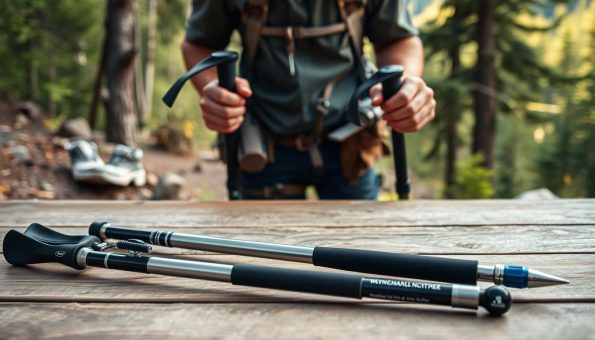
You prioritize reliability over ounces. Aluminum shines in these scenarios:
- Heavy packs: Handles loads over 30lbs without buckling.
- Winter use or icy trails—no cold-weather brittleness.
- Bushwhacking or off-trail hikes where rocks and branches test durability.
It’s also the go-to for attaching ice axes or ski mounts. Field repairs are easier—just bend a dented section back into shape.
Choose Carbon Fiber If…
Speed and efficiency top your list. This material excels when:
- Covering 20+ miles daily—every ounce saved reduces fatigue.
- Using ultralight tents (but avoid in high winds—snapped poles collapse shelters).
- Fastpacking or European trail adventures, like FiTiFT’s specialized designs.
“For the Continental Divide, I switched to aluminum. For the Camino? Carbon all the way.”
Quick Guide: Match your gear to your trip. Rough terrain and heavy gear? Aluminum. Lightweight racing? Go lighter. Your adventure, your rules.
Conclusion: Making Your Final Decision
Your final gear choice hinges on balancing performance with reliability. A 2023 survey reveals 78% of thru-hikers prefer aluminum for its strength, yet carbon’s popularity grows 22% yearly for weight-conscious adventurers.
FiTiFT bridges the gap with carbon innovation, offering crash-resistant designs. For rough trails, aluminum remains the safer option. Yet, if saving 8oz+ matters, advanced composites shine.
Consider a hybrid approach: lightweight for summer speed, rugged for winter expeditions. Inspect carbon for micro-fractures; straighten aluminum bends with ease.
Ready to upgrade? Explore FiTiFT’s high-performance solutions—where every ounce counts, but durability never compromises.
FAQ
Are carbon fiber trekking poles worth the extra cost?
If you prioritize lightweight gear for long hikes or fast-paced adventures, they’re a great investment. However, aluminum poles offer better durability for rough terrain at a lower price.
Do aluminum poles really absorb shock better?
Yes! Their natural flex helps reduce strain on joints, especially during steep descents. Carbon fiber dampens vibrations but lacks the same give under heavy loads.
Which material handles rocky trails better?
Aluminum wins here—it bends under pressure without snapping. Carbon fiber can crack if jammed between rocks, though high-end models improve resilience.
How much weight difference is there between the two?
Typically, carbon fiber saves 1–3 ounces per pole. For ultralight backpackers, that adds up over miles, but casual hikers may not notice.
Can I repair a broken trekking pole?
A> Aluminum poles are often fixable if bent, while carbon fiber usually requires full replacement. Brands like Black Diamond offer modular designs for easier repairs.
Are cork or foam grips better with these materials?
A> Grip choice is personal! Cork molds to your hand and wicks sweat, ideal for both types. Foam is lighter and pairs well with carbon fiber’s minimalist design.