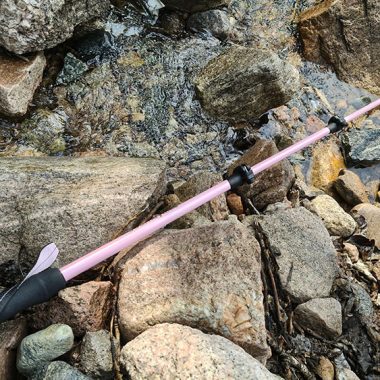

For modern hikers, lightweight and durable gear is essential. Carbon fiber trekking poles have become a popular choice, offering strength without the extra weight. These poles are designed to enhance your hiking experience, providing stability and reducing strain on your body.

Studies show that using the right trekking poles can reduce knee impact force by up to 40%. This makes them a valuable tool for long-distance trails. Expert reviews, like those in “The Best Trekking Poles,” highlight their versatility and performance.
Selecting the perfect pair involves balancing technical features with your trail needs. Properly chosen carbon fiber poles can significantly improve your mileage and overall enjoyment. Whether you’re a seasoned hiker or a beginner, this guide will help you make an informed decision.
Key Takeaways
- Lightweight and durable carbon fiber trekking poles are ideal for hikers.
- They reduce knee impact force by up to 40%, enhancing comfort.
- Expert reviews emphasize their versatility and performance.
- Balancing technical specs with trail needs is crucial for selection.
- Properly chosen poles improve mileage and overall hiking enjoyment.
Why Trekking Poles Are Essential for Hiking
Stability and endurance are key for a successful hike. Trekking poles provide both, making them a must-have for any outdoor enthusiast. They not only improve balance but also reduce strain on your body, ensuring a more enjoyable experience.
Benefits of Using Trekking Poles
Using trekking poles offers numerous advantages. They redistribute 5-8 pounds of weight per step, reducing the load on your knees. This can lower knee impact force by up to 40%, making them ideal for long-distance trails.
Poles also engage your upper body, improving endurance. They help maintain balance on uneven terrain, such as creek crossings or scree slopes. For single-pole users, the “Wizard Sticking” technique adds extra stability.
How Trekking Poles Enhance Stability and Reduce Strain
Trekking poles act as an extension of your arms, providing additional support. They absorb shock, reducing strain on your joints. This is especially helpful during steep descents or rocky paths.
Beyond hiking, poles can serve as shelter supports for ultralight tents. This dual-use functionality makes them a versatile addition to your gear. Despite the increased calorie burn, the energy savings they provide are significant.
| Feature | Benefit |
|---|---|
| Weight Redistribution | Reduces knee impact by up to 40% |
| Upper Body Engagement | Improves endurance and balance |
| Shock Absorption | Minimizes strain on joints |
| Dual-Use Functionality | Supports ultralight tent setups |
Understanding Carbon Fiber Trekking Poles
When it comes to hiking gear, the material of your equipment can make a big difference. Carbon fiber has gained popularity for its unique properties, offering a blend of strength and lightness. Understanding its advantages and limitations can help you decide if it’s the right fit for your needs.
What Makes Carbon Fiber Unique?
Carbon fiber is known for its exceptional vertical strength. It’s 30% lighter than aluminum, making it ideal for hikers who prioritize weight savings. However, it’s less flexible under lateral stress, which means it can snap if mishandled. This makes it perfect for fastpacking but less suitable for rugged terrains like rock scrambles.
Advantages of Carbon Fiber Over Aluminum
When comparing carbon fiber poles to aluminum poles, the difference in performance is clear. Carbon fiber excels in vertical strength, while aluminum bends rather than breaks under pressure. Here’s a quick breakdown:
- Weight: Carbon Fiber Z poles weigh around 12 oz, compared to 18 oz for aluminum.
- Cost: Carbon fiber ranges from $50 to $200, while aluminum is more budget-friendly at $30 to $120.
- Durability: Carbon fiber is great for speed and efficiency, but aluminum is better for extreme conditions like Everest treks.
One thing to note is that carbon fiber edges can chip during rock scrambles, so careful handling is essential. For hikers focused on weight reduction and speed, carbon fiber is a top choice. However, if durability in harsh environments is your priority, aluminum might be the better option.
Design Configurations for Trekking Poles
Exploring the different designs of trekking poles can elevate your hiking experience. The way these poles are built affects their performance, making it essential to understand the options available. Whether you’re a trail runner or a backpacking enthusiast, the right design ensures comfort and efficiency on the trail.
Telescoping vs. Folding Poles
Telescoping poles adjust in size, typically ranging from 12 to 16 inches. They are known for their durability and versatility, making them a popular choice for many hikers. However, their packed length of around 27 inches can be bulky for climbing packs.
Folding poles, on the other hand, collapse to a smaller size, often around 15 inches. This makes them ideal for backpacking or climbing trips where space is limited. The Distance Carbon Z is a top folding model, praised for its lightweight and compact design.
When it comes to locking mechanisms, telescoping poles often use lever locks. These can be made of plastic or metal, with metal being more reliable over time. Folding poles typically rely on a twist-lock system, which is efficient but may require occasional maintenance.
Combination Designs: The Best of Both Worlds
Combination designs offer the benefits of both telescoping and folding poles. They provide 6 to 8 inches of adjustability, making them versatile for various terrains. These poles are perfect for hikers who want flexibility without compromising on packed size.
For trail runners, fixed-length poles are often the best choice. They are lightweight and eliminate the need for adjustments, saving time during fast-paced runs. However, they lack the adaptability of telescoping or folding models.
When selecting a design, consider your hiking style and the terrain you’ll encounter. Telescoping poles are durable but bulky, while folding poles are compact but may require more care. Combination designs strike a balance, offering versatility for most hiking needs.
How to Choose the Right Length for Your Trekking Poles
Finding the perfect fit for your trekking poles starts with understanding the right length. Proper sizing ensures stability, reduces strain, and enhances your overall hiking experience. Whether you’re tackling steep descents or navigating switchbacks, the right length can make all the difference.
Determining the Ideal Pole Length Based on Height
Your height is a key factor in selecting the correct pole length. A general rule is to aim for a 90° bend at the elbow when gripping the handle. This ensures optimal support and reduces fatigue during long hikes.
Here’s a quick height-based sizing guide:
- Under 5’3″: 100cm poles
- 5’3″ to 6′: 110-125cm poles
- Over 6′: 130cm+ poles
For downhill sections, avoid undersizing. Longer poles provide better support on steep terrain, reducing strain on your knees and hands.
Adjustable Length Mechanisms: What to Look For
Adjustable poles offer versatility for varying terrain. Telescoping models provide up to 12 inches of adjustability, making them ideal for changing trail conditions. Combination designs offer a balance, with around 8 inches of adjustability.
When it comes to locking mechanisms, lever locks are more reliable than twist locks. They’re easier to use and less prone to slipping, ensuring a secure fit throughout your hike.
Consider repair options as well. Field-fixable mechanisms are a plus, while proprietary designs may require professional servicing. For hikers tackling diverse terrain, adjustable poles are the way to go.
Grip Materials and Ergonomics
The right grip material can transform your hiking experience, offering comfort and control on every trail. Whether you’re tackling rocky paths or humid forests, the choice of cork, foam, or rubber grips plays a crucial role in your performance and comfort.
Cork, Foam, or Rubber: Which Grip is Best for You?
Cork molds to your hands, providing a custom fit that improves with use. It’s ideal for long hikes, as it remains comfortable even in warm weather. However, in humid climates, foam excels by absorbing sweat and maintaining a secure hold.
Rubber grips are perfect for winter or snowy conditions. They insulate your hands from the cold, ensuring a firm grip even in freezing temperatures. However, they can feel sticky in hot weather, making them less versatile for year-round use.
When selecting a grip material, consider your hiking environment. Ergonomic designs, like Black Diamond’s contoured grips, offer added comfort and reduce hand fatigue. Avoid cheap foam options, as they tend to disintegrate over time.
The Importance of Wrist Straps
Wrist straps are more than just an accessory—they’re a functional necessity. Properly adjusted straps reduce grip pressure by up to 30%, minimizing hand fatigue during long hikes. To prevent chafing, ensure the straps are snug but not too tight.
Adjustable straps allow for a customized fit, enhancing stability and control. Whether you’re climbing steep trails or crossing uneven terrain, well-fitted straps ensure your poles remain an extension of your arms.
Basket Size and Terrain Compatibility
The size of your trekking pole baskets plays a crucial role in your hiking performance. These small but essential components ensure stability and prevent your poles from sinking into soft surfaces. Choosing the right basket for your hiking environment can make a significant difference in your experience.
Choosing the Right Basket for Your Hiking Environment
Different terrains require specific basket sizes. For summer trails, 2″ baskets are ideal, providing enough support without adding unnecessary bulk. In muddy conditions, 3″ baskets offer better stability, preventing your poles from sinking too deep.
For snowy environments, 4″ or larger baskets are recommended. These larger baskets distribute weight more evenly, keeping your poles on the surface of the snow. However, oversized baskets can snag on bushes or rocks, so it’s essential to match the size to your terrain.
Interchangeable Baskets: A Versatile Option
Interchangeable baskets are a popular choice among hikers, with 73% of thru-hikers preferring this system. Brands like Leki offer snap-on baskets using their Speed Lock system, making it easy to switch between sizes based on your needs.
While snow baskets add about 1.5 oz per pair, the added functionality is worth the minimal weight penalty. Carrying spare baskets, especially for long hikes like the Appalachian Trail, ensures you’re prepared for changing conditions.
| Basket Size | Best Use |
|---|---|
| 2″ | Summer trails |
| 3″ | Muddy conditions |
| 4″+ | Snowy environments |
Weight and Packability Considerations
Every ounce counts when you’re covering miles of rugged terrain. Lightweight gear can make a significant difference in your endurance and overall hiking experience. For long-distance trails, reducing weight is not just a luxury—it’s a necessity.
Why Weight Matters for Long-Distance Hiking
Studies show that saving just 1 ounce can reduce leg fatigue by 3.5%. Over a 2,000-mile hike, this adds up to substantial energy savings. For example, carbon fiber poles save 6 ounces per pair, equivalent to 42,000 fewer lifts.
Thru-hikers understand this well. A recent survey found that 68% prefer poles weighing less than 14 ounces. Lighter materials not only reduce fatigue but also improve speed and efficiency on the trail.
How Packable Poles Enhance Convenience
Packability is another critical factor. Foldable poles collapse to around 16 inches, fitting easily into 15-liter running packs. In contrast, telescoping models can be bulkier, with packed lengths of up to 24 inches.
For trail runners and backpackers, compact designs are a game-changer. They’re also airline carry-on friendly, making them ideal for travel. However, there’s a tradeoff: ultralight poles may sacrifice some durability for weight savings.
| Feature | Benefit |
|---|---|
| Lightweight Materials | Reduces fatigue and improves speed |
| Compact Design | Enhances portability and convenience |
| Energy Savings | 1oz = 3.5% less leg fatigue |
| Thru-Hiker Preference | 68% choose poles under 14oz |
Conclusion: Making the Right Choice for Your Next Adventure
Selecting the right gear for your next hike can make all the difference. Focus on material, adjustability, and grip comfort to meet your needs. For beginners, starting with aluminum is a smart way to learn the basics before upgrading to carbon fiber options.
Match your trekking poles to your primary activity. Trail runners may prefer lightweight designs, while mountaineers need durability. Testing poles with weighted packs at REI demo days ensures the perfect fit for your trail adventures.
With the right pair, you’ll feel confident and ready to tackle any path. Take your time to explore options and find what works best for you. Your next adventure awaits—gear up and hit the trail with confidence!
FAQ
Why should I use trekking poles for hiking?
Trekking poles improve stability, reduce strain on your joints, and help distribute weight evenly. They’re especially useful on uneven terrain or during long hikes.
What makes carbon fiber poles better than aluminum?
Carbon fiber is lighter and absorbs vibrations better, making it ideal for reducing fatigue. It’s also durable and strong, though it can be more expensive.
Should I choose telescoping or folding poles?
Telescoping poles offer more length adjustability, while folding poles are more compact. Your choice depends on your preference for adjustability versus portability.
How do I find the right length for my poles?
Stand upright and hold the pole with your elbow at a 90-degree angle. Adjustable mechanisms make it easy to customize the length for different terrains.
Which grip material is best: cork, foam, or rubber?
Cork molds to your hand and wicks away moisture, foam is lightweight and comfortable, and rubber provides a firm grip in wet conditions. Choose based on your needs.
Why are wrist straps important?
Wrist straps help distribute weight and reduce hand fatigue. They also ensure you don’t lose your poles on the trail.
How do I choose the right basket size?
Smaller baskets work well on dry trails, while larger ones are better for snow or soft terrain. Interchangeable baskets offer versatility for different environments.
Why does weight matter in trekking poles?
Lighter poles reduce fatigue during long hikes, making them easier to carry. Carbon fiber poles are a great option for minimizing weight.
Are packable poles worth it?
Yes, packable poles are convenient for travel and storage. They’re ideal for hikers who need compact gear for backpacking or trail running.