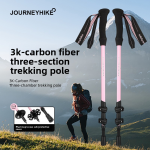
Embarking on outdoor adventures requires the right equipment, especially when it comes to trekking poles. Choosing between different types can significantly impact your comfort, safety, and overall experience in the wilderness. So, the question arises: Which is better — a folding trekking pole or a telescopic trekking pole? Both options come with their unique set of advantages and disadvantages, depending on your specific needs, terrain, and preferences. This comprehensive guide will delve into each type, compare their features, and help you make an informed decision for your next trekking journey.
Which is better? That’s a question many outdoor enthusiasts, hikers, and mountaineers ask themselves when investing in gear. To answer that effectively, you need to understand the nuances, benefits, and potential limitations of each. Whether you prioritize portability, durability, weight, or ease of use, this article provides detailed insights into both options, supported by expert opinions, user experiences, and practical recommendations.
Which is Better – An In-Depth Comparison of Trekking Poles for Outdoor Enthusiasts
The ultimate goal is to weigh the pros and cons of each type and offer insights into when and why you might choose one over the other. Having a clear understanding not only ensures that you select the best gear but also enhances your confidence in challenging terrains. Let’s take a closer look at each type to determine which is better suited to your outdoor trekking needs.
A folding trekking pole or a telescopic trekking pole? – Analyzing Design, Functionality, and Practicality
Selecting between a folding trekking pole or a telescopic trekking pole involves understanding their design principles and how these influence practical usage. Each type is engineered with specific features meant to optimize performance based on different outdoor scenarios. To accurately assess which is better, it is essential to evaluate their structure, how they operate, and the implications for endurance and convenience on rugged trails.
Structure and Folding Mechanics
Folding trekking poles are designed with multiple hinges or joints that allow the pole to collapse into smaller segments. Typically, they fold into three or four sections, making them remarkably compact when not in use. This design provides unmatched portability, making storage and transportation easier, especially when traveling by car, plane, or train.
By contrast, telescopic trekking poles extend and retract via nested segments that slide into each other. The telescoping mechanism relies on locking systems—usually twist-lock or lever-lock—that prevent undesired retraction during use. These poles are highly adaptable and can adjust quickly to changing terrain heights, which is especially useful on uneven or steep paths.
From a durability perspective, telescopic poles are often more resilient because their design simplifies the structure, reducing potential points of failure. However, folding poles have evolved with robust hinge mechanisms that handle rough handling quite well but may require maintenance to ensure longevity.
Ease of Use and Adjustment Flexibility
Folding trekking poles are set into predetermined lengths with hinges; they typically do not allow for quick, on-the-fly adjustments. Adjustments, if needed, require unfolding or refolding and sometimes manipulating multiple sections to achieve the desired length. Once set, they tend to be used at a fixed length, making them ideal for specific trips where terrain variation is minimal.
Conversely, telescopic poles excel in flexibility. Adjustments can be made swiftly with a twist or lever lock, making them suitable for varied terrains that demand different lengths. For example, ascending steep inclines might require shorter poles, while descent may benefit from longer adjustments, which telescopic poles facilitate rapidly.
Maintenance and Longevity
In terms of maintenance, folding poles with hinges might require regular lubrication and inspection to prevent hinges from jamming or corroding, especially under moist or muddy conditions. Telescopic poles, with their sliding segments, also demand periodic cleaning and lubrication to maintain smooth operation.
While both types are durable when maintained properly, telescopic poles tend to have fewer mechanical parts that could fail, offering longer-lasting performance for frequent or rigorous outdoor use. However, folding poles made from high-quality materials like carbon fiber or aluminum usually withstand rough handling remarkably well, adding to their overall durability.
Which is better for varied terrains and trekking styles? – User Experience, Weight, and Portability
For outdoor enthusiasts, understanding which is better largely depends on personal trekking styles, terrain diversity, and portability requirements. Every hiker has distinct needs—some require lightweight gear favoring speed and agility, others seek rugged durability for challenging mountainous terrain. Evaluating how folding and telescopic trekking poles perform under different conditions can guide you towards the most suitable choice.
Terrain Suitability and Performance
Folding trekking poles generally perform well on well-maintained trails and light hikes. Their secure hinge mechanisms provide stability, but their bulk can sometimes hinder ease of use on crowded or technical trails. Their compact fold makes them suitable for air travel or backpacking where space is limited, but they may require more effort to set up at each stage.
Telescopic poles are highly valued for their versatility across varied terrains. They allow quick adjustments in height, which is beneficial during ascents, descents, and navigating uneven ground. Their lightweight construction and simple extension system make them preferred for mountain climbing, trail running, and multi-day hikes where equipment flexibility is essential.
Weight and Portability
Weight plays a critical role in long-distance trekking. Folding trekking poles tend to be slightly heavier than telescopic ones due to their hinge mechanisms and multi-segmented design. However, modern folding poles made from advanced composites are surprisingly lightweight, balancing portability with durability.
Telescopic poles generally excel in being lightweight and easy to carry. Their slim, nested segments minimize storage space, making them particularly suited for ultralight hikers and backpackers. The quick adjustment feature decreases the need to carry multiple poles at different lengths, further reducing overall pack weight.
Comfort and User Experience
Comfort during long treks depends greatly on the ease of adjusting pole length and stability. Telescopic poles with twist locks are generally preferred by users who need frequent height modifications. Their straightforward mechanism allows quick and confident adjustments, reducing fatigue caused by improper pole lengths.
Folding poles, while offering excellent stability, may not be as adaptable mid-hike. They are ideal if your trekking style involves mostly fixed-length use or if you want a sturdy pole that remains at a specific size throughout the hike.
Which is better for durability, maintenance, and longevity? – Expert Insights and Recommendations
Durability and long-term usability are vital factors for outdoor equipment longevity. Trekking poles are investments that should withstand rough handling, exposure to elements, and repeated use. Choosing which is better in terms of durability involves weighing material quality, design simplicity, and maintenance ease for both folding and telescopic options.
Material Quality and Construction
Both folding and telescopic poles are manufactured from high-grade aluminum, carbon fiber, or composite materials. Aluminum poles tend to be more durable and resistant to bending, making them suitable for rugged mountain terrain. Carbon fiber poles are lighter and absorb shocks, but they can be more susceptible to cracking if mishandled.
Folding poles often incorporate hinges or joints made of reinforced plastics or metals—some with anti-corrosion coatings—that withstand impact and environmental stress. Well-designed hinges with secure locking mechanisms can last for years with minimal issues.
Telescopic poles with twist or lever locks are praised for their straightforward design. Their nested segments, if made from high-quality materials, maintain smooth extension and retraction over many use cycles. Improved locking mechanisms and robust seals prevent dirt and moisture ingress, extending their lifespan.
Ease of Maintenance and Repairs
Both types require regular cleaning to remove mud, sand, or debris that could impede their locking or folding mechanisms. Lubrication with appropriate lubricants prolongs component life and ensures smooth operation.
In case of damage, telescopic poles are relatively easier to repair—locking mechanisms can often be replaced, and segments can be swapped. Folding poles, with their hinge joints, might require more precise repairs, especially if hinges become bent or corroded. Choosing high-quality brands with good customer support and spare parts availability enhances longevity.
Real-World Longevity and User Satisfaction
Experienced trekkers and mountaineers often prefer telescopic poles for their straightforward design and fewer parts that can malfunction. Their capacity for adjustment and ease of maintenance aligns well with the demands of frequent use and harsh environments. However, enthusiasts who prioritize stability and prefer a sturdy, fixed-length pole may lean toward high-quality folding poles.
Balancing durability with maintenance needs, the most reliable choice is often the one that aligns with your trekking frequency, terrain, and willingness to perform routine upkeep.
FAQs – Common Questions About Trekking Poles
Q1: Which is better for backpackers—folding or telescopic trekking poles?
Telescopic poles are generally better for backpackers because of their lightweight design, quick adjustability, and compact storage. They adapt easily to varied terrain, making long-distance trekking more manageable.
Q2: Are folding trekking poles more durable than telescopic ones?
Not necessarily. While folding poles can be highly durable if well-made, telescopic poles tend to have fewer moving parts and are often more resistant to wear and tear over time with proper maintenance.
Q3: How do I choose between a folding and a telescopic trekking pole?
Consider your trekking style, terrain, weight preferences, and storage needs. If you prioritize portability and fixed-length stability, folding poles may suit you. For versatility and quick adjustments, telescopic poles are ideal.
Q4: Can I use either type of pole for technical climbing?
Both types can be used for general climbing and hiking; however, for technical mountaineering, specialized trekking or ice axes are recommended. The choice depends on terrain and personal preference.
Q5: How should I maintain my trekking poles to enhance their lifespan?
Regularly clean the locking or hinge mechanisms, lubricate where needed, and check for signs of wear or damage. Proper storage and avoiding excessive exposure to moisture will prolong their usability.
Conclusion
Choosing which is better — a folding trekking pole or a telescopic trekking pole — ultimately depends on your specific hiking requirements, preferences, and terrain. Folding poles excel in portability, compact storage, and stability, making them ideal for travelers and casual hikers during light to moderate treks. Telescopic poles, on the other hand, are praised for their adaptability, lightweight construction, and ease of adjustment, making them suitable for varied and challenging terrains. Both options offer exceptional performance when maintained properly; your choice should align with your outdoor style, frequency of use, and the environmental conditions you’ll face. By understanding the detailed differences, benefits, and limitations outlined in this guide, you can confidently determine which is better for your outdoor adventures and enjoy safer, more comfortable treks through nature’s wonders.