Short, practical, and friendly: this intro points you at clear choices for mountain ultras and fastpacking in the U.S.
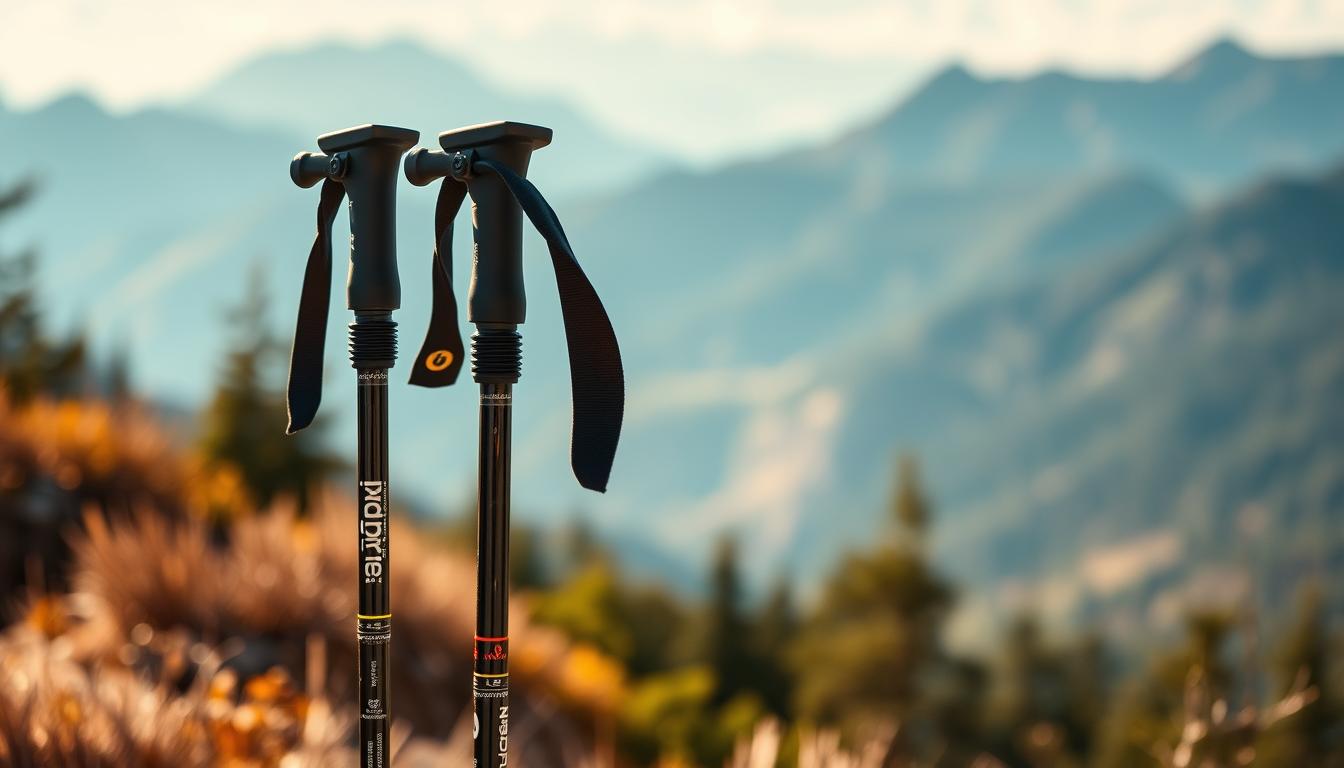
Trekking poles now show up at most mountainous ultramarathon starts. They give measurable propulsion uphill and steady control on steep descents. Modern running-specific models fold into segments and stow in a vest or belt.
Testing across varied terrain highlights the Black Diamond Distance Carbon Z, Leki Ultratrail Fx.One Superlite, and REI Swiftland TT Carbon as top light-and-fast picks. The Paria Tri-Fold Carbon Cork stands out as a budget option.
This guide previews how to match weight and length with your goals, why carbon versus aluminum matters, and which grip styles work best. You’ll also get clear buying cues about folded length, spare tips, and pack fit.
Key Takeaways
- Trekking poles cut joint load and boost uphill efficiency.
- Carbon models trade stiffness and light weight for cost.
- Fold systems and fixed-length designs affect stowability.
- Grip choice and strap systems change comfort on long runs.
- Check folded length and spare parts before purchase in the U.S.
Trail running poles in 2025: why they matter now
Manufacturers have shrunk weight and pack length. As mountain events grew in the U.S., lightweight trekking poles moved from niche gear into race day kits. Modern designs fold small and stow on vests, making them practical for fast courses.
Physiology matters: shifting effort into the upper body reduces leg fatigue and helps maintain power hiking late in long efforts. That makes a clear difference on sustained climbs and long ascents.
Where these tools shine: sustained climbs, off-camber ridgelines, scree fields, mud, and slabby rock. They add traction and stability when the trail gets rowdy.
- Folding carry: compact designs must fit securely in a running vest for quick transitions.
- Trade-offs: minimal weight versus durability depends on typical terrain and how aggressively you use gear.
- Reliability: locking systems and internal cords matter — failures cost races, so inspect mechanisms before long efforts.
| Use case | Priority | Key trait |
|---|---|---|
| 50K with mixed tech | Packability | Short folded length |
| 100-mile mountain | Durability | Robust construction |
| Day hikes + runs | Versatility | Balanced weight and grip |
Race specificity counts. Fine-tuning length, fit, and carry system often matters more than picking the lightest model. The next sections translate these needs into clear buying choices and setups that match goals.
User intent and how this guide helps you choose the right poles
Runners bring poles for different reasons — speed, safety, or pure comfort — and each goal needs a different setup.
What testers did: We evaluated lightweight folding models on smooth dirt, technical mountain terrain, and long efforts. Key models included Black Diamond Distance Z and Distance Carbon Z, Leki Superlite variants, and the REI Swiftland TT Carbon.
The guide helps you match intent with an option. Pick a setup for racing that trims fatigue, or one built for steady control on rough descents. First-time users, ultrarunners, and PR/FKT chasers get tailored recommendations.
- Comparison points: material, folding design, length strategy, and strap systems.
- Pack and stow: we favor models that fold small, ride securely in a vest, and deploy fast.
- Costs: maintenance and field fixes affect long-term ownership in rocky or wet conditions.
Quick outcome: by the end, you’ll know which pole and grip style fits your terrain and pack needs, and whether a budget trekking choice or a race-grade carbon model makes sense.
How to choose poles for trail running?
Decide if your primary goal is speed, multi-use value, or all-day durability before buying.
Match your terrain and race goals to pole type
Steep alpine climbs and technical descents reward stiff, light carbon. Fixed-length folding carbon dominates light-and-fast race kits.
Mixed missions — fastpacking or shelter setup — favor adjustable carbon for on-the-fly length changes and multi-use value.
Balance weight, durability, and packability
Carbon saves grams but can snap under big lateral loads. Aluminum weighs more and usually bends first.
Small folded lengths matter: shorter packs ride steadier in vest quivers and limit bounce.
When fixed length beats adjustable (and vice versa)
Pick fixed length for lowest weight and simplicity when you know your preferred length. Choose adjustable if terrain varies or gear gets shared.
“Check real pair weights and folded lengths — small differences add up over hours.”
| Use case | Best option | Why it fits |
|---|---|---|
| Race PRs / FKTs | Fixed-length carbon | Lightest, fastest deploy, low hand fatigue |
| Fastpacking / multi-use | Adjustable carbon | Length versatility, shelter support |
| Budget / learning | Aluminum folding | Durable, bends not snaps, cost-effective |
Key features that impact performance: material, weight, length, and grip
Small differences in material and mass can change fatigue and control on long climbs.
Carbon vs aluminum: carbon offers class-leading stiffness and low weight, prized in race-grade fixed-length folding models like the Distance Carbon Z and Leki Superlite. But carbon can snap under lateral hits. Aluminum costs less, is heavier, and usually bends instead of breaking, often remaining usable after impacts.
Weight and fatigue: grams in the hands matter. Extra mass amplifies fatigue through higher cadence and longer lever arms. Verify real-world pair weights and folded lengths to ensure your kit fits a vest or quiver without extra bounce.
Length basics and sizing
Most runners size so elbows sit near 90 degrees on flats. Shorten a bit for steep uphills. Lengthen for steep descents or river crossings.
Grip materials and strap systems
EVA foam grips stay light and keep tack when damp. Cork molds to the hand and manages sweat on hot days. Simple loop straps are fast and light; glove-style systems like Leki’s Trail Shark boost energy transfer and security but can feel warm with gloves.
| Feature | Why it matters | Practical check |
|---|---|---|
| Material (carbon / aluminum) | Stiffness vs durability | Inspect failure modes; prefer carbon for weight, aluminum for impact tolerance |
| Weight (pair) | Hand and arm fatigue over hours | Confirm published pair weight and test feel in store |
| Grip (foam / cork) | Comfort and sweat control | Pick cork for long hot runs, foam for wet conditions |
| Strap system | Energy transfer and security | Choose loop for speed, glove-style for power transfer |
“Comfort at the grip keeps hands relaxed and reduces cumulative hand and forearm fatigue.”
Fixed-length carbon folding poles: top picks for light-and-fast
Light, compact, and instant to deploy: fixed-length carbon folders are the go-to for race kits. They cut hand fatigue, collapse small, and slide into a vest or rear quiver with little fuss.
Black Diamond Distance Carbon Z
Why it stands out: 100% carbon shafts with reinforced joints and a push-button lock. The EVA foam grip has a long extension for varied hand positions.
Interchangeable rubber and carbide tips, plus winter basket fit, make it versatile across seasons. Sizes run 100–130 cm in 5 cm steps. Folded length sits about 33–44 cm; pair weight ~272 g (115 cm).
Leki Ultratrail Fx.One Superlite
Why racers pick it: extreme lightness (~268 g pair at 115 cm) and the Trail Shark glove-style strap that clips to a cork grip. Small trail baskets and a carbide tip make it race-first.
Folded near 33 cm and sized 105–135 cm, it favors experienced users who keep to predictable trail conditions.
REI Swiftland TT Carbon
Value pick: three-piece carbon with smooth button collapse and a wide EVA foam grip. Nylon strap and sensible pricing make it a good carbon entry for ultras.
Available in 105/115/125 cm with folded lengths around 33–40 cm and pair weight ~318 g (115 cm).
| Model | Pair weight (115 cm) | Folded length | Grip / strap |
|---|---|---|---|
| Black Diamond Distance Carbon Z | ~272 g | 33–44 cm | EVA foam long extension / standard strap |
| Leki Ultratrail Fx.One Superlite | ~268 g | ~33 cm | Cork grip / Trail Shark glove-style |
| REI Swiftland TT Carbon | ~318 g | 33–40 cm | Wide EVA foam / nylon strap |
Quick buying cues: fixed-length carbon folding designs win on weight, deployment speed, and pack fit. Small gram differences change hand fatigue on long efforts. Check folded length against your pack’s quiver and confirm spare tip availability.
Adjustable carbon folding poles: versatile options for mixed missions
Adjustable carbon folders give you real on-trail tuning for mixed missions and overnight gear duties.
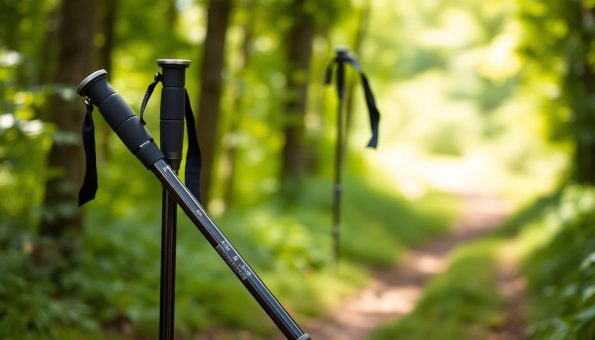
Leki Cross Trail FX Superlite is built as a dual-use choice for running and hiking. It uses a carbon shaft, a comfortable cork grip, and carbide tips for solid bite on varied terrain.
The design blends an internal lock with an external speed-lock lever. That makes fast length changes smooth while you move. Two size ranges (110–130 cm and 100–120 cm) cover most users.
Folded length sits near ~42 cm and pair weight is about 372 g. This balance means it still fits most vest quivers while giving real multi-terrain practicality.
“The Cross Shark glove-style strap boosts power transfer, but think about hot-weather comfort and glove swaps.”
Use this set as a primary versatile option or carry it alongside a lighter race pair. Check pack compatibility with ~42 cm folded segments and practice on local climbs. Optional rubber tips help on long rock sections.
| Trait | Why it matters | Practical note |
|---|---|---|
| Adjustable length | Climb and descent tuning | Try both size ranges |
| Glove-style strap | Energy transfer | Consider heat and glove changes |
| Folded 42 cm | Pack fit | Confirm vest quiver space |
Aluminum fixed-length folding poles: durable, budget-friendly workhorses
Aluminum folders earn praise as everyday trainers that shrug off knocks and keep you moving.
Why aluminum? The 7075 aluminum shaft gives forgiveness on impacts. That means a bend rather than a snap after a side hit, which many users prefer for long-term service.
Black Diamond Distance Z is a set-length option with a foam grip and a wicking strap. It uses interchangeable carbide and rubber tips, a removable trail basket, and snow basket compatibility. Sizes run 100–130 cm in 10 cm steps. Folded length is about 33–44 cm; pair weight ~344 g and the street price is near $140.
Camp Xenon Pro 2.0
This four-section design packs very short and uses a Kevlar cord plus a Velcro wrap that keeps segments tidy. It ships in 115–135 cm ranges at 5 cm increments, folds ~33–36 cm, and weighs ~340 g per pair. A simple nylon wrist loop replaces a fancy strap.
| Model | Material | Folded length | Pair weight |
|---|---|---|---|
| Black Diamond Distance Z | 7075 aluminum | 33–44 cm | ~344 g (120 cm) |
| Camp Xenon Pro 2.0 | 7075 aluminum (Kevlar cord) | 33–36 cm | ~340 g (115 cm) |
Use cases: daily training on technical terrain, spare pole for ultras, or budget entry before upgrading to carbon. Both accept rubber or carbide tips and stow in most vest quivers without excess bounce.
Best budget choices for new trail runners
Smart budget picks deliver comfort and useful features while you learn what you need.
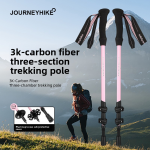
Paria Tri-Fold Carbon Cork is an ultra-affordable, adjustable carbon option that works well across hiking and running use.
The shaft uses carbon with aluminum connectors, cork grip, and wide nylon straps. It ships with carbide and rubber tips and two size ranges (100–120 cm, 110–135 cm). Folded into three ~15-inch sections, it costs about $70 and feels heavier than premium carbon but offers great utility.
Entry aluminum alternatives
Aonijie folding poles are a low-cost aluminum choice. They come in set lengths (110, 120 cm), thin foam grips, and minimalist wrist straps. Pair weight sits near 350 g and the internal unlined nylon cord may age faster under heavy use.
Practical guidance:
- Paria is a good first pole if you want cork comfort, mixed-tip options, and adjustability at low cost.
- Aonijie gives a simple, durable aluminum option that handles smooth routes and learning sessions.
- Budget gear is ideal for learning technique; expect lower long-term durability than premium sets.
- Verify folded length fits your pack quiver and check spare tips availability before buying.
- Practice quick deploy and stow at home and on local hills; good technique matters more than shaving grams.
| Model | Material | Folded length | Pair weight |
|---|---|---|---|
| Paria Tri-Fold Carbon Cork | Carbon shaft, aluminum connectors | Three ~15-inch sections | Heavier than premium carbon, ~$70 |
| Aonijie folding poles | Aluminum | Compact fold (varies by model) | ~350 g per pair |
Next step: treat these models as a starter option and plan an upgrade once you lock in preferred strap style, stiffness, and folded length needs.
Using trekking poles to run faster and longer: benefits backed by testing
Measured runs on mixed surfaces prove that extra hand-contact points convert arm drive into forward momentum on long climbs.
Evidence from testing: athletes using trekking poles push more work through the upper body, which translates into forward and upward motion on sustained climbs. That power shift eases leg load and preserves speed over time.
Two extra contact points add stability. On loose or wet terrain this reduces slips and micro-stumbles, letting runners keep a steadier pace and more confident footwork.
Downhill and posture: a pole pair spreads impact across the body and reduces knee shock on descents. Poles also promote a more upright posture, opening the chest and aiding breathing late in events.
- Power hiking stays efficient: cadence holds higher and the transition back to running feels smoother.
- On technical ground a well-timed pole plant gives midair corrections — like an extra leg for balance.
- There is a learning curve: practice timing and avoid overgripping to save energy.
Benefits scale with technique and correct length settings; integrate poles into training blocks and do cadenced uphill repeats.”
| Benefit | Effect | Practical tip |
|---|---|---|
| Uphill propulsion | More forward drive | Short quick plants with firm push |
| Stability | Fewer slips | Use on loose or wet terrain |
| Joint load | Less impact | Lean slightly and distribute force |
How to size your poles for trail running, hiking, and racing
A simple elbow test and a few on-trail tweaks will save shoulder strain and wasted energy all day.
Quick fit rules: aim for roughly a 90-degree elbow bend on flat ground. Shorten the shaft a bit for sustained steep climbs so shoulders stay relaxed.
Lengthen slightly on descents or water crossings for extra reach and stability. If you sit between sizes, try two neighboring lengths—comfort and cadence beat a perfect formula.
Set-length vs adjustable
Set-length designs are lighter and simpler once you’ve dialed the preferred size for local terrain. They drop grams and avoid moving parts.
Adjustable poles let you adapt across big grade changes, share gear between runners, and support shelter setup. Mark preferred settings on the shaft for fast, repeatable setup before key climbs.
- Check shoulders and wrists after long climbs—tightness often means the pole is a bit too long.
- Practice with race gloves; grip thickness can shift hand position.
- Recheck fit after shoe changes—stack height subtly changes elbow angle.
| Type | Common ranges | When it fits |
|---|---|---|
| Fixed-length | 100–130 cm | Races, known terrain |
| Adjustable | 100–120 or 110–130 cm | Big grade changes, multi-use |
“Try on real climbs and flats before committing—your posture and arm reach matter more than numbers.”
Straps and systems: from simple loops to Leki’s Trail Shark
Strap choices change how much power you can put through each plant and how quickly you can stash a pair. Pick a setup that matches pace, terrain, and how often you stow gear during a race.
Glove-style systems like like leki Trail Shark and Cross Shark attach a mesh glove to the pole. The glove stays on the hand and clips into the grip, then releases with a button push. This gives direct energy transfer and a relaxed hold on long sustained climbs.
Downsides include extra warmth on hot days, fiddly layering with gloves, and a small learning curve for clipping and unclipping. They reward long climbs where each watt counts.
- Compare systems: glove-style boosts power and security; simple loops or no-strap maximize transition speed.
- Simple loops: light, quick to don, and enough support for most runs.
- No-strap setups: useful when you stow a pole often on technical moves or have many short scrambles.
Practical tips: pair strap choice with your preferred grip material—cork vs foam feel different under sweat. Check edges for chafe and tidy any strap tails before stowing to avoid snagging on brush or pack features. Test configurations on long efforts to find the balance of comfort, control, and speed.
Folding, stowing, and deploying: carry systems that actually work
Good carry habits make poles feel like an extension of your pack, not a nuisance when trails get tight.
Vest quivers, vertical carry, and front carry trade-offs
Vest-mounted quivers offer fast access and low bounce when snug. They work well on rolling courses where you deploy often.
Vertical rear carry keeps shafts inside your body width and cuts snag risk. It usually bounces less than horizontal lash systems.
Front carry above soft flasks is easiest to reach but can feel awkward, and may catch on obstacles during a fall. Test it before race day.
Minimizing bounce and snagging on fast descents
Prefer fixed retention over elastic when you need low oscillation. Elastic cords are quick, but they can oscillate on steep downhills.
Practice transitions at race effort: fold by feel, align segments, and lock without looking down. Secure loose strap ends so they don’t whip or snag.
- Match folded length to your carry method; a few centimeters matter.
- Rehearse stow and deploy with full kit and outer layers on.
- Confirm poles don’t block bottle access, zipper pulls, or mandatory gear retrieval.
“Practice makes transitions smooth—fast stows save energy and keep momentum.”
Technique tips: using trekking poles efficiently on real trails
Good technique makes poles feel like an extension of your body rather than extra weight. Small, consistent pole plants let your upper body share load and keep leg fatigue at bay on extended climbs.
Uphill propulsion and power hiking cadence
Sync plants with stride. Plant slightly ahead and drive down as the opposite foot lands. This keeps cadence brisk and steady on long climbs.
Keep hands relaxed and let the strap carry load when possible. Shorten length a touch on very steep grades and choke down on the grip to keep shoulders neutral.
Downhill stability and technical terrain tactics
Use light, quick plants for balance checks rather than heavy bracing that can slow you. Scan the terrain and lift tips over roots, talus, or brush to avoid trapping them.
- Practice smooth transitions between running and hiking so rhythm stays consistent.
- Train small midair corrections: soft taps can recover balance without exhausting the arms.
- On side slopes, lower your hand position and stay upright to reduce ankle roll risk.
- Film short reps to check posture, cadence, and whether pole plants align with foot strikes.
“Technique sessions in long runs build muscle memory; that pays dividends on race day.”
Durability, maintenance, and field fixes
Simple field fixes and seasonal swaps keep trekking gear reliable across long campaigns.
Carry spare tips and a tiny repair kit. Bring an extra carbide or rubber tip and a short cord or tape strip. A quick swap saves a race if a tip snaps or a cord loosens.
Check folding cords or internal wires often. Look for fraying, loss of tension, or exposed strands. Retension when possible, and replace cords at the first sign of abrasion.
Grip, foam, and strap care
Wipe cork grips with a damp cloth and let them dry fully. Clean EVA foam with mild soap and a soft brush to remove grit that wears joints and grips.
Inspect straps and glove interfaces for stitching wear. Salt and sweat stiffen webbing; rinse and air-dry straps after hot efforts.
Tips, baskets, and final checks
- Swap low-profile trail baskets for dry use and fit larger snow baskets in winter.
- Tighten external speed-lock levers and verify they hold length under load before long outings.
- After sandy or muddy runs, rinse shaft sections so grit won’t score joints or jam locks.
- Store pairs dry and loosely assembled so cords aren’t under constant tension in your pack.
“Routine care and a small repair kit are the best insurance against a midcourse failure.”
Comparisons at a glance: weight, pack length, materials, price ranges
A compact snapshot helps you match specs with carry systems and terrain.
Quick notes: sub-300 g carbon pairs feel noticeably lighter on long climbs and during high cadence efforts. Folded lengths around 33–36 cm drop into most vest quivers cleanly; ~42 cm often needs a rear or special pack carry.
Here are common models and their headline specs so you can shortlist by weight, folded length, and material.
| Model | Pair weight | Folded length | Material / Grip |
|---|---|---|---|
| BD Distance Carbon Z | ~272 g (115 cm) | 33–44 cm | Carbon / EVA foam |
| Leki Ultratrail Fx.One Superlite | ~268 g (115 cm) | ~33 cm | Carbon / Cork |
| REI Swiftland TT Carbon | ~318 g (115 cm) | 33–40 cm | Carbon / Wide EVA |
| Leki Cross Trail FX Superlite | ~372 g | ~42 cm | Carbon adjustable / Cork |
| BD Distance Z / Camp Xenon / Paria | ~340–344 g | 33–36 cm | 7075 aluminum or hybrid / foam or cork |
Final tips: adjustable carbon adds grams but gives real on-trail tuning and shelter use. Aluminum offers strong value: modest extra mass for durability and lower price. Include spare tips, baskets, and strap cost when comparing total value, and track your top candidates in a simple spreadsheet of weight, folded length, price, and strap system.
Who should pick which poles: scenarios and recommendations
Your season plan should drive the pole choice—daily trainers differ from race-day specialists.
Racers chasing PRs or FKTs
Pick ultralight fixed-length carbon. Models like the Leki Ultratrail Fx.One Superlite and BD Distance Carbon Z shine when grams and fast deployment matter.
Glove-style systems pay off on long climbs by improving energy transfer and keeping hands relaxed.
Ultrarunners and fastpackers
Choose an adjustable carbon option such as the Leki Cross Trail FX Superlite if your day mixes big climbs, descents, and shelter duty.
Adjustability gives real on-trail tuning across varied terrain and pack loads.
New users and budget-conscious runners
Start with durable, wallet-friendly sets like BD Distance Z, Camp Xenon Pro 2.0, or Paria Tri-Fold Carbon Cork.
They let you learn stow and plant technique without risking an expensive race-day shaft.
- Match choice to terrain: aluminum for rocky training, carbon for race days.
- Prefer cork grips in heat; foam for light weight and simple care.
- Prioritize folded length fit with your pack and test stowing on descents.
- Consider a two-pole strategy: tough aluminum for daily miles and a featherweight carbon set for key events.
- Mark stems, tighten tips, set baskets and straps on a pre-race checklist.
Quick note: try gear on real runs before race day—the right grip and length make all the difference.
Where to buy in the United States and what to check before checkout
Major U.S. retailers and brand sites often carry the full range of modern trekking models, but sizes and stock move fast.
Look for Black Diamond Distance Carbon Z and Distance Z, Leki Ultratrail Fx.One Superlite and Cross Trail FX Superlite, REI Swiftland TT Carbon, Camp Xenon Pro 2.0, and Paria Tri-Fold Carbon Cork at national stores and brand shops.
Before you buy: confirm folded length against your vest or pack and verify pair weight for the exact size. Photos often hide subtle grip and straps differences, so inspect images closely.
Also add spare tips and baskets to your cart. Check return policies and warranty terms for ultra-light models that may be race-focused. Size increments (5 cm vs 10 cm) matter—pick finer steps if you want a precise fit.
“Confirm locking style and read user notes about deployment feel before placing the order.”
| Check | Why it matters | Action |
|---|---|---|
| Stock by size | Folded length and fit vary by model | Confirm specific length and folded spec |
| Pair weight | Impacts fatigue on long runs | Verify published weight for your size |
| Grip & straps | Comfort and power transfer | Zoom photos and compare materials |
| Parts & returns | Quick fixes save races | Add tips, read warranty and return policy |
- Compare price tiers and look for seasonal sales on mid-range carbon and aluminum options.
- Check third-party tip compatibility for budget buys.
- Consider bundle deals that include a quiver or carry accessory to finish your setup.
Conclusion
The right pairing of shaft, grip, and carry method beats any headline weight number.
Pick gear that matches your terrain and goals, not just specs. Lightweight fixed-length carbon folders like the BD Distance Carbon Z and Leki Ultratrail Fx.One Superlite remain top race picks. Adjustable carbon such as the Leki Cross Trail FX Superlite fits mixed running and fastpacking use.
Newcomers benefit from durable aluminum or value carbon — think Black Diamond Distance Z, Camp Xenon Pro 2.0, or Paria Tri-Fold Carbon Cork — while you refine stow and plant skills.
Practice length, cadence, and relaxed hands, keep tips and cords tidy, and test carry options at speed. Shortlist 2–3 models that suit your routes, verify sizes, then build a small maintenance kit. Pick smart, practice well, and your gear will help you run steadier and longer on real mountain terrain.
FAQ
What are the main differences between carbon and aluminum poles?
Carbon shafts offer a lighter weight and better vibration damping, which reduces arm fatigue on long efforts. Aluminum costs less and resists catastrophic breakage — it bends before it snaps. Choose carbon for race-day lightness and aluminum for durability and budget-friendly use.
Are fixed-length folding poles like the Black Diamond Distance Z better than adjustable models?
Fixed-length folding poles, including the Black Diamond Distance Z line, save grams and pack down very short. They suit runners who know their ideal length and want minimal weight and hassle. Adjustable poles win when you need versatility for mixed terrain, multiple users, or quick length changes.
Why pick Black Diamond Distance Carbon Z or Distance Carbon over other brands?
Black Diamond’s Distance Carbon Z models balance low weight, reliable folding systems, and reputable tip/basket geometry. They’re proven in races and long ultras. Compare pack length, weight, and grip feel against other carbon options before deciding.
How important is pole weight versus grip comfort?
Weight reduces shoulder and arm fatigue over hours, but a poor grip causes hotspots and blisters that ruin pacing. Prioritize light shafts, then test foam or cork grips and strap systems. The best pole feels nearly invisible in your hands while saving energy.
Which grip material should I pick: foam or cork?
Foam stays warmer and chases sweat quickly; cork molds to the hand, resists odor, and offers better long-term comfort. For long ultras choose cork or a cork-foam blend; for cold-weather runs foam can be more comfortable.
What strap system is best for fast transitions and power transfer?
Glove-style or trigger systems like Leki’s allow quick engagement and excellent power transfer during poling. Simple loop straps work fine for casual use and speed when you want easy removal for stowing. Pick what fits your pack carry routine and technique.
How should I size poles for ups, flats, and downhill sections?
A quick rule: slightly shorter for uphill (about elbow at 90° or 5–10 cm shorter than flat length), standard for flats (elbow at ~90°), and a touch longer for downhills to increase stability. Adjustable models let you dial this in on the fly; fixed-length requires choosing your most-used terrain.
Are folding poles more likely to fail at the joints than one-piece poles?
Folding poles use internal cord and hinge systems that add failure points, but modern designs like those from Black Diamond and Leki are robust. Inspect cords regularly and avoid over-torquing. For pure durability choose a solid shaft if weight and pack length aren’t critical.
Can trekking poles really improve speed and endurance on long races?
Yes. Poles offload leg workload, improve uphill pacing, and stabilize technical downhills. Many ultrarunners report faster times and less leg damage when using poles strategically. Practice technique to gain the most benefit without wasting energy.
What are the best carry options for vest and pack users?
Front-carry quivers and vertical side attachments keep poles accessible but can bounce. Vertical in-vest carry or horizontal pack slings work well for fast runs. Test your preferred vest or pack with your poles and simulate technical sections to find the least-bouncy solution.
How do I maintain carbon poles and handle field repairs?
Keep them clean, dry, and free of grit in joints. Replace worn tips and small baskets before they fail. For broken carbon, field fixes are limited — use duct tape or splints temporarily and avoid loading the damaged section. Aluminum bends can sometimes be hammered back in emergencies.
What should I check before buying online in the United States?
Confirm shaft material, packed length, grip type, strap system, tip style, and return policy. Check sizing charts and read reviews for real-world packability and durability. Buy from reputable retailers that offer easy returns if the fit or feel isn’t right.
Which brands offer the lightest race-ready folding carbon poles?
Look at Black Diamond Distance Carbon Z, Leki race models, and recent REI carbon options. These prioritize minimal weight and compact pack length. Compare real-world weight (not just claimed), tip robustness, and how the grips feel in long runs.
Are cheap folding carbon poles worth it for a beginner?
Budget carbon can save weight but may cut corners on tips, cords, or folding hardware. For beginners who want low cost, consider entry aluminum folding poles or a mid-tier carbon from a trusted brand to balance weight, durability, and warranty support.