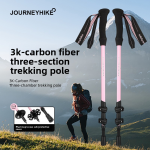
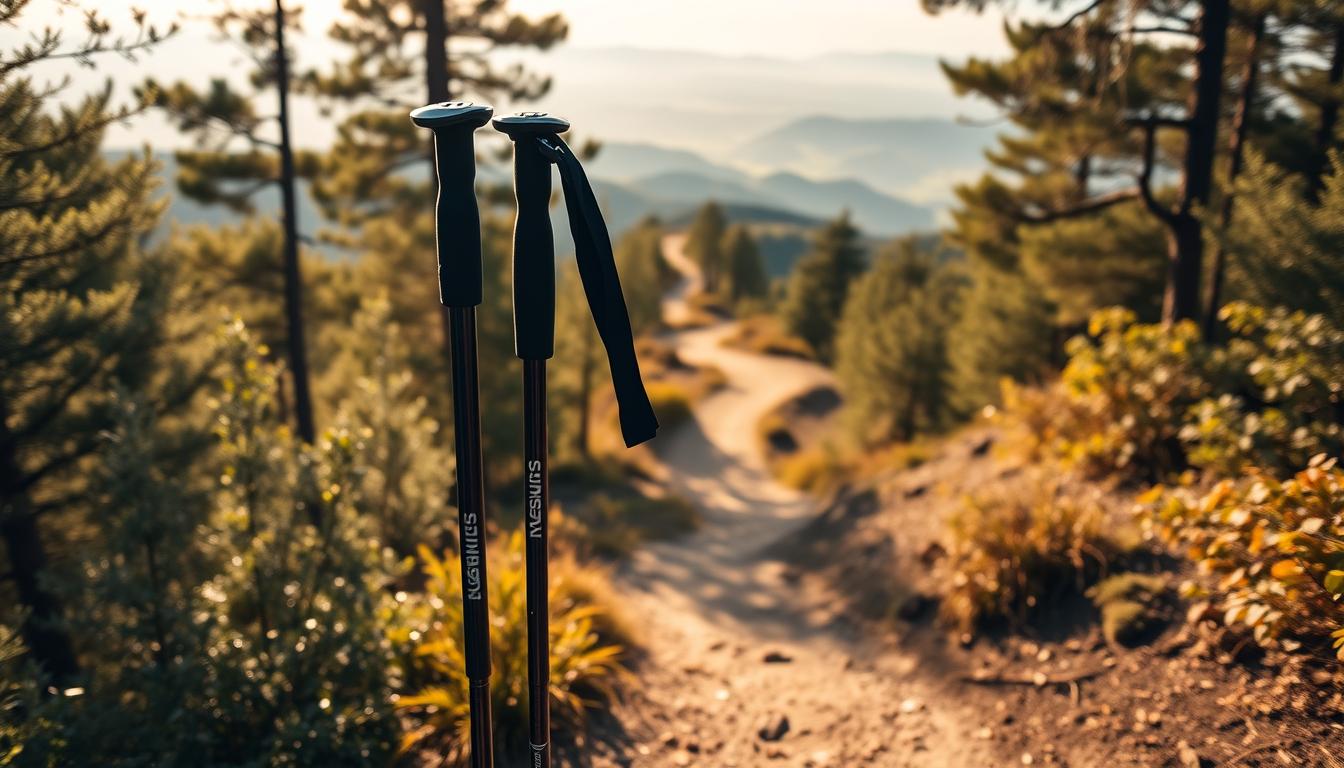
Curious about adding poles to your kit? How to use poles while trail running? is a common question for runners in the U.S. and Europe. Poles are simple tools that many ultrarunners carry for steep climbs, rough descents, and long days.
These devices cut impact on joints and help push you up steep sections. They also boost balance on technical ground and save energy when fatigue sets in. Experts like Gavin Mackenzie and Mirna Valerio stress practice and smooth planting.
There is a reason practice matters. A folded-pole mishap seriously injured Gabe Joyes, which reminds runners to stow gear safely and learn transitions.
This guide outlines gear choices, when to add poles in mountain or hilly courses, technique basics, and smart storage options from Black Diamond, Leki, and TSL. Treat it as a skills roadmap: read, then build confidence on short outings before relying on poles for long efforts.
Key Takeaways
- Poles cut impact and aid propulsion on climbs.
- They improve balance on technical descents.
- Practice transitions and planting for safety and speed.
- Modern vests and belts make stowage easy.
- Start small on local hills, then scale up to mountain runs.
Why Use Poles for Trail Running: Key Benefits and When They Help
Adding poles shifts effort off tired legs and hands some load to the upper body on steep climbs.
Energy savings: share the load between arms and legs
Efficient planting moves work from your quads and calves into the shoulders and back. That sharing keeps form and cadence steadier on long vertical sections.
Extra balance and stability on technical terrain
Two extra contact points give a big stability boost on roots, rocks, and off-camber ground.
This added support helps you recover if a foot slips and lets you probe uncertain surfaces before committing weight.
Reducing eccentric loading on descents and late-race fatigue
Poles cut some braking force during downhill steps, which eases strain on knees and spares muscles for later miles.
They are most useful on sustained climbs, talus fields, snow, and the final hours of long efforts. On flats and rolling sections, they are often time-neutral or slow you down and are better stowed.
- Goal: smooth, coordinated plants that complement natural stride, not interrupt it.
- Practice improves timing, force transfer, and the resulting energy savings.
| Situation | Benefit | Action |
|---|---|---|
| Long, steep climbs | Share load, preserve legs | Keep extended use |
| Technical, rocky terrain | Increase balance and probe ground | Plant deliberately |
| Downhill, late race | Reduce eccentric loading on knees | Use for controlled descents |
| Flat, runnable trails | Often time-neutral | Stow or quiver |
Practice matters: the benefits compound as movement becomes smooth. In mountain sections and at night, a steady plant can also buy confidence and safer steps.
Picking the Right Trekking Poles for Running
Gear that balances lightness and stowability makes transitions smoother for racers.
Fixed, adjustable, or foldable — clear choices
Fixed-length carbon shafts like the Black Diamond Distance Carbon are ultra-light and stiff, ideal for fast efforts and races. They trade packability for performance and can be awkward for air travel.
Foldable “Z” styles (Carbon Z, Leki Ultratrail FX.One Superlite) break down for vest or belt storage and ease transitions mid-race. Adjustable models such as the MSR DynaLock Ascent add versatility but raise overall weight.
Materials, grips, and tips
Carbon wins on stiffness-to-weight for racing. Aluminum lasts longer on rocky daily trails.
Seek EVA or cork grips that stay comfy. Look for secure straps, interchangeable rubber and carbide tips, and removable baskets for varied surfaces.
“Runners focused on smooth transitions often favor foldable designs that sit cleanly in a vest quiver.”
| Design | Best for | Trade-off |
|---|---|---|
| Fixed carbon | Fast races, workouts | Stowability, travel |
| Foldable Z | Races with transitions | Slight extra weight |
| Adjustable | Multi-sport trekking | Heavier per pole |
Tip: try a bit of each style before committing. Personal fit, carry systems, and race plans shape the right choice for any runner.
How to Size Your Poles: Length, Fit, and Straps Setup
Start simple, then fine-tune on the move.
Begin with adjustable shafts so you can experiment. Stand tall, place the tip on the ground near your foot, and set the length so your elbow sits around 90 degrees. Test slightly shorter for agility; many runners prefer a shorter shaft than hiking length for technical ground.
Strap setup matters. Thread your hand up from beneath the strap, lay the strap across the back of the hand, then close your grip. Let the strap carry most of the load so your fingers relax and forearm fatigue drops.
Practical checks and tips
- Try markers on adjustable poles for quick, repeatable length settings.
- Test settings on tight turns and scrambly sections to confirm control and ground feel.
- Recheck fit when wearing bulky gloves — thickness can change hand position.
- Do a short shakedown run after adjustments before long outings or events.

| Adjustment | Why it helps | Quick test |
|---|---|---|
| Elbow ~90° | Balanced power transfer | Stand, tip near foot |
| Slightly shorter | Better agility, fewer tip catches | Run a tight loop |
| Strap on from below | Wrist bears load, less hand squeeze | Grip, relax fingers |
How to use poles while trail running?
Step into movement that links arm swings with foot strikes for smoother climbs. Start by walking with the shafts dangling from straps, then lift a hand and plant the opposite shaft as the opposite foot lands.
Alternating poling and cadence
Keep plants at roughly a 45-degree tip angle. At slow speeds, plant every step and drive through the strap as your foot leaves the ground. As pace rises, shift to every second or third step so the tool supports stride without interrupting it.
Double-plant for steep pitches
On very steep grades, plant both shafts together two steps ahead, hike up to them, and repeat. Match each double-plant with steady breathing to keep rhythm and power.
Practical tips and troubleshooting
- Keep plants close to your feet and body to avoid overreaching and tip catches.
- Drive through the strap for propulsion, not a death-grip on the handle.
- If timing slips, walk a few steps with shafts dangling, then re-sync the opposite arm-leg pattern.
- Short practice sessions build coordination for tempo changes and long efforts.
Uphill Techniques: Efficient Movement on Grades and Long Climbs
Climbing efficiently means linking posture, pole placement, and breathing into a single motion.
Moderate slopes call for an upright body and firm, individual plants. Gavin Mackenzie recommends placing each tip slightly ahead and outside the foot. This creates a stable triangle and a clean forward drive.
Keep steps compact and hips tall. Let your arms add power without rocking the torso. Short, steady strides save energy on long hiking sections and keep momentum steady.
Steep grades and double-plant rhythm
When the pitch climbs above roughly 30%, shift to a synchronized double-plant. Place both tips two steps ahead, hike into them, then repeat.
Sync each cycle with calm breaths. Matching inhale-exhale to plant-and-step keeps cadence smooth and prevents wasted effort on rough terrain.
- Drive dynamically through straps so the upper body becomes part of the engine.
- If you gasp, shorten steps and keep plants close for continuous motion.
- Pick grippy ground for tips and test slick surfaces before committing weight.
- Narrow trail? Tighten plant width and keep shafts near your centerline.
| Slope | Technique | Goal |
|---|---|---|
| Moderate | Single, outward plants; upright posture | Stable forward drive |
| Steep (>30%) | Synchronized double-plant; breath rhythm | Maintain cadence, conserve legs |
| Narrow or rocky | Tighter plant, test surface | Avoid catches and slips |
Downhill and Flat Terrain: When to Use, When to Stow
Descending quickly often forces a choice: keep gear in hand for support or stow it and free your arms.
Pros and cons on descents: Poles can cushion knees and add balance on steep drops, yet they may catch in roots or gaps if planted late or too far ahead. For technical descents, deliberate, compact plants reduce snag risk and keep movement reactive.
Practical downhill technique
Plant just below your center of mass. Take small, quick steps and use the shaft load for light landings on big rock steps. This lets the upper body share braking force without overreaching into hazards.
Flats and runnable sections
- Check time honestly: if carrying gear slows your arm swing, stow and open stride.
- Set rules before events—stow for any flat longer than two minutes in races to avoid hesitation.
- At night or in dusty terrain, keep plants compact so tips probe safely and you avoid hidden holes.
Final note: Test both ways on local loops, time your runs, and pick the way that stays faster and safer for you.
Stowing, Transitions, and Race-Day Strategy
A smooth carry system turns pole handling from a chore into a quiet advantage.
Modern vests and waist belts now include loops, quivers, or sleeves that make clipping in and out fast.
Vest, belt, and quiver systems: practice fast, safe transitions
Pick a vest or belt that holds poles securely without bounce. Test reach, deploy, and stow while jogging so movements stay fluid.
Some setups speed actions. The TSL Addict Trail Carbon 4 offers magnetic detachable gloves for quick clips. Leki’s FX.One pairs with a glove interface for slick hand-ins. Both save seconds, but try them in race kit and expected temperatures.
Simple transition drill: jog, unclip, assemble, plant within a few strides; reverse and stow while keeping eyes up and feet moving. Repeat until it feels automatic.
- Map the course and plan pole segments; set time thresholds for deploying or stowing so decisions are quick.
- Rehearse with gloves, wind shells, and full bottles — real loads change how sleeves accept shafts.
- Never run with folded poles in hand; stow them so tips and straps won’t injure you or others.
Race gains are quiet: consistent transitions cost no extra effort but add free time. Log a few sessions focused on smooth stowing and your rhythm will hold under stress at events.
Safety, Etiquette, and Trail Rules
Safety on singletrack begins with smart gear handling and calm awareness.
Don’t run with scissors: never carry folded poles in your hand. Gabe Joyes suffered a severe arterial bleed after tripping with folded shafts in his hand and now advises stowing gear when not in use.
In groups, point tips down and keep plants close to your body. This cuts the chance of jabbing the person behind you when the pack tightens.
- Place tips on supportive ground — avoid polished rock edges that can skitter and flip you or other people.
- Know local trail rules; some areas ban carbide tips to reduce rock scarring. Carry rubber covers when required.
- Give clear audio cues when passing — say “on your left” — and lower your pole angle so tips won’t snag a calf or shoe.
- If you stumble, let go if needed. Protect your body and a safe fall path matters more than holding gear.
- Store shafts with tips covered in quivers at aid stations or on narrow singletrack to avoid accidental pokes.
“Always stow poles when you’re not planting them; simple habits keep everyone safer.”
Training, Maintenance, and Travel Tips
Start small: short jog-hikes let you learn timing and strap feel without risking long-term soreness.
Practice progression
Begin with 20–30 minute sessions that focus on clean alternating plants and relaxed grip. Add hill repeats, then longer climbs, and finally full mountain outings.
Set weekly goals like smooth double-plant rhythm or faster stow and deploy drills. Include upper-body strength and mobility work so your body and muscles adapt to the added load.
Care and upkeep
After each outing rinse dirt from shafts and tips and dry moving parts. A small spray of WD-40 on sticky folding or locking mechanisms keeps action smooth.
Check length markings, inspect straps, and replace frayed cords before big efforts. Worn straps reduce power transfer and can cause blisters.
Know gear limits and travel prep
Carbon does not bend—avoid lateral prying. If a tip jams between rock, reverse the angle rather than force it; misuse can snap a shaft.
Test folding and assembly the week before events and confirm airline rules for carry-on versus checked gear. Consider weight and stowability when choosing a pole for long days.
| Focus | Action | Why it matters |
|---|---|---|
| Short sessions | 20–30 min jog-hikes | Build timing and strap skills |
| Care | Rinse, dry, WD-40 | Maintain locks and tips |
| Travel | Test, check rules | Avoid surprises at events |
Conclusion
When you train with intent, a pole becomes an extension of your stride and a source of steadier energy.
Recap: practice alternating and double-plant techniques, size shafts and set straps correctly, and rehearse smooth transitions. Done well, poles save energy, add balance on technical terrain, and cut impact on descents in mountain races.
Integrate gear slowly into training so form stays clean and transitions get fast. Pick the design you will actually carry—fixed, adjustable, or foldable—based on weight, travel, and time on feet.
Safety note: always stow folded shafts, mind tip direction in groups, and plant close to your body for control. Poles shine on climbs and late in a run; let your stride lead the way.
With a little practice and smart planning, runners can unlock more efficient trail running and more enjoyable race days.
FAQ
What are the main benefits of using trekking poles for trail running?
Poles share load between arms and legs, boost balance on technical terrain, and cut eccentric stress on knees during long descents. They also help conserve energy over sustained climbs and reduce late-race fatigue.
Which type of pole suits most mountain runners—fixed, adjustable, or foldable?
Adjustable poles offer the best mix of on-trail tuning and packability for races. Foldable models pack smallest for travel and may be faster to stow, while fixed shafts give simple reliability but add bulk for transport.
How do I pick between carbon and aluminum poles?
Carbon is lighter and absorbs vibration well, ideal for fast races. Aluminum is tougher and cheaper, better if you expect scrapes, rock strikes, or frequent use. Choose by weight priorities and durability needs.
What pole length should I set for climbing and running?
Slightly shorter than standard hiking length usually works best for active running. Dial down a few centimeters to keep a natural forward lean and allow quick hand movements. Test lengths on varied slopes during training.
How should straps be worn for efficient power transfer?
Feed your hand up through the bottom of the strap and rest the wrist on top. That lets you push into the strap for power without gripping too tightly, reducing hand fatigue and improving control.
When is alternating poles with my stride better than double-poling?
Alternate planting matches a normal running cadence on rolling terrain and flats. Double-poling shines on steep sustained climbs when you need maximum upper-body drive and a higher breathing rhythm.
How often should I plant poles relative to my steps (cadence)?
Use what feels natural: every step for high-power climbs, every other step for mixed terrain, or every third step when conserving energy. Practice in training to find the rhythm that suits pace and slope.
Should I use poles on descents or stow them?
Poles help protect knees and add stability on technical or steep descents. Stow them on fast runnable downhills where a pole tip could snag or slow you. Learn quick stow techniques for safe transitions.
What’s the safest way to carry folded poles on the trail?
Never run with folded shafts in your hands blade-first. Use a vest, belt, or a quiver carry system. Keep tips pointed down and secure to avoid catching other runners or dangling into brush.
How should I behave around other runners when using poles?
Be courteous: point tips away, avoid broad arm swings, and yield space on narrow singletrack. Announce “pole up” or “on your left” when passing with extended shafts to prevent accidents.
How do I train progressively with poles?
Start with short sessions to learn technique, then add long climbs and simulated race efforts. Practice transitions, stowing, and cadence changes so gear handling becomes automatic on race day.
What maintenance tips extend pole life and performance?
Rinse off grit after runs, dry sections before collapsing, and periodically lubricate locking mechanisms. Inspect tips and baskets; replace worn carbide tips. Avoid forcing stuck segments—use gentle heating or lubricant.
Are there travel concerns for carbon poles on flights?
Yes. Pack poles in a protective case and check airline rules—some require checked baggage. Securely pad the shafts and consider removable tips or disassembly to prevent breakage and meet size limits.
Can poles speed up race times or do they just add weight?
On steep, technical, or ultra-distance courses, poles often improve time by saving leg energy and stabilizing pace. On short, fast, runnable races they may be neutral or slightly slow. Choose based on course profile and personal strength.