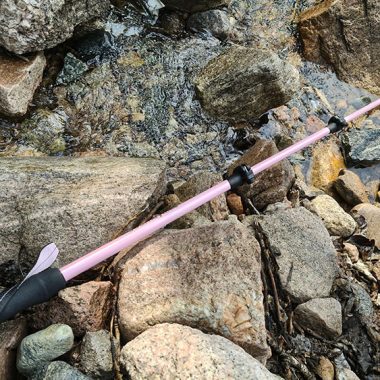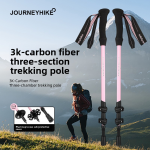
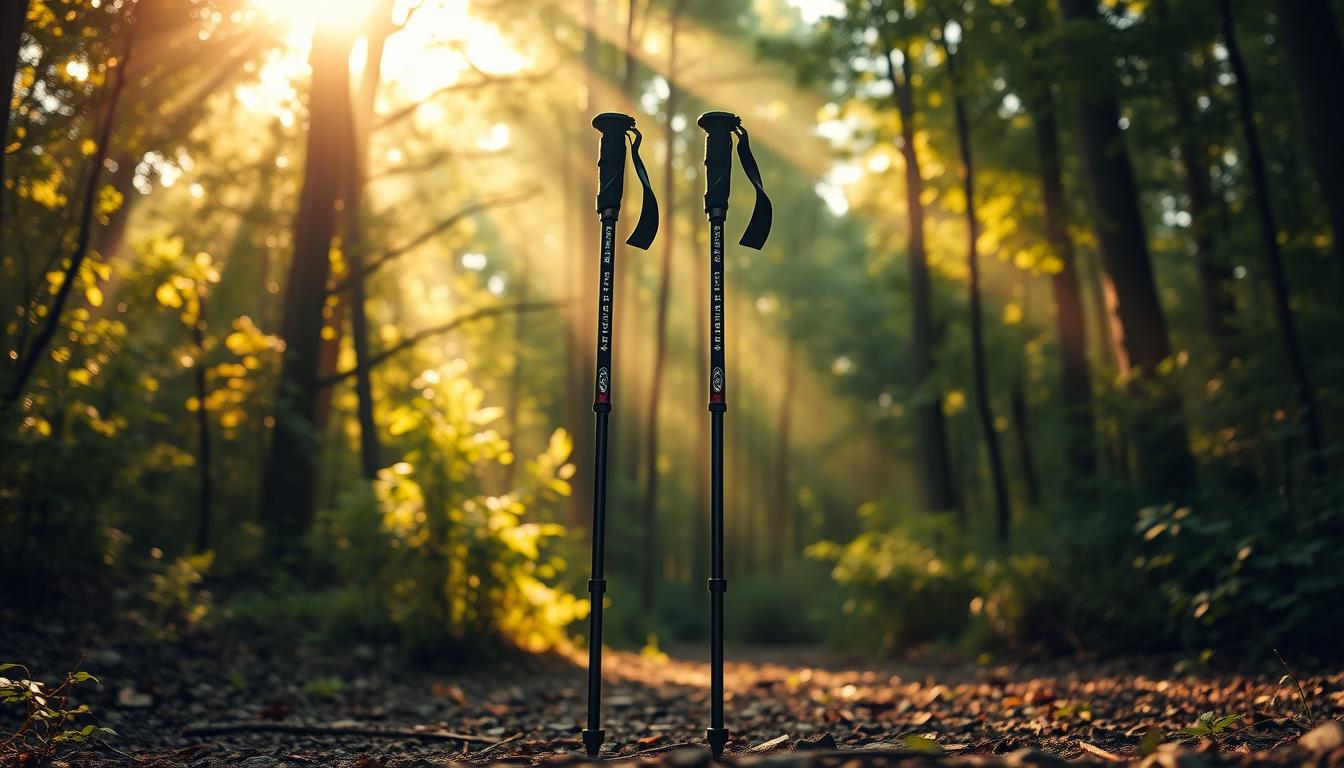
Lightweight trekking tools can change how you move in steep, technical terrain. These shafts help shift load from legs to upper body, cutting impact on knees and quads during long mountain days.
The basic anatomy is simple: a shaft in carbon or aluminum, a grip and strap system, baskets, and tips that bite into rock, dirt, or snow. Carbon saves weight but can fail under sideways stress; aluminum bends but keeps you moving.
Formats matter: fixed-length carbon suits racers who want minimal weight, while folding designs stow neatly in a vest or pack for multi-hour runs. Foldable models pack into three or four segments for easy carry.
Why try them? Expect better balance on roots and slabs, stronger traction on steep climbs, and less fatigue on long efforts. Our hands-on testing across dirt roads, technical alpine terrain, and a 100-mile Pacific Crest Trail run informs the picks that follow.
Key Takeaways
- Poles add stability, traction, and propulsion on varied terrain.
- Carbon offers low weight; aluminum trades weight for toughness.
- Grip shape and strap comfort matter for long outings.
- Foldable options fit a running pack; fixed shafts suit racers.
- Choose based on terrain, distance, and how often you stow them.
- Top brands like Black Diamond, Leki, REI, and MSR cover different needs.
What are trail running poles? The quick answer
A pair of compact supports shifts load to your upper body so your legs recover faster. Trail poles are compact trekking tools that help you move faster and steadier on climbs, descents, and technical segments.
Pick between lighter carbon and more forgiving aluminum. Carbon saves weight but can snap under sideways stress. Aluminum is heavier but usually bends instead of breaking.
Many running-specific designs fold into three or four sections so they stash easily in a quiver or rear cradle on a pack. Short folded length, low swing weight, and reliable locking matter most for racers and fast hikers.
Grip shape and strap setup are crucial. A good hand interface gives secure planting and clean power transfer without hot spots.
| Feature | Carbon | Aluminum |
|---|---|---|
| Weight | Very low | Moderate |
| Durability under side load | Can break | Bends, keeps working |
| Packability | Excellent (distance carbon, black diamond distance models) | Good (adjustable options for daily use) |
| Best use | Racing, ultralight agendas | Everyday versatility |
Quick tip: For a simple choice, pick a proven, lightweight fixed-length folding model for racing, or a slightly heavier adjustable pole for everyday versatility. Using trekking technique takes a bit of practice, but the payoff shows fast on hilly or technical terrain.
Why trail runners use poles today
Many runners add short shafts to their kit to steady foot placement and save energy on long, technical outings. The result is more confident movement over roots, slabs, and loose scree.
Stability, traction, and confidence on technical terrain
Two extra contact points help you commit to a line. Poles stabilize steps on rock and root gardens so you can push through slippery sections instead of hesitating.
Use poles to preload and push on step-ups where shoe grip alone might fail. That added traction matters in mud, snow, and wet slabs.
Reduced impact and better posture over long miles
Planting a shaft shifts load from legs to the upper body and reduces downhill impact on knees and quads. That saves strength for late-race efforts.
Poles also encourage an upright torso and cleaner alignment during long climbs. Learning hand placement and timing takes practice, but it quickly yields smoother, more efficient movement.
- Mental edge: extra contacts cut hesitation across creeks and scree.
- Safety: poles often stop a stumble from becoming a fall.
- Practical tip: decide when to stow in your pack based on terrain and length of the day.
How trail running poles improve performance
Adding short shafts to your kit can turn long climbs into efficient, sustainable ascents. They shift effort into the upper body so legs rest more between hard pushes.
Efficiency gains: a shaft spreads workload off your legs. That reduces lower-body fatigue on repeated climbs and keeps cadence steadier during power hiking.
Two‑beat planting helps maintain a rhythm. A steady plant-and-step sequence keeps forward momentum, especially late in multi-hour efforts on technical terrain.
On descents, the extra contact points cut braking forces. That means less quad smashing and more controlled posture through loose or rocky stretches.
“Many runners report feeling faster over rugged ground thanks to fewer balance checks and smoother transitions.”
- Lighter swing weight and correct length let the arms move naturally without disrupting rhythm.
- Distance carbon and similar models offer a favored stiffness-to-weight ratio for committed uphill pushes.
- The right mix of shaft material, grip feel, and basket/tip traction gives dependable performance across seasons.
How to choose running poles: materials, weight, and durability
Choosing the right shaft material and weight will shape your cadence and comfort all day. Think about the terrain you’ll cover, how often you stow a shaft in a pack, and how hard you push on technical sections.
Aluminum vs carbon: bend versus break under stress
Aluminum is heavier and budget friendly. It bends rather than snaps, so it often keeps you moving after a hard hit.
Carbon cuts weight and swing mass. That helps preserve form and lowers the energy cost of frequent plants, but carbon can fail if overloaded sideways.
Why weight matters more for runners than hikers
Runners move shafts far more often than hikers. Every extra gram at the hand multiplies with turnover and causes arm fatigue.
Lower weight and reduced swing weight from carbon maintain cadence and feel less tiring on long efforts.
- Durability trade-off: thicker aluminum feels stout for rocky scrambles; carbon favors racers who prioritize low mass.
- Folding systems: many use internal cord or wire — build quality here affects longevity and maintenance ease.
- Grip and strap options: entry-level foam and simple strap systems keep cost down; cork and premium straps add comfort.
“Match material, weight, and length to your terrain and stowing habits to get the best balance of speed and durability.
Final tip: if you hammer technical routes pick tougher builds. If you race, favor the lightest carbon option, such as models in the Black Diamond Distance family, and keep tips, baskets, and cord tension checked for long life.
Adjustability, fixed length, and folding systems explained
How you set a shaft affects stiffness, pack fit, and on-trail speed. Choose the right mix for the route you run and how often you stash a shaft in your pack.
Set length vs adjustable length for varied terrain
Fixed length options feel lighter and stiffer in hand and often suit racers who prefer a single, reliable length. They cut weight and eliminate lock fiddling midstride.
Adjustable models give a useful range for steep climbs or long descents. Typical mechanisms include external flip-locks or push-button detents. Runners often find the adjustment range smaller than classic trekking sets, but still enough to tune posture for varied terrain.
Three-piece, four-piece folding and internal connection systems
Folding poles collapse fast. Three-piece shafts balance packability with fewer joints. Four-piece folding poles pack shorter, which helps when quiver or pack space is tight.
Internal cords range from fabric/Dyneema to plastic-sheathed wire. The latter adds durability for snowy, heavy use. Practice deploying and collapsing your system until it feels automatic.
- Match length choices to torso and leg proportions for efficient hand placement and rhythm.
- Confirm folded length against your pack carry to avoid bounce or snagging.
- For race-day speed, a fixed length or short folding poles can be the best option.
Grip, foam versus cork, and strap systems for better pole use
A well-chosen grip can change how your hands feel after hours on steep, rocky miles. Choose a handle and strap setup that suits your sweat, pace, and terrain. Small differences in material and shape add up over long outings.
Foam, cork, and mixed handles
Foam grips give a firm, budget-friendly feel but can get slick with sweat. They also risk chafing when paired with rough strap edges.
Cork grips absorb moisture and mold to your hand over time. They reduce hot spots and often feel better on long climbs.
Mixed handles (cork upper, foam lower) give a versatile option for sidehilling and quick hand shifts without changing length.
Strap choices and strap-free setups
Simple loop straps are light and easy to adjust mid-stride. They work well when you stash the shaft in a pack or need quick transitions.
Glove-style systems, like Leki’s Trail Shark, boost power transfer and security. They add a bit of weight and can complicate glove swaps. Watch for chafing and glove compatibility.
Going strap-free is fastest for agility but sacrifices steady leverage on steep climbs.
| Feature | Foam | Cork | Mixed |
|---|---|---|---|
| Sweat control | Low | High | Moderate |
| Comfort over time | Good | Very Good | Very Good |
| Best for | Budget, short outings | Long efforts, sweaty hands | Variable terrain |
| Pairing with straps | Use soft edges | Works well with glove systems | Flexible |
Quick tips: test grip diameter in-hand, pick softer straps if you adjust fit often, and wipe grips to remove grit. For sensitive skin, choose smooth strap edges and breathable materials to avoid hot spots.
Packability and stowage: quivers, packs, and waist belts
Stowing short shafts well saves energy and keeps you from fighting bounce or snagging on technical terrain. Pick a carry method that fits how often you will deploy a shaft and how fast you want to move.
Popular carry options include rear quivers, vertical pack sleeves, front carry, and waist belts. A rear quiver offers quick access and works well for frequent use. Vertical sleeves usually bounce less than horizontal mounts and stay out of the arms.
Elastic cords give fast access but can allow movement. Fixed cords lock the shaft tight and reduce slap. Partially or fully tucking the shaft inside a pack is the most secure option, but you may need to remove the pack to re-stow.
- Practice deploy/re-stow transitions at race pace; most time is lost after long climbs.
- Watch clothing changes—putting on a shell can block a usual carry and force a backup plan.
- Manage dangling straps so they don’t snag or slap during faster sections.
“Compact folding designs with the shortest folded length make quiver carry simple and near bounce-free.”
Tip: Distance carbon and Black Diamond Distance-style collapsible options pack small and deploy fast, making them a top choice when quiver carry is your primary option.
Best overall trail running poles: Black Diamond Distance FLZ roundup pick
If you want a dependable daily driver for mixed terrain, the Black Diamond Distance FLZ fits the bill. It blends a sturdy aluminum shaft with folding convenience so you can stash it in most quivers or a vertical pack sleeve.
Why it stands out for everyday use
Reliable build: the aluminum construction handles scrambly sections and hard hits without catastrophic failure. The adjustable 95–140 cm length covers climbs and long descents, and included snow baskets add shoulder-season utility.
Tradeoffs to consider
Weight vs. carbon: at roughly 390–450 g per pair, the FLZ feels heavier than carbon race shafts. Racers and ultralight fans will notice swing weight on long efforts.
- User-friendly deployment: compact ~34–41 cm folded length that rides well in most packs and quivers.
- Value: mid-range price (~$179) with practical features runners use.
- Comfort caveats: firm foam grip can become slick in humidity and some straps may chafe with heavy sweat.
- Best fit: beginner-friendly, ideal for those who want durability and adjustability over the lightest carbon option.
- Carry tip: pair with a stable quiver or vertical carry to reduce bounce given the extra weight.
| Spec | Detail |
|---|---|
| Material | Aluminum |
| Length | 95–140 cm adjustable |
| Folded | ~34–41 cm |
| Weight (pair) | 390–450 g |
| MSRP | $179 |
Best lightweight and racing options: Leki Neotrail Pro FX.One Superlite
For racers chasing every saved gram, a featherweight shaft can change the math on long climbs and fast descents. The Leki Neotrail Pro FX.One Superlite targets that need with a focused, competition-first build.
The shaft is carbon and fixed length (110 cm example) and tips the scales at about 226 g per pair. That makes it one of the lightest poles with proven 100-mile race performance.
Lightest poles and racing-focused design
The cork grip feels comfortable for long hours and the minimalist wrist straps dry fast and avoid major chafing. Small-diameter handles suit many hands but may not fit larger palms comfortably.
When ultralight becomes a race-day-only option
This model shines in fast, careful hands. Durability leans toward competition use. If you bash through brush, pack the heavier gear instead.
- Best for: experienced racers who value low weight and rhythm.
- Carry tip: use a secure quiver or belt for instant deployment.
- Note: fixed length keeps stiffness and cadence predictable.
Best for ultrarunning and fastpacking: REI Swiftland TT Carbon
For ultra-distance runners and fastpackers who value comfort over bare-minimum grams, the REI Swiftland TT Carbon hits a practical sweet spot. It uses fixed length folding carbon in three sizes (105 / 115 / 125 cm) and weighs about 318 g per pair at the 115 cm size.
The molded EVA foam grip feels plush for long climbs, and the soft wrist loops adjust smoothly on the move. Full-length trekking tips make field replacement and simple maintenance easier on remote terrain.
While lighter than many aluminum options, this carbon build is a touch heavier than the ultra-minimal race shafts. That trade-off buys added durability and better real-world resilience on mixed routes.
- Good value: quality carbon material and features at a mid-range price (~$169).
- Comfort-forward: wide grips and easy straps for extended efforts.
- Practical caution: wide handles can jam quiver access—stowing may require removing your pack.
Recommendation: Choose the Swiftland TT Carbon if you rarely change length mid-run and prefer comfort and serviceability over the lightest gram-count options like distance carbon or Diamond Distance race-style shafts.
Best for winter running: MSR DynaLock Ascent Carbon Backcountry
Winter outings demand gear that resists cold, ice, and rough packs more than a slim gram-count. The MSR DynaLock Ascent Carbon Backcountry is built as a winter specialist for snow, sidehilling, and mixed mountain approaches where reliability beats shave-at-all-costs designs.
Flip locks, baskets, and field-ready details
Flip-lock tensioners let you change length easily while wearing gloves. Choose between 100–120 cm or 120–140 cm ranges for secure, predictable settings.
The pair uses carbon shafts with a plastic-sheathed wire internal linkage for extra durability in cold, icy conditions. Robust snow baskets and a lower sidehill grip improve control on traverses and steep ramps.
Practical touches include a beak on the handle to flip snowshoe heel lifts without bending down. Firm foam grips feel stable with gloves and provide a lower hand section for sidehilling leverage.
- About ~470 g per pair (100–120 cm) — heavier than three-season race options.
- Best for winter trekking and mountaineering approaches; reserve for snowy or icy terrain.
- Pair with a winter-ready pack carry so you can deploy shafts without fumbling in gloves.
Best affordable picks: Aonijie folding poles and other budget options
If you’re curious but cautious, budget folding shafts let you test the benefits without a big outlay.
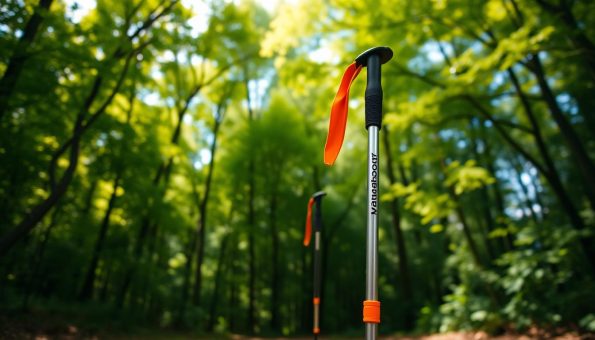
Aonijie Folding Ultralight 7075 is a solid entry-level choice. It comes in set lengths (110 / 120 cm) and weighs about 350 g per pair. The textured foam grip feels decent on short to medium outings.
Pros: competitive weight for an aluminum option, compact fold, and simple straps that keep cost down.
- Good gateway option to see if a pole fits your pace and pack routine.
- Small-diameter hand section may not suit larger palms or wrist issues.
- Internal unlined nylon string can wear under heavy snagging or torsion on rough terrain.
Use these on smooth trail or occasional trekking days. If you plan frequent mountain runs or hard scrambles, upgrade to tougher aluminum or entry carbon for better longevity.
| Model | Length | Weight (pair) | Best use |
|---|---|---|---|
| Aonijie 7075 | 110 / 120 cm | ~350 g | Smooth trail, entry-level test |
| Mid-range aluminum | Adjustable | 380–450 g | Everyday mixed terrain |
| Entry carbon | Fixed / short fold | 220–320 g | Racing / frequent mountain use |
Tip: budget choices are great for learning technique and finding the right grip and strap feel. Pair them with a stable stow method so they don’t bounce in your pack.
Other notable models we tested and like
Below are a few additional models that earned praise for specific uses. Each option balances weight, pack fit, and comfort in different ways.
Black Diamond Distance Z and Distance Carbon Z
Distance Z (aluminum) is a sturdy, fixed length folding option that gives reliable performance and value. Its foam grip and basic strap can feel plain for long days, but the design folds compactly for quiver carry.
Distance Carbon Z trades durability for very low weight. It folds fast and favors speed; experienced users who chase grams will like it, though carbon needs kinder handling.
Leki Cross Trail FX Superlite and Camp Xenon Pro 2.0
Leki Cross Trail FX Superlite blends adjustable carbon with the Cross Shark glove for strong power transfer. It suits mixed running and trekking at a higher price.
Camp Xenon Pro 2.0 is a four-piece aluminum choice with a Kevlar cord and Velcro wrap. It packs tiny and stays affordable, though the wrist loop is basic.
Paria Tri-Fold Carbon Cork
Paria Tri-Fold Carbon Cork is a budget adjustable carbon with cork grips. It’s heavier than premium race models but gives a wide length range and good crossover for hiking and faster jogs.
| Model | Material | Key trait |
|---|---|---|
| Distance Z | Aluminum | Fixed length, durable fold |
| Distance Carbon Z | C | Ultra light, fragile |
| Leki Cross Trail FX | Carbon | Adjustable, Cross Shark glove |
| Camp Xenon Pro 2.0 | Aluminum | 4-piece, compact pack |
| Paria Tri-Fold | Carbon | Cork grips, budget adjustable |
Tip: match fixed length to race needs and adjustable or four-piece folds when shared use and tight pack space matter. The black diamond distance family spans choices so you can pick aluminum for toughness or distance carbon for speed.
How to size your poles for running and mixed terrain
Correct shaft length makes poles feel like a natural extension of your arms on flats and climbs.
On level ground, a simple rule helps: hold the grip and plant the tip near your foot. Your elbow should sit near a 90-degree angle. That gives a natural cadence for power hiking and steady running.
Steep climbs ask for a quick trick — grip lower on extended handles to shorten the effective pole without changing hardware. This keeps rhythm and posture on long ascents.
Adjustable models let you shorten for climbs and add a bit of reach for descents or water crossings. Fixed length carbon and aluminum options come in 5–10 cm steps (100–130 cm on many race models); test two adjacent sizes if you fall between markings.
- Check folded length so the shaft fits your quiver or pack cleanly.
- Account for shoe stack, soft vs rocky terrain, and glove thickness in winter when confirming reach.
“Sizing is personal — torso and arm proportions change the sweet spot, so test on local routes.”
| Factor | Quick guide | Why it matters |
|---|---|---|
| Elbow angle | ~90° on flat ground | Natural plant and cadence |
| Climbs | Grip lower to shorten | Improves power transfer |
| Adjustable vs fixed length | Adjustable for mixed terrain; fixed for race stiffness | Balance weight and simplicity |
| Packed length | Verify fits quiver/pack | Reduces bounce and deploy time |
Using trekking poles on the run: technique, timing, and terrain
Using trekking poles well starts with simple timing and relaxed hands. Set a steady rhythm, keep posture upright, and let the shafts share load so your legs rest between efforts.
Climbs, descents, and technical sections
On climbs, plant the shaft opposite your stepping foot in a steady two‑beat rhythm. This power hiking cadence spreads work to your upper body and keeps breathing steady.
For descents use light, quick taps to steady balance. Avoid heavy, braking plants that can pitch your weight forward and trip you up.
In rough terrain scan ahead and pick solid spots for tips. Wider tip placement gives a stable base when rock and roots steal traction.
Power hiking cadence and hand placement on long grips
Choke down on long grips when grades get steep to shorten effective length and keep elbows close to the ribs. That hand change keeps power-packed strokes without extra swing.
Keep wrists relaxed and shoulders neutral. Let straps assist—don’t squeeze—so your upper body can push without tiring fast.
- Quick transitions: learn to carry both shafts in one hand or stow fast when the grade eases.
- Probe with a tip: across bogs or streams check depth before committing weight.
- Be courteous: plant tips safely around other users on shared lines.
“Efficient use cuts fatigue and improves safety, especially late in long efforts.”
The real-world cost of carrying poles and how to reduce it
Even lightweight shafts bring a measurable cost in pace unless you manage weight and stowage well. Koop’s estimate is a useful benchmark: carrying poles typically slows overall performance by about 4–7%.
That breaks down to roughly 2–4% from extra weight in the hands and 2–3% from stowing and deployment nuisance. Small delays and energy losses add up across long efforts.
Reduce the penalty with gear and habit
Cut weight: favor low-mass carbon or lighter aluminum when grams matter. Shorter folded length makes stowing quicker and less disruptive to cadence.
Optimize carry: use vertical, no-bounce pack or quiver systems so the shaft stays secure during fast descents. A tight carry reduces fumbled adjustments and time loss.
Practice your deploy/stow routine until it’s automatic. You’ll save seconds and avoid removing your pack on the move when possible.
Small choices that add up
- Decide between straps or strapless grips based on how often you switch holding a pole in one hand versus planting—comfortable grip choices reduce hand fatigue.
- If you plan to keep a pole out the whole event (e.g., short verticals), fixed-length, non-folding shafts remove transition cost entirely.
- Account for layers: confirm a rain shell or pack straps won’t block quiver access in key sections.
“Minimizing nuisance is a system job: pick the right shaft, fit smart stowage, and drill transitions until they’re second nature.”
Care, maintenance, and long-term durability tips
A quick post-run rinse and a few checks add years of reliable use to your gear.
After muddy or sandy outings, rinse grit from shafts, joints, and tips to stop abrasion. Wipe down the grip and straps to remove sweat salt that can stiffen materials and irritate skin.
Inspect locking hardware and tighten flip-lock screws or push-button pins before big effort days. Check internal cords or wire for fray or slack and re-tension or service as needed.
Replace worn carbide tips promptly. If a tip falls out, fix it right away to avoid damage at the shaft end. Carry small spares—tips and baskets—and a mini tool on multi-day runs or fastpacks.
- Store items dry and loosely extended to limit moisture in joints.
- Rotate left/right use to spread wear on baskets and tips across varied terrain.
- For winter, keep locks ice-free; a dab of anti-seize helps screws in cold, snowy use.
| Check | Action | Frequency |
|---|---|---|
| Shaft & joints | Rinse, dry | After muddy/sandy outings |
| Locks & screws | Tighten, inspect | Monthly or before long trips |
| Tips & baskets | Replace spares | As wear appears / pre-race |
| Cords/wire | Re-tension or replace | Seasonal or when fray appears |
How we researched, tested, and why you can trust this guide
Field testing ranged from smooth dirt loops to technical alpine scrambles and a 100-mile endurance run to see how each shaft performs. We tested eight popular models across New Hampshire’s White Mountains and a full Pacific Crest Trail effort.
Evaluations focused on adjustability and ergonomics, folded length and packability, long-run grip and strap comfort, and durability under stumbles and snags. We measured pair weight and folded length in the field and checked those figures against manufacturer specs.
Cross-checks included independent data and comparisons with outlets like iRunFar that prioritize foldable designs for vests and belts. That let us confirm strengths and limits for race use and mountain work.
Our picks balance performance and value and note clear trade-offs so you can choose confidently. Reviews remain brand-agnostic and independent; editors run reader-supported testing and may include affiliate links that do not affect price.
“We flag race-focused gear versus everyday workhorses so your choice matches terrain, pack carry, and race goals.”
- What we stressed: real terrain, long hours, and pack transitions.
- Verification: measured specs, hands-on feel, and long-run durability checks.
- Disclosure: independent testing with transparent affiliate use.
Conclusion
Let practical trade-offs — weight, durability, and carry — guide your final pick.
Choose material first: aluminum for toughness, carbon for low weight and speed. Next decide fixed versus adjustable length and confirm folded fit for your pack or quiver.
For most riders, the Black Diamond Distance FLZ is the everyday workhorse. Pick the Leki Neotrail for race-level distance savings, the REI Swiftland for comfort, and the MSR DynaLock for winter mountain work.
Practice efficient stowage and timing so deployment costs stay small. Mind grip comfort, strap quality, and simple maintenance — tighten locks, check cords, and swap tips before long trips.
With the right pole and technique you climb stronger, descend with more control, and finish feeling better. Start with a reliable everyday pair or a budget set, then refine toward specialized gear as you gain experience.
FAQ
What is a running pole and how does it differ from a trekking stick?
A running pole is a lightweight, often carbon or aluminum, shaft designed for fast movement and quick deployment. Compared with bulkier trekking sticks, these poles focus on low weight, slim grips, and compact folding or fixed-length systems so runners can carry and swing them without excess drag.
Why do many trail runners choose Black Diamond Distance models?
Black Diamond’s Distance line balances light weight, simple foam grips, and packability. Models like the Distance FLZ and Distance Carbon use fast-fold systems and thin shafts so athletes save energy on climbs while keeping a reliable option for technical sections.
How does carbon compare to aluminum for pole shafts?
Carbon offers a superior weight-to-stiffness ratio and resists fatigue for long events, but it can snap under severe bending. Aluminum bends first and can be hammered back into shape, so it’s often chosen for durability and budget-minded buyers.
Should I use folding or fixed-length poles for races?
Folding poles win for packability and quick stowage during fast descents. Fixed-length or adjustable locking poles give more consistent leverage when terrain varies. Many racers prefer a folding option that locks solidly when extended.
How important is pole weight for performance?
Weight matters a lot for runners: lighter poles reduce arm fatigue and cumulative energy cost. For ultrarunners, shaving even a few ounces per pole can cut fatigue over many miles, but lighter poles sometimes sacrifice durability.
What grip material should I pick — foam or cork?
Foam grips are warm, soft, and cheap; cork wicks moisture, molds to the hand, and reduces hotspots on long outings. Some athletes like mixed grips: cork on top for comfort, foam lower down for midshaft hand placement.
Do I need strap systems on pole grips?
Straps transfer power and prevent drops; glove-style straps offer security but add complexity. Simple loops let you release quickly. Some runners use strap-free setups to simplify transitions and avoid snagging on packs.
How do I size poles for mixed terrain and running?
For a fixed-length pole, a common rule is elbow at about 90 degrees on level ground. Many runners subtract a few centimeters to shorten for steep climbs or choose adjustable models to tailor length for climbs and descents.
When should I switch between using poles and stowing them?
Use poles on sustained climbs, technical uphill sections, and when you need extra balance. Stow or fold them for fast, runnable flats and steep, technical descents where poles cause nuisance or slow you down.
How do poles improve climbing and descending technique?
On climbs, poles let you push with your upper body, reducing leg load and improving cadence. On descents they add stability and help manage impact if used correctly; however, improper timing can increase braking and slow you down.
What are common folding systems and which is best?
Common systems include three-piece/four-piece fold with internal cord, segmented carbon with quick-click joints, and telescoping locks. The best system depends on your priorities: fastest packability favors fold systems like Black Diamond’s; adjustable lengths favor twist or lever locks.
How do I carry folded poles on a pack during a race?
Many runners tuck folded poles into side pockets, lash them to a daisy chain, or use pack quivers designed for poles. Test deployment while moving so you don’t fumble at critical moments.
Are there pole options specifically for winter running?
Yes. Winter options include larger snow baskets, flip locks that work with gloves, and longer shafts for deep snow. Models like carbon backcountry designs add sidehilling lower grips for easier hand placement during icy traverses.
What maintenance keeps a pole working season after season?
Rinse salt and grit after wet runs, dry before storage, check locking mechanisms for wear, and replace worn tips and baskets. For carbon poles, inspect for cracks; for aluminum, watch for bent sections.
How much time or energy do poles cost during a race?
Poles add a small deployment and stow time, but they typically save more energy on climbs and technical terrain. Practice transitions to minimize “nuisance” time and choose a system you can operate quickly under stress.
Which budget poles make sense for beginners?
Budget aluminum folding poles from brands like Aonijie suit beginners who want packability with a lower price. They’re heavier than carbon but offer durability and easy replacement parts for new users.