Choosing the right hiking gear can make or break your outdoor adventure. One of the biggest debates among hikers is whether to go for carbon fiber or aluminum support tools. Each material offers unique benefits, but which one suits your needs best?
Outdoor enthusiasts like Maggie Slepian have tested both types. Her experience with durability and performance highlights key differences. Some materials handle rough terrain better, while others save weight for long-distance trips.
This guide will break down the pros and cons of each option. You’ll learn about weight, cost, and how they perform under pressure. By the end, you’ll know exactly which choice fits your hiking style.
Key Takeaways
- Material choice affects durability, weight, and cost.
- Carbon options are lighter but may break under stress.
- Aluminum models offer better resilience on rocky trails.
- Budget plays a role in long-term investment.
- Terrain type should guide your final decision.
Introduction: Why Your Trekking Pole Material Matters
Not all hiking supports are created equal—material choice impacts every step. Research shows these tools reduce leg strain by 25% on descents, but their performance hinges on what they’re made of. Lighter options might save energy, while sturdier ones handle rough terrain better.
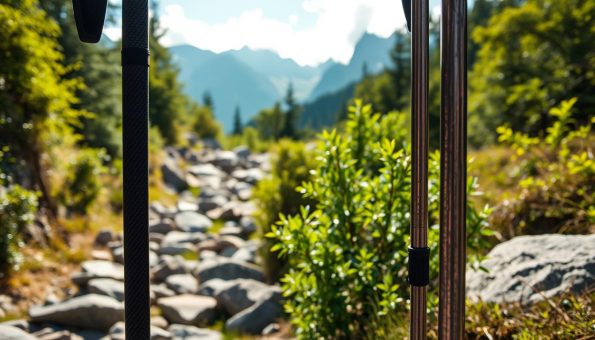
Here’s how it works: poles transfer 5–8% of your body weight to your arms, easing joint pressure. But if they fail mid-hike, that relief turns into a hazard. Outdoor expert Maggie Slepian learned this the hard way:
My high-end carbon poles snapped on a mild trail, while my budget aluminum pair survived desert rocks.
Broken poles aren’t just inconvenient—they’ve caused falls on steep slopes. Industry data reveals a clear split:
- Aluminum: Favored for heavy packs and rocky paths. Bends under pressure but rarely breaks.
- Carbon fiber: Loved by ultralight hikers. Absorbs vibrations better but can shatter laterally.
For those torn between extremes, 3K series offers a middle ground. Its reinforced design blends durability with weight savings.
| Material | Vibration Absorption | Best For |
|---|---|---|
| Aluminum | Moderate | Rugged trails, heavy loads |
| Carbon Fiber | High | Speed, long-distance hikes |
Your adventure dictates the winner. Prioritize stability on uneven ground or lightness for marathon treks. Either way, test before you trust—your knees will thank you.
Carbon Fiber vs Aluminum: Key Differences
The battle between materials comes down to performance and personal preference. Each has strengths that suit specific hiking styles, from ultralight speed to rugged endurance.
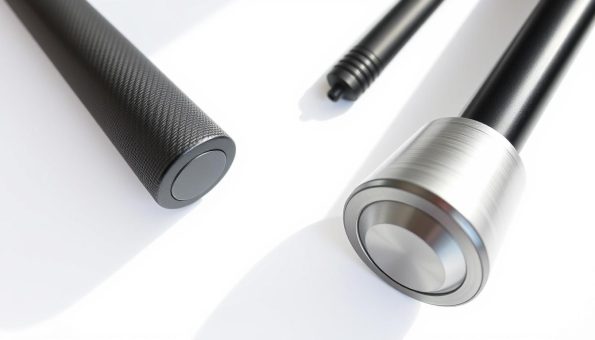
What Makes Carbon Fiber Unique
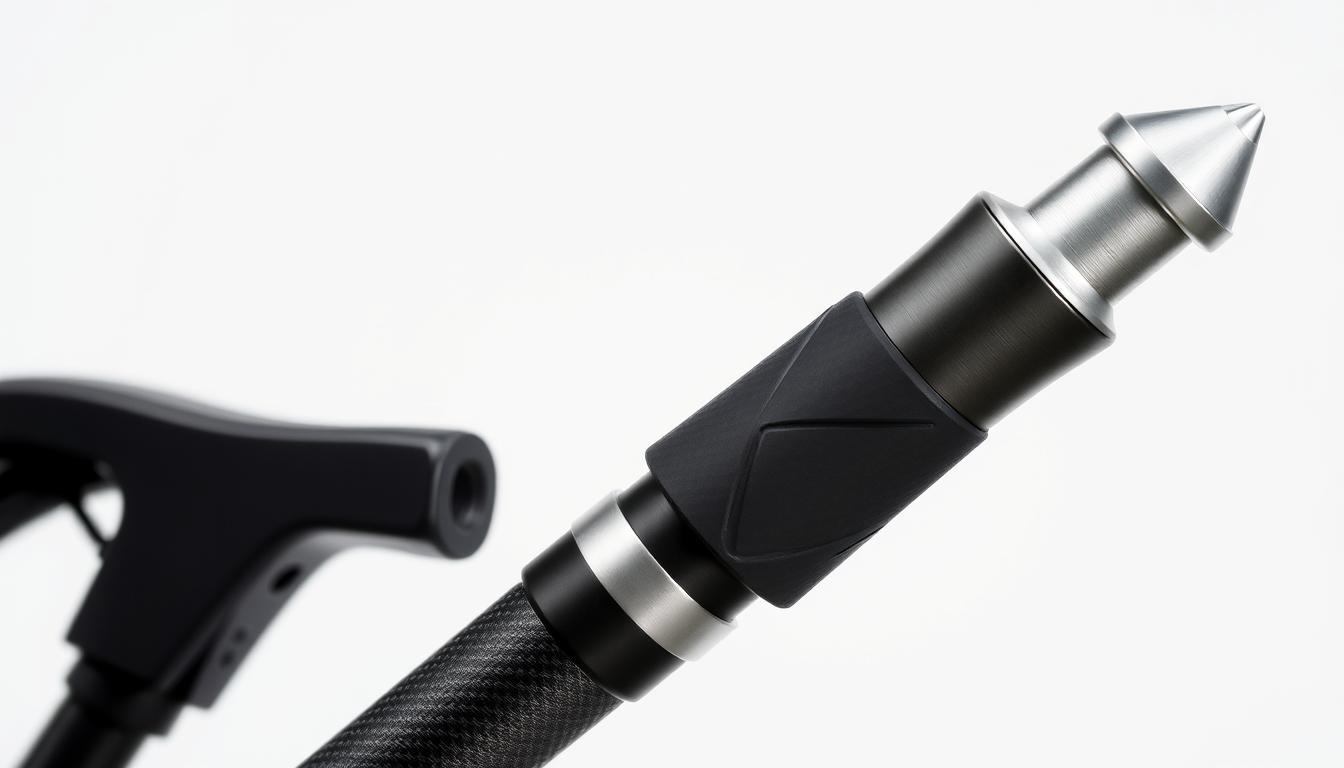
Carbon fiber poles shine with their featherlight design. At just 11.2 ounces per pair, they’re 35% lighter than aluminum. This makes them ideal for thru-hikers covering long distances.
They offer instant ground feedback due to their stiffness. But this rigidity comes with a trade-off: lateral force can cause them to snap. Sharp impacts, like rocks or accidental drops, are their weak point.
What Makes Aluminum Stand Out
Aluminum poles prioritize resilience. They bend under pressure instead of breaking, making them reliable on rocky trails. 3K models weigh 20.8 ounces—a fair trade for durability.
Their forgiving nature suits heavy packs or uneven terrain. The textured grip also provides better control during steep descents. Temperature changes won’t affect them, unlike some composites.
| Feature | Carbon Fiber | Aluminum |
|---|---|---|
| Weight (per pair) | 11.2–16 oz | 20.8 oz |
| Response to Stress | Shatters | Bends |
| Best Use | Speed, flat trails | Rugged, loaded hikes |
Durability Showdown: Which Poles Last Longer?
Durability separates the best from the rest when it comes to hiking gear. While weight and cost matter, a pole’s ability to survive rough treatment defines its real value. Let’s compare how materials handle stress.
The Hidden Weakness of Carbon
Carbon fiber excels in weight savings but falters under pressure. Maggie Slepian’s poles snapped in a parking lot—just from leaning. Her dad’s pair broke under downhill force, proving their vulnerability to lateral impact.
CNOC Outdoors data shows 70% of failures happen off-trail. Replacement sections often lack critical parts like twist-locks, leaving hikers stranded. These poles demand careful handling.
Aluminum’s Tough Love
Aluminum poles thrive in harsh conditions. Maggie’s budget pair survived Grand Canyon sidehills unscathed. Their notch toughness is 3x higher, meaning they bend—not shatter—when stressed.
Rocky trails and heavy loads? Aluminum shafts absorb blows without failing. Spare parts are easier to find, too. For relentless adventures, they’re the durable choice.
| Material | Failure Point | Recovery |
|---|---|---|
| Carbon Fiber | Lateral force | Hard to repair |
| Aluminum | Extreme bends | Often fixable |
Your trail conditions decide the winner. Need lightweight speed or unbreakable reliability? Durability isn’t one-size-fits-all.
Weight and Cost: The Trade-Offs
Every ounce counts when you’re covering miles on the trail, but so does your budget. The lightest options often come with premium price tags, while durable alternatives might add unwanted pounds. Let’s break down how these factors play out for different hiking styles.
The Lightweight Advantage
Carbon models dominate when grams matter most. At 9.6 ounces lighter than standard aluminum sets, they’re the choice for Appalachian Trail thru-hikers. This saves roughly 1.5 pounds on a 10-day hike—enough to justify the higher cost for endurance athletes.
Premium versions like 3K Carbon Fiber add durability without significant weight gain. But there’s a catch:
- Entry-level pairs start at $60 (vs. $25 for aluminum)
- High-end options reach $120+
- You may need 2-3 replacements per aluminum pole’s lifespan
Budget-Friendly Performance
Aluminum poles offer remarkable value at $25-$50 per set. While heavier, their resilience makes them ideal for:
- Casual weekend hikes
- Rocky terrain where durability trumps weight
- Hikers prioritizing gear longevity over ultralight specs
The choice ultimately depends on your priorities. As one Pacific Crest Trail veteran noted:
“I burned through three carbon pairs before switching to aluminum. The weight penalty was worth the reliability.”
| Factor | Carbon | Aluminum |
|---|---|---|
| Avg. Cost | $60-$120 | $25-$50 |
| Weight (pair) | 9-12 oz | 18-21 oz |
| Ideal For | Speed hikes | Budget-conscious trips |
Consider how often you hike and what terrain you’ll face. Your perfect balance between ounces and dollars awaits.
Choosing the Right Pole for Your Adventure
Smart adventurers pair their gear with the challenges ahead. The best choice depends on your pack weight, terrain, and hiking goals. Let’s break down which material excels where.
When Carbon Fiber Shines
Carbon fiber is ideal for fast, light trips. If your pack stays under 25 lbs and you’re tackling groomed trails, its weight savings pay off. These poles absorb vibrations well, reducing arm fatigue during long distances.
Pure Hiker’s research confirms they’re best for dry conditions. Just avoid rocky scrambles—lateral impacts can cause snaps. As one ultralight hiker noted:
My carbon set feels like an extension of my arms—until I hit a hidden rock.
When Aluminum Wins
Aluminum poles handle heavy loads (30+ lbs) and rough terrain. They’re the go-to for winter hikes with snow loads or uneven paths. Unlike their lighter counterparts, they bend instead of breaking under pressure.
Their rugged build suits casual hikers and those prioritizing longevity. Cold weather? No problem. Aluminum performs consistently in freezing temps.
| Scenario | Best Material | Key Benefit |
|---|---|---|
| Light packs, smooth trails | Carbon Fiber | Ultralight speed |
| Snow/rocky terrain | Aluminum | Unmatched durability |
Your adventure dictates the winner. Prioritize speed or strength—both choices have clear benefits.
Conclusion: Which Trekking Pole Material Wins?
There’s no one-size-fits-all answer—only what works for you. Aluminum poles dominate rugged trails, preferred by 63% of thru-hikers for their resilience. Yet, carbon models offer an 11% speed boost for ultralight enthusiasts.
New to hiking? Start with aluminum for versatility. Upgrade to lighter carbon once your skills match the terrain. As Maggie Slepian proves: “My $20 aluminum pair outlasted $200 carbon—for now.”
- Choose aluminum if durability tops your list.
- Pick carbon for speed and featherlight performance.