The right gear can turn a difficult journey into an unforgettable adventure. For anyone who loves exploring nature, choosing the correct equipment is a vital decision.
Many outdoor enthusiasts face a common question. What truly separates trekking poles from ski poles? While both provide crucial support and stability for your body, they are designed for very different purposes.
This guide offers a clear comparison. We will examine the design intent, material technology like carbon fiber and aluminum, and performance on various terrain. Understanding these factors ensures you invest in quality gear that matches your activity.
Whether your passion is hiking mountain trails or skiing down snowy slopes, making an informed choice saves time and money. More importantly, it enhances your safety and enjoyment during every outdoor excursion.
Key Takeaways
- Choosing the correct poles significantly impacts your comfort and performance outdoors.
- Trekking poles and ski poles are engineered with distinct designs for specific activities.
- The primary function of both is to offer support and stability, but they perform differently.
- Material choice, such as carbon fiber, plays a major role in a pole’s weight and durability.
- Selecting the right tool for hiking or skiing ensures a safer and more efficient experience.
- An informed gear decision protects your investment and optimizes your time on the trail or slope.
Overview of Outdoor Poles for Hiking and Skiing
In the world of outdoor recreation, having the right tools makes all the difference for safety and performance. Quality equipment transforms challenging activities into rewarding experiences.
Introducing FiTiFT’s High-Quality Outdoor Gear
FiTiFT stands as a trusted provider of premium outdoor sports equipment. Their gear meets diverse needs from casual hiking to serious backcountry adventures.
The company offers three main product lines designed for different preferences. The 3K Carbon Fiber models provide ultralight performance. Premium 7075 Aluminum versions offer enhanced durability. Standard 7075 Aluminum poles deliver reliable all-around use.
General Benefits of Using Poles Outdoors
These tools have become essential mountain companions over the years. They provide critical support and aid for your entire body during various activities.
Proper pole use significantly reduces impact on joints. They absorb shock in the knees during descents and challenging terrain. This protection helps maintain long-term joint health.
Poles distribute weight and effort across four points of contact. This adds power to uphill steps while engaging your upper body and hands. The technique promotes better posture and prevents back strain.
Maintaining balance becomes easier on uneven or slippery surfaces. This stability proves invaluable for safety reasons across different outdoor conditions.
Carbon Trekking Poles vs Ski Poles: Key Differences Explained
When selecting support tools for outdoor adventures, the intended activity dictates every aspect of the design. Each type serves distinct purposes with specialized features.
Design Intent and Usage Scenarios
Fixed one-piece tools work best for downhill skiing at resorts. You choose a single size matched to your height for the day. They provide consistent support during descent.
Two-piece backcountry options offer adjustability for varying travel angles. This makes them suitable for ski touring with mixed uphill and downhill sections. They remain focused on snow conditions.
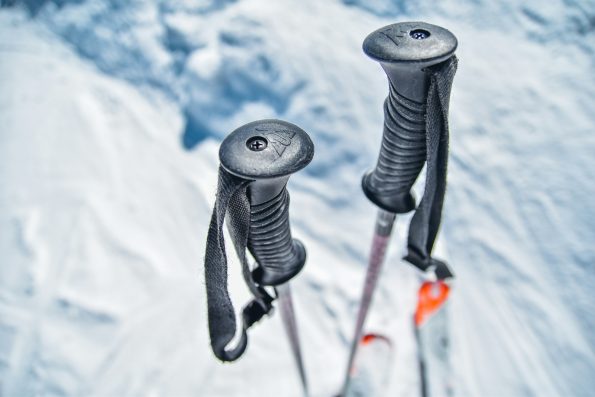
Three-section hiking tools provide the greatest adjustment range. This versatility is essential for traversing steep slopes. You can dramatically shorten your uphill pole while extending the downhill one.
Lightweight Construction and Shock Absorption
Hiking equipment prioritizes minimal weight to reduce fatigue during long days. Materials balance durability with comfort that won’t burden your hands.
Internal anti-shock mechanisms in hiking gear reduce impact on joints during descents. Snow tools prioritize rigidity for effective planting and pushing in snow.
| Feature | Fixed Poles | Two-Piece Backcountry | Three-Section Hiking |
|---|---|---|---|
| Primary Use | Resort skiing | Ski touring | Multi-day hiking |
| Adjustability | None | Limited | Full range |
| Travel Size | Long | Requires ski bag | Fits standard luggage |
| Shock Absorption | Rigid | Minimal | Advanced systems |
These design differences optimize each tool for its intended environment. Hiking equipment excels on varied terrain while snow tools perform best in specific conditions.
Material Technology: Carbon Fiber and Aluminum Explained
The composition of your outdoor poles directly influences their performance and longevity. Two materials dominate high-quality gear: carbon fiber composites and 7075 aluminum alloy.
Each offers a distinct balance of properties. Your choice depends on the activity and environmental factors you expect to face.
Carbon Fiber: Strength, Weight, and Temperature Sensitivity
This material is crafted from carbonized fibers woven into sheets. These sheets are rolled with a specialized epoxy resin to form the pole shaft.
The result is an exceptionally light and strong tool. It significantly reduces arm fatigue over long periods of use.
Another major benefit is excellent vibration dampening. The pole absorbs shock when it strikes hard surfaces like rock.
However, the epoxy resin has a critical limitation. It becomes brittle in very cold conditions. This sensitivity makes the pole more prone to failure in sub-freezing snow environments.
7075 Aluminum: Durability and Performance in Cold Conditions
This alloy is a chemically bonded metal known for its toughness. It boasts a high fatigue point, meaning it can withstand repeated stress.
Unlike carbon fiber, its performance remains consistent across a wide temperature range. You need to apply extreme force to cause a permanent bend or break.
This reliability makes it the superior choice for high-stress winter activities. It handles aggressive skiing and mountaineering in deep snow with confidence.
For three-season hiking where weight savings are prized, carbon fiber excels. Understanding these differences ensures you select the right tool for your adventure.
Performance on Varied Terrains: From Hiking Trails to Snowy Slopes
The true value of outdoor poles reveals itself when facing unpredictable terrain challenges. These tools transform your movement across changing landscapes.
Enhanced Stability, Balance, and Joint Support
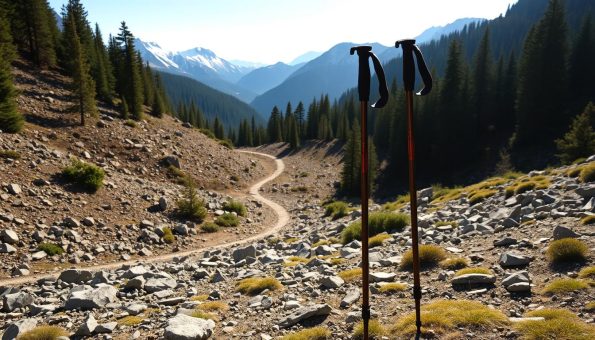
Quality poles create additional ground contact points. This transforms two-legged hiking into a stable four-point system. The improvement in balance is immediately noticeable.
On tricky surfaces like stream crossings or rocky paths, this stability prevents falls. The equipment distributes your body weight more evenly. This reduces impact on knees and joints during descents.
Your upper body and arms share the load with your legs. This transfer makes long-distance hiking more sustainable. Joint strain decreases significantly with proper pole use.
Adjustment Features for Uphill and Downhill Efficiency
Adjustable length represents a key advantage for changing elevations. Shortening poles for uphill climbs maintains natural planting height. This posture maximizes push-off power without overreaching.
Lengthening poles for downhill sections positions them as forward anchors. They act as brakes that reduce jarring impact on knees. This adjustment versatility outperforms fixed-length options.
Backcountry ski equipment benefits from similar adjustment principles. The right pole length shifts throughout your outdoor adventure. This adaptability ensures optimal performance across all terrains.
Choosing the Right Pole for Your Outdoor Adventure
Selecting the appropriate outdoor equipment involves weighing factors like versatility, durability, and adjustability against your planned adventures. The right choice enhances your experience across different environments.
Comparing Trekking Poles for Hiking and Skiing Needs
Fixed-length options work best for resort downhill skiing where consistent support matters. Two-piece backcountry models suit mixed terrain with snow conditions.
Three-section adjustable gear offers the most flexibility for varied activities. This design accommodates changing terrain and user height throughout the day.
Material selection depends on your primary use cases. Lightweight composites provide comfort for three-season activities. Durable metal alloys handle winter conditions and high-impact use.
FiTiFT’s Trekking Poles Range and Product Links
FiTiFT offers three distinct product lines to meet different outdoor needs. Each provides excellent quality and performance for specific applications.
The 3K Carbon Fiber Trekking Poles deliver maximum weight savings. They’re ideal for long-distance adventures where every ounce counts.
For year-round reliability, the Premium 7075 Aluminum Trekking Poles offer superior durability. They handle temperature extremes and demanding conditions.
The 7075 Aluminum Trekking Poles provide dependable performance at an accessible price point. They’re perfect for all-purpose outdoor use.
Investing time in selecting the right equipment pays dividends in comfort and safety. Quality options exist for every activity level and budget consideration.
Conclusion
A successful adventure hinges on matching your gear to the specific challenges you’ll face. The fundamental distinction is clear. Ski poles are specialized tools for navigating snow, while trekking poles offer versatile support for hiking and trekking across diverse landscapes.
Understanding the differences in design, materials, and adjustability empowers you to make a smart choice. This knowledge ensures your equipment enhances safety, comfort, and performance on every outing.
Consider your primary activities and the typical conditions you encounter. Your decision should reflect your performance priorities, whether you need lightweight agility or rugged cold-weather durability.
For reliable performance that serves you well for years, explore quality options designed for real-world use. The right poles are an investment in countless memorable journeys.
FAQ
Can I use my hiking poles for backcountry skiing?
It is not recommended. FiTiFT trekking poles are designed for dirt and rock, offering balance on uneven ground. Ski equipment, however, is built for snow with larger baskets to prevent sinking and a different grip angle for downhill control. Using the wrong tool can be unsafe and inefficient.
What are the main advantages of carbon fiber over aluminum?
Carbon fiber poles are significantly lighter, which reduces arm fatigue on long days. They also provide excellent vibration dampening on rocky trails. High-grade aluminum, like the 7075 alloy used in some FiTiFT models, offers superior durability and reliability in very cold conditions where carbon can become brittle.
How do I choose the correct length for my needs?
For hiking, your elbow should form a 90-degree angle when holding the grip. Most adjustable models make this easy. For skiing, length is more dynamic; it’s often set longer for uphill travel and shortened for downhill runs. FiTiFT poles feature quick-adjust mechanisms to handle these changes seamlessly.
Why do ski poles have different grips and straps?
Ski grips are molded to fit a gloved hand and often include a spike for pushing on flat sections. The strap is designed as a safety release to prevent injury during a fall. Hiking grips prioritize comfort for bare hands and have secure straps for weight transfer during ascents.
Are adjustable or fixed-length poles better?
Adjustable poles offer great versatility for changing terrain, allowing you to customize for uphill and downhill sections. They are ideal for most hikers. Fixed-length options are lighter and more robust, preferred by fastpackers and those on consistent trails. FiTiFT provides high-quality options in both styles.